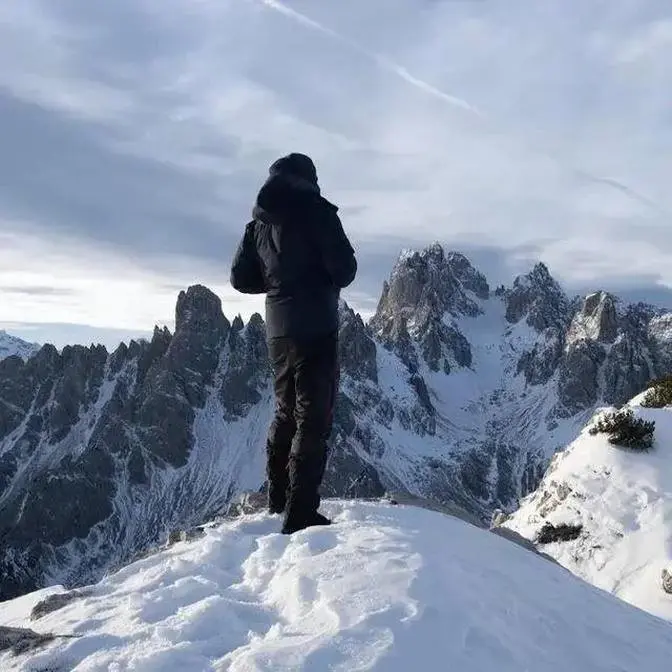
There are certain tips and pieces of advice that I find myself giving more than anything else during workshops or in response to email enquiries, and in this video I've tried to put them all together.
If you’d like to join me for a landscape photography workshop in Swedish Lapland, Norway, Iceland or the Dolomites I’ll be co-leading groups there in 2019. Check my website for more information https://www.andymumford.com/workshops/
If you're interested in purchasing any of the gear I use in this video, and you enjoy my videos, please support my work by clicking on the affiliate links below. The US Amazon links are on the left, the UK ones are on the right. Thanks so much.
In all the years that I've been doing photography, I've realised that the more I learn,
the more there is for me yet still to learn. And that's actually one of the joys of photography.
It's a journey that will stay with us for the rest of our lives. Whatever the kind of photography it
is that we're doing, there's always new things to learn, new techniques or new technology develops
which opens new doors and new things to learn. However, over the years that I've been teaching
photography in workshops, there are a handful of things that I find myself repeating more often
than anything else. So this video is about the six most useful things that I've learned while
doing landscape photography. Buy the best tripod that you can afford. Photography can be a really
expensive hobby and it can be really tempting when you're starting out to try to save a little bit of
money on something like the tripod because a good tripod is incredibly expensive. It can cost you
anything from $600 upwards. But to do that is always going to be a false economy because you'll
buy the cheaper tripod and then maybe you'll buy a slightly better tripod. But at some point,
sooner or later, as you continue with photography, you're going to realize that you need a really
good carbon fiber tripod. So you're going to invest in one sooner or later. It's just cheaper
and you save a lot more money to invest in it as soon as possible. This is a Gitzo Series 2
Mountaineer. Now I bought this 11 years ago. I bought it when I was using a Nikon D3 and after
that I used it with a Nikon D800 and then I switched to Fujifilm. It was used with an X-T1
and after that it's been used with my X-T2 along with the Gitzo Traveller which is what is holding
up the camera for this video. Now the thing is that tripod has lasted me four cameras and what
you realize is that the tripod is going to be the piece of equipment that you will own for the
longest period of time. It's the best value thing that you can ever buy. So buy a really good one
and it will last you forever. Don't be put off by failure. In fact, I know it's a cliche but
failure is the best way to learn. In fact it's probably the only way to learn. We learn by
making mistakes. We make mistakes and then we get better and do it better next time. But beyond that
we need to embrace the fact or at least live with the fact that most of the shots that we do and
most of the times we go out shooting we're not going to come back with a mind-blowing image or
something that's incredible or that we're going to remember forever. Unfortunately with landscape
photography that's just the way that it is. Most of the shots that we take are not going to be
anything special and that applies to anyone from a beginner all the way up to a professional.
Now I really wouldn't like to try to estimate the fraction of the images that I keep
against the images that I've taken in my career but it's certainly going to be something like
0.000 something and maybe more zeros because the reality is the vast majority of images that I
take I don't keep. I'm not going to keep because they're just not good enough for one reason or
another. They don't have that factor that makes me go wow they're not something that a year later
or two years later I look back on and think oh that really really captured the scene there. Failure is
the norm in landscape photography and that's a good thing because if we got it right most of the
time there wouldn't be anything else to learn. There'd be no challenge. It would be too easy.
So when I see images taken from other photographers particularly from plate locations that I've been
to and they managed to see something that I didn't see or they captured the place in a way that I
wasn't capable of doing that's actually a positive thing. It's an inspiring thing and it's an
encouraging thing because it makes you realize that there is room to grow. There's more to learn
and as I said at the beginning of this video photography is a journey that lasts us forever.
We're always going to be learning and it would be a terrible thing if there were nothing left
to learn and it would be a terrible thing if we weren't inspired by other images that have got
something that ours currently haven't because it gives us something to strive for and something to
aim for and in doing that we need to embrace the fact that we're going to fail sometimes.
So this is a practical tip for shooting in the field and one that we always try to incorporate
into workshops and that is to get to the location where you're going to be shooting as early as
possible but not only that do as much research beforehand as you can. So look at things like
Google Earth to try to find the location it's certainly if it's a location that you've never
been before to get an idea of what it is that you're going to find there. Use apps like the
photographer's ephemeris to try to find out what the light's going to be doing, check what the
tide is going to be doing if you're shooting on the coast or the tide's going to be coming in,
whether it's going to be going out, where it's going to be at the time you're going to be
shooting and then get to the location as early as possible so you have time to explore it, to walk
around, to try a few frames, to try different compositions and find a spot so when the light
hits absolute peak you've had the opportunity to find the composition that you're really satisfied
with to make the most out of the scene. I can't tell you how many times I've been frustrated
when for one reason or another I've not been able to get to a location particularly early
so I've not really had a lot of time to explore the scene so you do some shots and yeah they're
okay you know you get back home but then a few weeks later or a few months later you see some
other shots from the same location and you realize that if you just walked a little bit further, if
you've just gone around that pile of rocks there is a much better composition waiting for you so
always give yourself the time to explore a location as much as possible before you start
shooting seriously. Now I should invest in the best tripod that you can afford, conversely with
the camera you shouldn't worry too much about the specs or buying the very best camera that you can
get or the very best camera that's on the market because you don't need the very best camera to
take good images. Now there is a myth that professional photographers will always use
the best quality equipment available at the time but it's actually not true. Now let me give you a
few examples. Back in the film days the very best quality that you could find would be in large
format or medium format but some of the most famous and best known landscape photographers
of the time were shooting on 35mm film. For example Art Wolff, this is a book, beautiful
book, images printed incredibly large, all shot on 35mm film. Franz Lanting is another one and
Galen Rao who is perhaps one of the godfathers of modern adventure photography. Now if you read any
of Galen Rao's articles he was a huge advocate in traveling as light as possible so he would quite
often not take the very best quality lenses, the f2.8, the super sharp lenses but carry something
lighter and smaller because he felt that it helped him to create better images. Now if I look at my
own work from a purely commercial point of view, if I look at the images that have sold the most
in terms of licensing and things like that or images that have sold the most in terms of print,
none of them are taken with the best technology that was currently available at the time. This
image is taken with a Nikon D90 and the 18-200mm lens which is a consumer camera and a consumer
lens and I used that camera quite simply because my main camera, the Nikon, was actually being used
for another shot at the time. I only had a few seconds to grab the shot so I picked up the spare
camera with the lens that it had on it and used this shot and as it turned out it was probably
the best image that I got on that trip and it's certainly been one of my most popular images ever
since then. This image was taken with a Nikon D3. Now that is a pro body full-frame camera however
it's only 12 megapixel and it certainly wasn't the best image quality available at the time.
This image was taken with a Fuji X-T10, a 16 megapixel crop sensor consumer camera which again
it was my backup and I used it because my main camera, which was an X-T1 at the time, was being
used to shoot something else. It was a grab shot, it was shot handheld and again I only had a few
seconds to get the image and this final image was shot with an X-T1, again 16 megapixels,
it's a very good camera but certainly when I shot this I'd recently changed to the Fuji system
from using a 36 megapixel Nikon D800 and this image has been more commercially successful
than any image I ever shot with that 36 megapixel full-frame sensor. Now I'm not trying to say that
high-end cameras aren't fantastic because obviously they are fantastic and if you can afford a Fuji
GFX or Nikon D850 by all means get one of those cameras and you will take fantastic images with it
and I also understand that different people take different things out of photography. We
all appreciate photography and images in a different way and many people take a lot of
pleasure and get a lot of satisfaction from being able to zoom into their images at 100%
and see the quality there, to see the definition, to see the resolution and that's a really valid
reason to get into photography but other people take different things out of photography. Now
personally for me the best camera is the one that helps me realize my creative vision the best,
so it's the camera that's an extension of my arm and of my hand, it's a camera that's an extension
of my eye and it's a camera that's an extension of my mind in the way that I see a scene. So a
camera has to be incredibly intuitive and it has to help me capture the scene in a way that I want
to see it and that isn't necessarily going to be done by the camera with the most resolution.
Back up your images, in fact back them up multiple times in multiple different places because you can
hope that it never happens to you and it may never happen to you but if you ever do have a drive fail
those images are gone and they're gone for good. It's kind of like having a seat belt in a car,
you hope that you're never going to use it but you're always going to put it on, it's just good
to know that it's there. Now different photographers have different ways of backing up their images
but a basic rule is you should have at least one or more copies on external hard drives outside
away from your computer and other copies off-site or in the cloud. Now because most of my work is
done on a laptop I actually don't keep any images on the laptop. The only images that are there
are ones that are just after I've imported from a card or from my camera and those are backed up
in multiple drives using time machine backup on my computer. But as soon as I finished editing those
images they're then moved onto a mirrored hard drive which is on the wi-fi network in my apartment.
So the drive is mirrored and I can access them from within Lightroom so I can still make small
edits and I can easily pull them off to export them for print or to send to the web and that's
my first line of backup and there's a slight redundancy there because the drive is mirrored
but that's not enough. Those drives are then mirrored with two external hard drives which I
keep in the flat and I also use Backblaze as my cloud storage which again is constantly backing
up those mirrored hard drives. So it's stored apart from on those those drives which is repeated
in two places inside my flat and then in the cloud which gives me a fair degree of security
when it comes to backing up my images. Now how often you should back them up it's really hard
to say. There's not really a hard and fast rule but if I've just come back from a trip and I'm
working through the images then they'll be backed up pretty much daily. If I'm not doing lots of
work if I'm not making lots of changes to my library or not importing the images then I'll
back them up a little bit less than that but never really anything less than every week because I
don't want to lose the work that I've been doing. Now moving back into the field this is something
that I always try to stress when I'm giving workshops. When you're standing in a scene when
you're framing an image what are you actually shooting? Why are you taking the image? It sounds
like a ridiculous question but it's not because it's not just about the focal point it's not
just about what it is that you're framing what's the actual object that you've got in your image.
It's also about the mood of the image what the place is telling you and how you're going to try
to capture that because when you ask that question and when you try to answer the question the
answers are going to help inform how you shoot that scene. What lens choice are you going to use?
Do you need to isolate the scene? Do you need to isolate the an element and use a telephoto lens
or do you need to really capture the entire breadth of the scene to use leading lines to
move you towards some kind of focal point in which case you need to choose a wide-angle lens.
What about using a long exposure? Is a long exposure going to work? What will that do towards
the mood of the scene? Now these are all decisions that you need to make when you're standing behind
your camera and in front of the scene because quite often when you have really momentary flashing
good light you really aren't going to get that many opportunities to get it right so when you're
standing behind the camera when you're standing there with this vista or whatever in front of you
ask yourself what is it that I'm shooting here and what is it that I'm trying to tell people
what do I want people to feel and what do I want them to see when they look at the image that I
take what do I need to put in and just as importantly what do I need to leave out. Now
these are the kind of decisions that you can only really make at the scene no matter how much
research you do before you get there you can only really understand it when you're actually standing
there so it's another reason why you should get to the location as early as possible and spend as
much time as you can just trying to soak in the mood try to soak in the feeling because that will
make it clearer to you what it is that you're trying to communicate and sometimes you need to
be aware that you may have brought a vision a preconceived idea with you before you visited
the scene and while sometimes that can work sometimes it just won't and you have to be able
to understand when it is that you're trying to force that preconceived idea of what you're going
to shoot onto the scene in front of you and understand when it's not working and when it's
not working just walk away change lenses and try something else. Okay so the final tip is perhaps
the most important and that is always shoot for yourself and take the images that you want to take
and that you enjoy taking because at the end of the day photography should give you pleasure both
the act of taking the images of being out there in nature and operating the camera trying to capture
what it is that you're seeing in front of you to the final product to the final edited image that
you've got all of this is a process that should be fun and should be enjoyable and that's the
most important thing. Now criticism is important and it can be a valid way to learn but understand
that a lot of the criticism that you get is from people telling you about how they would take the
image and what they would like to see and that isn't necessarily the same as what you want.
It doesn't necessarily match with your vision so while criticism can benefit you and it can help
you learn it's not always something that you need to listen to. Photography it is a process and we
do expect to progress and we do expect to improve but you need to consider what improvement actually
means because improvement should be that you are much more capable of taking the images that you
like that communicate the scene in the way that you want to communicate it and that's something
that mostly will come from inside of you and that will come from practice. So I hope that's been
useful I hope there's at least one thing there that you could take away and incorporate into
your own photography. If there's anything that you'd like to say if you've got any questions
as ever just drop a comment in the box below and I'll get back to you and as ever thanks for
watching and take care.