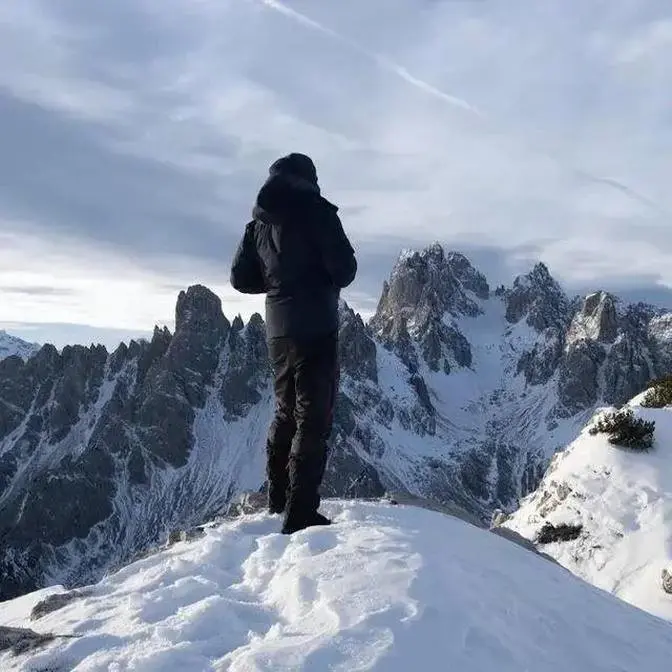
It's been a little over 10 years since I started using the Fujifilm X Series for all my professional landscape photography. Looking back, what do I think of the system, and how does it work for me?
Chapters 0:00 Introduction 2:10 Weight & Feel 5:07 Image Quality 9:13 The System as a Whole 10:48 Conclusion
If you’d like to join me for a landscape photography workshop, there are still some places left on my 2027 workshops and I'll soon be opening waiting lists for 2028. Check my website for more information https://www.andymumford.com/workshops/
If you're interested in purchasing any of the gear I use in this video, and you enjoy my videos, please consider supporting my work by clicking on the affiliate links below.
A couple of years ago I made a video about my experience using the Fuji X system as a
landscape photographer and still now it's one of my most viewed videos and something that I
continue to get questions about. So it's been 10 years now, well actually it's coming up on 11 since
I switched to the X-T1 and the X-T10 and since then I've used pretty much every generation of
Fuji cameras in my work so I thought it was maybe time to revisit what I feel about the system.
So right from the start I think it's important to lay out that this video isn't trying to convince
you to switch to Fuji and nor is it a comparison with other brands. About that my opinion remains
the same. Every camera brand manufacturer nowadays makes incredible gear that's beyond the wildest
dreams of photographic capability that existed back when I started with digital photography.
Whatever camera system you use you really can't go wrong. It's the nature of camera manufacturers
to convince you that the latest evolution of technology is a game changer that's just
impossible to live without and it's the nature of social media and camera reviews to kind of
magnify that and while there have been some significant jumps in photography particularly
in the areas of resolution, in high ISO performance and autofocus, my experience in the field
shooting side by side with people using pretty much every brand of camera has shown me time and
time again that in the vast majority of occasions the camera that you choose to use won't make you
take better photographs. There are some things that make certain aspects of photography easier
and I'll talk about those later in the video but I want to lay out right at the start of this video
that I'm not here to tell you that Fuji cameras are the best and that you should buy one because
I simply don't believe that. What I believe is that you should buy the camera system that works
best for you whatever that may be. What I will tell you about in this video is my experience
using Fuji cameras for over 10 years shooting landscapes and a little wildlife across five
continents. I'll go over the system and talk about how it's met my needs professionally and why it
works for me and if you're thinking about moving to the system then hopefully it will give you an
insight into what you can expect. So I want to start this video talking about the less tangible
things which is kind of why I switched to Fuji in the first place. For me the creation of landscape
images it's not really a technical pursuit and for the most part I want the camera to get out of
my way as much as possible. The camera should be an almost invisible extension of the hand and eye
and for this to be the case then the camera's controls should be completely intuitive
particularly the exposure controls. Now for as long as I've been using Fujifilm I've really
appreciated the analog feel of the controls from the shutter dial on top the aperture ring on the
barrel of the lens. It's a system that just works for the way that I think and the way that I shoot
and things like switching to bracketing mode also feel really intuitive so I rarely have to take the
camera away from my eye while I'm shooting. But what's intuitive to one person can feel painfully
obscure to someone else so I can fully understand why some people don't get on with the analog dials
on Fuji cameras. But Fuji also produce cameras like the X-H2, the X-S20 which have the more common
PSAM control system, the GFX100S also has this, so you're not stuck with one system of control
through the cameras you can choose a style that works best for you. I also really like the displays
the EVF and LCD to be as clean and uncluttered as possible. I'm happy with just being able to
see the exposure settings, a live histogram and a focus point and to be honest that's just for
the EVF. I prefer the LCD to be completely clean. The more information that's displayed there the
greater the clutter and the more that interferes with me being able to focus on composition.
I like that I can easily remove all of that info and can just see the frame.
Now I can't say this with any authority but being able to turn this off and get a clean screen
doesn't seem to always be completely straightforward on some other cameras that I've seen on workshops
and again this is a personal thing as I said I want the camera to get out of the way as much
as possible so I can focus on the scene with as few distractions as possible. And finally there's
a weight. Now when I started with Fuji it really made a difference to be using a system that's so
small and light but nowadays full-frame cameras and lenses have gotten significantly lighter and
smaller but I still really like the fact that I can have such a small and lightweight kit. My X-T5
with three lenses that give me coverage from 10 millimetre to 200 millimetre or 15 to 300
millimetre equivalent weighs in and around 1.6 kilograms or a shade over two if I take a second
body and for some trips I do weight makes a real difference. At the end of this year I'll be doing
a 16-day trekking trip at high altitude in Nepal where I need to keep my backpack weight as low as
possible. Next year I'll be doing hiking tours in the Drakensberg at 3,000 metres and in the past
I've done lots of hiking in the Dolomites and in Patagonia and having less weight it really adds
to the enjoyment of hiking which is important to me. Then there are weight restrictions on some of
the local charter flights we do so having a light aircraft things like that so having a light kit
that still has so much range is something I really really appreciate. So for lots of people
this is the big issue that feeling that not using full frame compromises image quality but for me
I always keep coming back to what do I actually need. Full frame will generally but not always
give you more resolution or at the same resolution it's going to give you better dynamic range and
better noise control. I also shoot with a GFX 100 megapixel medium format camera and as I've
pointed out in a video I made comparing the two systems there is a difference and that difference
in image quality it can be seductive the idea of always having the absolute best image quality but
the reality is how much do I need that extra quality in real terms in my work. I can notice
it when I zoom in at 100% in Lightroom but in a print for a book or a magazine can you notice
the difference? I've never had a client who specified a certain resolution or sensor size
and no one who's ever printed one of my images either as a commercial client for a magazine or
a private client for a print has commented on whether the image shot was on 26 megapixels on
an X-T3 or 100 megapixels on the GFX. The prints in my print store are from different cameras and
I can guarantee you can't tell the difference which one came from which camera. Even in prints
that are a meter wide and in a book that I'm putting together now and if you're interested
in the book there'll be more news of that in the summer I didn't give any preference to which
camera I shot which image with and nor did the publisher notice so I do understand that for some
people absolute image quality is king and I get that but for me the X system produces excellent
results that are more than good enough in the real world for all of my professional work. Now
I'm not in any doubt that for most people if they had to name the one aspect of Fuji cameras where
they like the most it would undoubtedly be autofocus and it's true that while the system
has got better it does still lack the accuracy of the big three full-frame systems. Things like
pre-capture and the insane frame rates on cameras like Sony definitely make some aspects of
photography things like action events or wildlife easier. A faster frame rate means more chances to
get it right, pre-capture means you don't miss a shot and autofocus accuracy means a higher rate
of success. Now for me as a landscape shooter none of this mattered for the most part I have
the camera on a tripod and I focus manually so autofocus super fast autofocus is not something
I particularly cared about as it made no difference at all to my work. However in the last couple of
years I've been shooting more and more wildlife so it has become something I'm much more aware of.
So what do I think of it in the field? Well I've captured polar bears in the arctic where the
camera had to distinguish between the ice and the bear that was with the X-T5. Here in Namibia
where the lions and the cheetah were in long grass again with the X-T5. Diving birds in the Galapagos
and here in these images in the Amazon where I was in a moving boat shooting through the vegetation
in low light and then here again hummingbirds in flight in Ecuador and on each occasion I've been
able to get a relatively high rate of shots in focus I'd say a good 85 to 90 percent and I've
not yet been in a situation where the autofocus had made has made me miss shots. On all these
occasions I was with people using different camera brands who may have got more images more accurate
images due to a higher frame rate but hand on heart they didn't seem to be getting shots that
I was unable to. Now okay these are just a handful of occasions and I'm by no means a professional
wildlife photographer. If I was things like pre-focus those higher frame rates that accuracy
combined with the wider lens choice for the fast telephotos that you get
with the likes of Sony, Canon and Nikon would almost certainly swing me in that direction
but again for me it comes down to what I need and I'm not saying that Fuji is amazing or probably
even comparable but for my occasional wildlife needs then the autofocus on Fuji has never really
felt like a hindrance. Now I don't think you can talk about camera brands without looking at the
system as a whole and what all of the lens support looks like. It's one of the major
issues for me with the GFX system. It is a fantastic camera but it lacks certain lenses
for example it lacks a longer tele zoom something like 100 to 400 equivalent and that affects how
useful the system is for me. Fuji are a smaller manufacturer with a much more limited manufacturing
output. You get a handful of new lenses or updates towards lenses each year and so for a while at the
beginning of the system there were definitely areas where the system felt lacking. Now though
certainly just for my usage the system has everything I need with really well performing
zooms at all the focal range that I that I ever use and over the last four or five years you've
had third-party companies like Sigma, Tamron have started producing really excellent x-series lenses
the Sigma 10-18 f 2.8 and their 100 to 400 have become staple lenses in my bag and then you have
some fantastic third-party primes the likes of the Viltrox this is their 13 millimeter f 1.4 it's
a fantastic lens for astro and aurora so for sure you don't have the selection that you have with
the legacy four frame brands. I think particularly in the area of things like fast long telephoto
primes things like an f 2.8 300 millimeter for example and for certain specialized areas like
wildlife, bird photography, sport photography that does matter but for the work I do I've never
really felt a lack of choice or options. So at the end of the day after 10 years of photography I've
been really happy with the Fuji X system it fits my needs and I don't feel it lacking for what I
need from a camera but different people are different and my needs as a landscape photographer
are going to be different from other people's. I come from a hiking background for me the experience
of being out in nature is always primary and I don't like anything that gets in the way of that
so for me a smaller lighter system that I can work intuitively is better than a system
which may have a slight improvement in image quality or autofocus that feels less intuitive
and is bigger and heavier. I have the GFX which has incredible image quality and I do enjoy using
it but despite that I tend to use my X series cameras more often on trips and if I had to give
up one system it would be the GFX for all the reasons I've outlined above and I want to finish
with one final observation. One thing I've noticed in my 20 years as a professional is that most
professionals they don't really change the camera brand that they use or if they do they might do it
just once in their career. Photography should be intuitive the camera is just a tool between what
you see in front of you and what you see in your head and as such it should be able to communicate
that vision as effortlessly as possible but as I said at the beginning it should also get out of
your way and become almost invisible. Different things work for different people and so when you
reach a point when you can do it effortlessly, when you know exactly how the camera is going to
perform in any given circumstance, any incremental increases in things like resolution, dynamic range
or even autofocus, the things that you might get from a different camera they have to be balanced
against how much you would lose in that effortlessly intuitiveness that you've built up
with the system that you have and for most professionals they've got super comfortable
with their equipment to the point that the camera is very rarely if ever a limiting factor in their
work. So I think this needs bearing in mind any camera system is capable of producing great results
so find a system that works for you whatever that is and stick with it. And that's it for this video
I hope it's been useful and I hope it's been interesting. Drop me a comment if you have any
questions and I'll get back to you and if you have enjoyed the video please like, please subscribe,
it really helps support the channel. I have lots of Fuji related content as well as lots of video
about landscape photography and travel photography and if you enjoyed that photography and you'd like
to join me on a workshop my trips for 2027 are now all open and I've got some incredible workshops
coming up to places like Namibia, we're going to be going to Utah,
to Alaska, the Drakensberg, Madeira and the Galapagos. You can find all the information
on all of these trips on my website so please check that out and drop me a line
if you'd like to join me on a trip. And as ever thanks so much for watching and
good luck with all of your photography. I'll see you next time, take care.