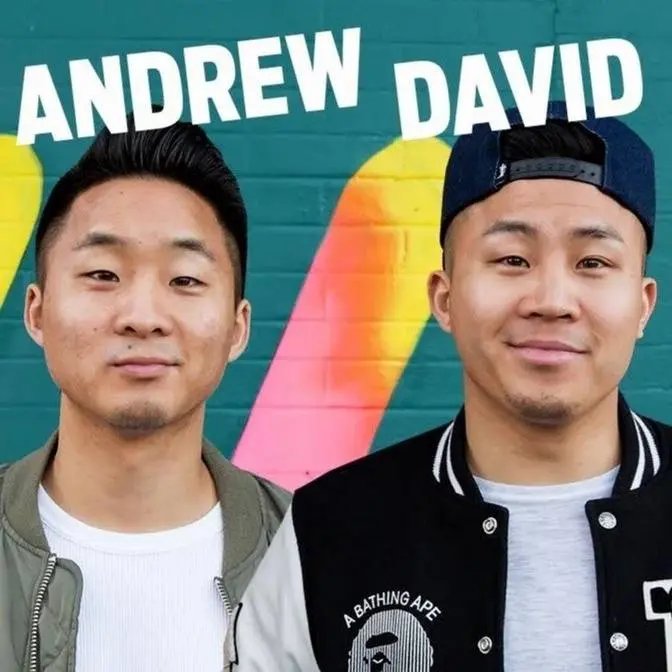
I used to play DJ. I'm trying to be an emcee, but you realize it's like a, you know, English problem.
It's happened, you know?
The uni here is fresh and delicious.
Uni over Wagyu. The new thing right now.
Oh, the uni!
Put the little wasabi right there.
Little pat that in there, you know what I mean?
Just, you know, dab it. Dab it right there.
Boom!
Sushi is one of those dishes you can get from a fridge, in a bento, off a conveyor belt,
and in a very private and pricey omakase style.
There's over 4,000 sushi restaurants in America,
but how did it get so popular?
We explore three different levels of sushi,
everything from the Japanese-owned to even non-Asian-owned,
but everyone is trying to put their own spin on it
and spread their universal love for it.
We're here with our friend Chad Matsuoka,
who's got family roots in Little Tokyo, LA,
to experience what might be the future of sushi.
Alright, so sitting here in Makaku,
I gotta say, it definitely has like a neighborhood vibe.
It's kind of homely.
There's a lot of places in the 626
that are like this.
They're more of my go-to spots.
I just like the traditional feel,
walking in there and knowing the chef.
You have stuff like the Alaska roll, the Boston roll.
Okay, that's definitely obviously new,
because Boston is not known for sushi.
We definitely want to do this lunch special,
any three rolls for $12.35.
Guys, that is such a good deal.
Our lunch specials are here. David is here.
Tell us about the history.
Alright, so it all originated with the California roll.
There was the first sushi restaurant in Little Tokyo in the late 60s.
They came out with rolls.
In the beginning, the rolls weren't popular
just because the seaweed was on the outside.
Because the more traditional style is to have the seaweed on the outside, right?
Yeah, so I think just to hide the crunch,
they put the rice on the outside.
They put avocado in there for the texture.
Very California, and also they put the crab
in there for that fishy taste.
Back then, it was an exotic food. People were hesitant to it.
Once the 80s came, the whole
sushi roll craze took off.
You know what I would compare the California roll to?
Run DMC doing that
collaboration with Aerosmith.
Rap Rock was
necessary for rap to enter the American
mainstream consciousness at that time.
It's crazy to think that the California roll
is responsible, partially, for blowing up sushi.
Guys, of course, the Philly roll is going to have
your Philadelphia cream cheese inside.
In my opinion, the two most mainstream
rolls in the entire
mainland North America
have got to be the California roll and the Philly roll.
This Boston roll right here
has no raw fish in it.
California roll. You started seeing some rolls
in Japan also use rice on the outside.
Is that more of an American thing or a Japanese thing?
It's definitely more of an American thing.
I wonder if they're doing that just because there's a lot more
tourists going to Japan. They're opening
up the tradition to tweak
it a little bit more for the Western palette.
Spicy yellowtail. Funny thing, actually,
when I was younger, I used to go to sushi
restaurants. I used to poke everything out of the middle
and just eat the rice and nori together.
The word sushi is referring
to the vinegar rice and not the actual fish.
You're actually just eating the
sushi. Philly roll. Does it not taste like
a bagel, salmon, lox, and cream cheese?
Yeah, that tastes like something from Tompkins Bagel.
Boston roll.
The Boston roll just has cucumber,
lettuce, and shrimp.
I've never heard of it in my life.
But the Boston roll sucks. It's like Boston.
I would refer
to this sushi style as Anytown USA because
it's probably likely that any town in the
USA has a sushi spot that's
sort of based off this type of menu. But I will say
the one thing that they had that was kind of authentic is
they got the lamune. Alright, you guys, that was
pretty cool to come here to Mikiko, get the nostalgic
vibes in. We want to show the transition
from 1990 to
2020. Maki Kosaka.
Alright, so before we go on to our next spot,
we gotta make a quick stop and try this
supermarket sushi. But not just
any supermarket, David. We're talking about Chinese supermarkets.
It kind of goes to show you
how many different people have taken ownership of
sushi. We're eating Chinese supermarket sushi.
We just came from the 1980
spot, and then we're headed to the Michelin
affiliated Korean spot next.
It doesn't get cheaper than buying it from the
supermarket. Yeah, this one's actually
$5 right here for 9 rolls.
Supermarket sushi. The rice here is not as
good, but there's a lot of it.
And this fish right here is not
very bad, but I've eaten a lot of
Kai-ten to go sushi
in my life, so I can kind of take it.
With a heavy amount of wasabi and soy sauce,
you can kind of mask anything. Overall,
I think, with a few exceptions,
pass on the supermarket sushi.
Makaku kind of represents how sushi might have started
in America, but now let's jump to a Michelin
star level spot that is doing sushi
on a whole new level. These
are dishes that look unlike anything else.
Now we're at this spot,
Maki Kosaka. It just opened in 2020.
This group, Kosaka, has a Michelin
star at their fancier spot. This is sort of
their, I guess, takedown or express concept.
I actually like places like this from the Michelin
family, because not a lot of people
go eat at Michelin star restaurants.
Places like this make it a little bit more
affordable for everybody else. So at this spot,
the chefs are Japanese, but
it is Korean owned, so that's very 2020.
Maki Kosaka.
Okay, I'm here with the owner, Ki,
of Maki Kosaka. So Maki
is a hand roll. Japanese food is
like a mainstream, especially in New York.
Almost 100% is all
the fish is flown from Japan.
We get delivery every day. Taste is the most important,
but it should be very visually
pleasing to your eyes.
Alright, this is the uni cup with
caviar. Guys, we are scooping
the uni right now here at Maki Kosaka
like it's ice cream. I've never had
uni in a cup. So it's seared with a little
bit of caviar. A lot of places, they make
things look nice, and it doesn't taste nice.
But this place is doing it right.
You can never go wrong with uni. The uni here is
fresh and delicious. How are the
customers supposed to eat this? Because this almost
looks like a postcard. Right. We chose
this super fine, I guess
refined nori. This is like opening
a red envelope on Chinese
New Year. Yes. Instead of money,
it's nori, right? You can
grab it. Depends how you like it. It's all
seasoned, so you can just taste it. You can use
the soy sauce as well. I would do
it the more traditional way, because these chefs
know what they're doing with their bellies. Right.
It's just kind of disrespectful to dip it in
soy sauce. Thank you. That's right. David,
the seaweed is from Kyushu. Shout out to
Tim Shiba-san. I'm gonna go for the bluefin
tuna right in the middle.
And you're wrapping it like a taco.
Yeah. I have the bluefin toro
and you have the yellowtail. Even that seaweed
is good. It's super crunchy
and it's dissolving in my mouth. And then like the
bluefin tuna is actually really fatty.
Actually, you know what? I'm happy just eating
this by itself. This is some great
A seaweed right here. Dan, why don't
you grab one behind the camera? This is the type of fancy
sushi that Dan can even eat behind the camera. Okay.
There we go. You can hear
how crunchy that seaweed is.
That nori. Seared uni
on top of a scallop. Bro.
That's what I think is fun and that's actually why I think
the rolls are getting so much
more popular. It's fun to eat. It's interactive.
And what's so special about
the seaweed is that it's from the Saga
prefecture of Kyushu. And that means that
the tides are really high and low
so there's a lot of like nutrients
that get into the seaweed. So there's just levels
to this. When you are eating
higher end sushi, what is recommended
is you do cleanse your palate with ginger
afterwards. Well, these are deconstructed
onigiris.
So the bros are going for the
onigiris. Deconstructed onigiri.
Honestly, it was like eating a donut because
it was topped, you know, plus
internally. I'm going to go for this
sea bass piece. We're doing origami
with the nori, guys. So we're going to call it
norigami. Sea bass right
here. Very, very crispy on the outside.
Flaky inside. Chad
is from LA, but you do kind of look like one of
those famous Japanese pitchers.
You told me you pitched in MLB
for like two seasons and then went back to Japan League.
I would believe you. Futamaki.
This is kind of like a larger traditional roll.
This one looks a lot like kimbap. It does have a very
unique taste to it. I really, really enjoy that. So far
my favorites have been that
futamaki and the deconstructed
onigiri.
All right, you guys. We are looking at the traditional maki
roll, hence the name maki kosaka.
This is going to be, I guess
kind of like your hamburger to
your steak where it's like the same beef
and you can have the same components, but it's
going to taste different because of the form. Onigiri
definitely is a little bit more expensive just due to the
way the fish is cut.
This is actually like the OG style
maki roll with the seaweed on the outside.
One thing I do like about this
place, they specify seaweed
inside or seaweed outside.
Salmon maki. This has a perfect ratio
for fish, rice, and seaweed
right here. Tuna maki.
I like that scallion in there.
Sometimes when I see these rolls at like your regular
spot versus the onigiri, I'm always leaning
towards nigiri. I'm like, oh, nigiri is categorically
better. I don't think that's true because here
you have good seaweed and
good fish. Scallion maki.
A lot of people like to cover up the scallion with cream.
There was no cream in that. Snow crab maki.
That one and the tuna one, it's hard for me.
Those are like tied. Now we head to a
place that is trying to turn the omakase experience
into a fast, casual concept at
an affordable level. Chefs hand you
a fresh maki roll and you eat it right away.
Could this be the next big thing in sushi?
All right, you guys. We are at a spot called
Tamakase. I believe it is a fusion
between the omakase and the
tamaki. So I think they combined
them. I just came up with that right now. I swear
to God. Of course they did. Yeah.
That's the name. They are just like the hand
rolls that we just had, except they're larger.
This never existed back in the day, right? Maki
came out first. I'm happy to see a trend
like this come about. This is the type
of sushi trend that is sweeping the nation, guys.
Hand rolls, you pick them up,
eat them with your hands. Tamakase.
Aren't you guys, we are here
at Tamakase. Andrew, you are looking at
a pear wrapped salmon in a
yuzu sauce right
here. Let me go in.
Burst of citrus, sweetness from the pear,
different textures. Here we have the sashimi
appetizers right here. We have the salmon,
yellowtail, and the tuna.
This is like the Americanized pick right here.
Tuna on crispy rice. That's how
you know I like it because I don't even like this dish,
but they did it good here. It ended up tasting almost like
a hash brown. Last but not least, you have a
maguro avocado. I think maguro
is just tuna. I think like to me, sushi
is one of those things where it doesn't have to be 100%
traditional. You guys, we are
looking at what might be, and you know,
I'm not saying that it's an omakase, but this would be the
cheapest one in the country. Yeah.
I don't know. Usually, they would not all
be lined up like this. You would eat these one roll
at a time as the chef brings it out
for you, but for the sake of time, we're eating them
all together. Each roll is between
$7 or $8. I mean, that's a lot
of fish for $35. No, definitely. Even if
you look at this, that rice to fish ratio
is insane.
I much prefer this design over
the cone-shaped hand rolls. Blue crab
roll. You can't really see it, but there is
truffle in there, and that truffle tastes
really, really good with this blue crab. This
is a fire roll.
Hey, she's Burmese.
There's a lot of like non-Japanese
owning shops and non-Japanese even
making the sushi. A lot of people, once they
say the word sushi, they think raw
fish. Some of this is raw, but this next one,
the lobster roll, is not raw. Lobster roll.
I like to brush the wasabi
on the back of it. I think
one thing about this spot is that we're having a lot of fun
because it's really easy to eat. You're in a
kind of nightclub-style environment.
It's worth the money. Spicy scallop.
Obviously the seaweed, it will begin to soak up
the moisture. The fact that it's dehydrated
and it might get a little bit soggy, that's why it's
so important to eat the tamaki
rolls like right when they come out.
Toro scallion. You could never go wrong with toro.
I'm gonna have to go with this one. I'm going with lobster.
I'm rolling with the blue crab one.
Oh, yeah.
I forgot.
I have a toss-up. I love truffle
and I love toro.
Oh, the uni.
Here we have the uni roll. Fresh.
You can still hear that crisp. You hear that?
You want the seaweed and the nori
to still be crispy. A little bit of
soy sauce right here.
Now it is uni season and they are not
skimping on uni. Put the little
wasabi right there. A little pat that in
there, you know what I mean? Just, you know,
dab it, dab it right there. Boom.
We couldn't end this video
without visiting our friend Koji. He started
as a DJ, wanted to be a rapper, but
tied it all together at his restaurant, Doska.
It's what I would call a chill
omakase. Doska is on the corner
of Delancey and Allen over in the lower
east side. The chef and owner, Koji, is
from Kagawa, Japan and he grew up
fishing all over his little island that he's from.
I expect it to be good. I guess if you're
Japanese and this is your
craft, you should
outshine anybody else that isn't
a Japanese sushi chef. Theoretically.
I do have high expectations.
Koji very much embodies the lower east
side, his love of hip hop, his love
of good food, his craftsmanship.
Let's go check it out.
Koji Kagawa, what got
you into the tamaki sushi game?
My family always make in the house
catching the fish and put inside
all the ingredients. So you would catch your own fish?
Yeah, my father
likes fishing all the time.
For me, I'm just using
my own recipe.
What I feel like a Japanese palate.
I know you're very into hip hop.
Is that one of the things that drew you to New York?
I used to play DJ. I tried
to be an MC. But you
realize it's like
an English problem. It happens,
you know? Here we are.
Let's get some tamakis. All right, you guys.
Round one has arrived here at Doska.
Doska is a slang in Japanese
for what's up. I got uni.
You have negitoro.
And Chad, what do you got? I got the ebi, the
sweet shrimp. Doska.
Oh, you put some soy sauce inside already.
The toro is super fresh. There's some
furukake in there to give the uni
a little bit of extra crunch. You can try
that one, bro.
I feel like you can never go wrong with uni, right?
I've definitely gone wrong with uni
before. Round two here
at Doska. I've got a bluefin
tuna. Here I have the spicy scallop, which
is a very, very popular hand-rolled flavor.
And I have the yellowtail with scallion.
Nice little crispies. I love the
type of soy sauce he's putting on. I can tell it's very thick.
It's a little bit sweet.
David's like, no, one bite, one bite,
Andrew. The little radish inside
adds this nice, sweet crunch to it.
I'm speechless. If you can stay quiet
after eating something good, you know it's good.
All right, round three here at Doska.
I've got ikura, which is salmon
egg right over cucumbers.
And then I have the uni over wagyu.
This is the new thing right now, right?
Surf and turf. I'm saying you take something from the sea,
you put it with something from the land.
So here I have the toro, topped with caviar
and gold flakes. What do you think
of the gold flakes? This is a big trend right now.
I kind of just want to put that in my pocket. I don't want to eat it.
Round three. Still speechless.
Koji is not playing.
Let me tell you this, the natural flavor of everything
really, really shines through here at Doska.
They don't need to add so much because everything
is fresh. As you can see,
we haven't been dipping it in soy sauce.
I haven't even been putting wasabi
on it. Honestly, didn't need it.
All right, you guys, we're at round four. I have
a fried shrimp with yellow
Peruvian chili sauce. I've got unagi
eel, but cut in a very steak-like
manner. I have the fried oyster with
chipotle in here. You would think that just like
a tempura shrimp roll is just
you've had it before, but you haven't
had it here. I'm not a fan of
fried oysters. I wanted to get that shrimp tempura.
I'm glad I tried it because this is
good. It definitely changed my opinion on
fried oysters. Everything was so good here
at Doska. There was some really traditional things
and some like fusion things. I think
it really goes to show you how Koji has worked
around the world from Miami to
Israel to Vegas. He's learned how to serve
all different types of people, and I think it shows
in the recipes that he's picked.
All right, you guys, that brings us to the very
end of our New York City
hand-rolled crawl. I mean, we
checked out so many different spots owned by so
many different types of people, different philosophies
about the product they wanted to represent.
One of my major takeaways is that most of the
spots had a Japanese chef
involved in the conception of
a lot of the dishes, but it also depends
on the generation of the Japanese chef
and even where they come from and how they're used to making
sushi. I like Doska. That's my number one
in my opinion. It's a neighborhood spot.
Talk to the chef. You're able to add
certain things to your hand roll.
Add a jalapeno, add truffle, caviar
to whatever you want to do. A lot of places
that we've been to didn't
give that option. Each spot really has its own
vibe. It even has its own system
and its own like kind of approachability.
Click on the links down below. Check out each spot
on your own. And it's just really cool to
check out where sushi is going in 2020.
And please let us know in the comment section below, what is your
favorite way to eat sushi? Why do you think
tamakis and hand rolls are dominating the game
in 2020? And what's the next big sushi
trend? Thank you so much for watching this
World NY. We love exploring
culture through food. Huge shout out to Chad.
Check out his spot, Nori Tai on Grand Street
in New York City. Until next time, we're out.
Peace!