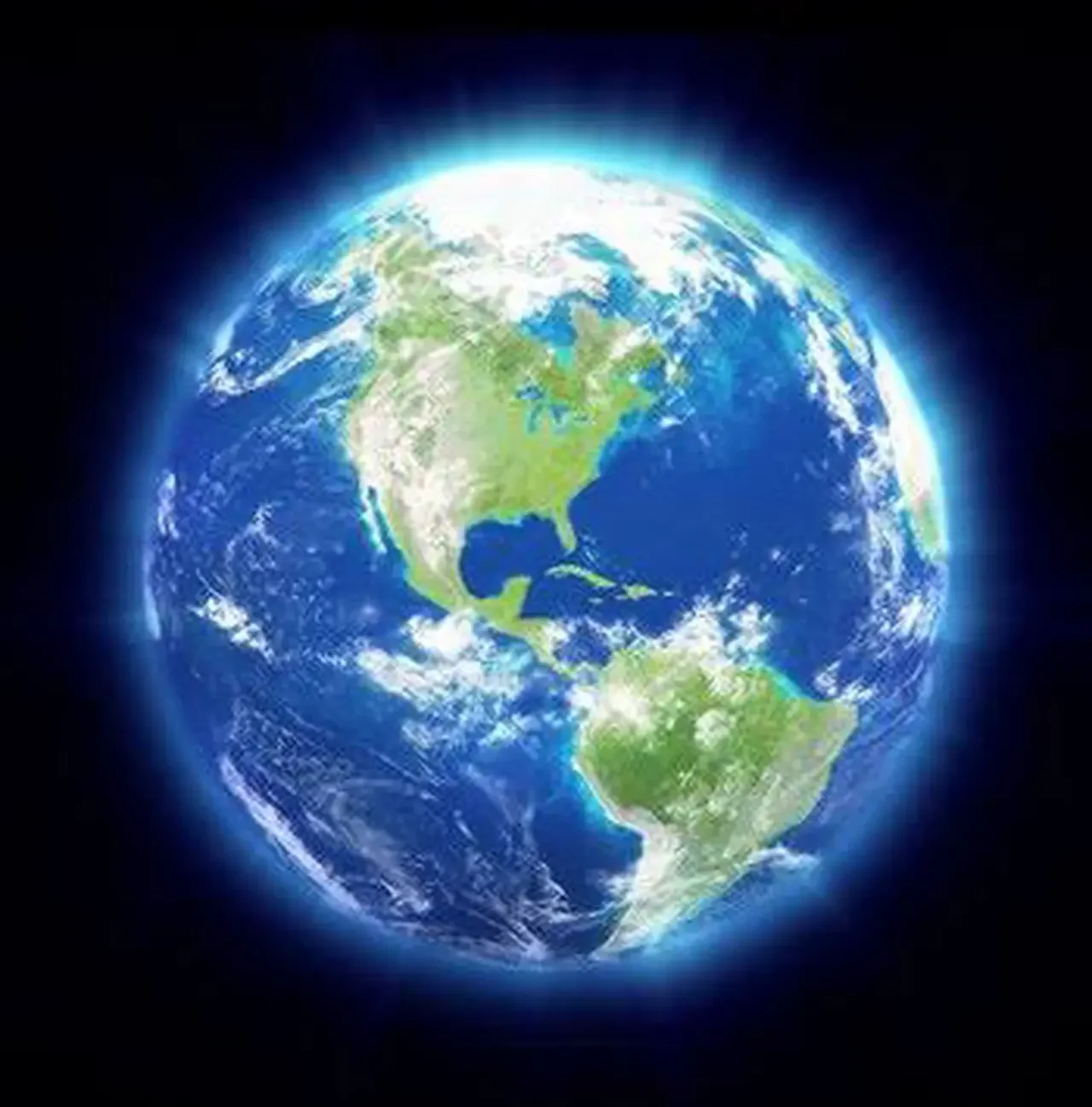
The sun sets on the horizon.
The darkness begins to set.
If not for other areas that are the farthest away
or extremely difficult to reach,
the electricity will be turned on to drive away the darkness.
But not in the small area of 360 square kilometers
that has a population of almost 2 million people.
On the other hand, Gaza is the longest
long-distance conflict zone in the world.
The entry and exit of this area is strictly controlled.
There are high-rise walls.
Israeli forces are inspecting.
The life behind the wall is no different
from being in an open-air prison.
And what is used as a tool for people to accumulate
is electricity.
Electricity is here. Electricity is here.
Sentences that sound like heaven
are quickly sent from house to house.
People get up in a hurry to do the activity next door.
The cool breeze blows back.
The phone screen is brighter again.
Cell phones have been kept alive
for many hours.
This is the northern end of the Gaza Strip,
the place where electricity is during the golden hour.
And everyone knows that they have to hurry
before the electricity goes out again.
It's been many years since the residents here
have electricity that only lasts 3-4 hours a day.
We have to hurry.
We have to wash.
The electricity goes out.
We have to wait.
We have to hurry.
Sometimes we throw it away.
Sometimes we leave it.
We have to wash.
We have to wash our hands.
Not only does it affect the way of life of the residents,
the electricity that is used is limited
and causes the business in the area to stagnate.
Mamut, the owner of a laundry shop in the Gaza Strip,
has no time to work.
It depends on the electricity when it comes.
Once, while taking a break with the family,
as soon as the neighbors came to say that the electricity had come,
Mamut hurried back to the shop
to finish the laundry.
Sometimes the electricity comes back in the middle of the night
and Mamut has to sleep,
because it's better than losing customers.
Sometimes the electricity comes in the middle of the night.
Last time it came at 3 a.m.
The schedule was 3 hours, 24 hours a day.
It came from 3 a.m. to 6 a.m.
3 a.m. to 6 a.m.
3 hours, 24 hours a day.
What do you want to do?
I want to work more to satisfy the customers.
The life that depends on the electricity of the people here
is an abnormality that has become normal.
Gaza Strip is a small area
close to the city of Samut Songkhram,
located next to the Mediterranean Sea in Israel.
Although it is small,
it is one of the most densely populated areas
with more than 1.8 million people living in Palestine,
mostly women and children.
However, Gaza Strip is a self-governing area
under the control of Egypt.
But the victory of Israel in the Six-Day War in 1967
changed the status of this land.
In 1917, after the Ottoman Empire lost to Britain
in World War I,
Palestine and the land in the Middle East
fell to Britain.
A group of Jews in the Zionist organization
who were determined to re-establish the original foundation
according to the covenant,
used money and propaganda to let Britain
give the land of Palestine to Ton.
At that time, Palestine already had an Arab resident.
When hundreds of thousands of Jews
moved to establish the foundation of the house of the Palestinians,
what followed was a conflict between the two nations.
In 1947, Britain submitted a problem
to the International Human Rights Organization.
As a result, half of the land was divided
among the dissatisfaction of the Arabs.
The next year, the country of the Jews
was established on the land of Palestine
in the water of Israel.
The Arabs fought the war for the land,
but lost and lost some of the land
that the International Human Rights Organization
had designated as the territory of the Palestinians
to the Jews.
20 years later,
the Palestinians, together with the Arab nations,
invaded the Jews' stronghold in the Six-Day War.
They lost again,
and the Gaza, West Bank, and Jerusalem
were taken by Israel and besieged until today.
At Gaza, the power went out again,
and the border was besieged by a dark night.
The Mammoth stopped working.
There were only a few shops left
that could still operate because of the power cuts.
It was time for many people
to find money to feed their mouths and stomachs.
For Abdullah Sakud,
a 70-year-old man,
his father's respiratory disease
caused him to have to use a respirator
every two hours.
Gaza needs regular electricity,
so I had to look for an alternative.
I found an alternative
with a very high cost
compared to the economic situation.
The Hajj needs to continue
to have electricity
in the house for 24 hours.
In the Gaza Strip,
most people were born here.
Some were forced to emigrate
after the 1948 Arab-Israeli War.
The Israeli occupation
caused the people here
to lose their jobs.
They were poor
and had to wait for help
from the international organizations.
When life goes on,
electricity is an expensive tool.
What you see is the life
that is connected to electricity.
It's so bright
and clear
that you can see it from outside the world.
This satellite image
shows the arrival
and use of electricity
that reaches almost everyone
in almost every area today.
The average consumption of electricity
in the Gaza Strip is limited.
According to a report
by the World Bank,
many people in many countries
still can't get electricity
because they live far away
and are poor,
especially in the south of the Sahara
in Africa,
where less than half of the population
has electricity.
But there is no place
like the Gaza Strip.
People here can't get electricity
because they have to pay
a high price for electricity
that costs up to 50,000 Baht
per month
to maintain the family's business
that has been going on
for more than 40 years.
The story goes that
the electricity went out
before it was fully charged.
The electricity went out
after three or four hours.
Right now,
I have electricity
for one kilometer.
But the electricity that went out
this time was caused
by the people's anger.
In the outskirts of the Gaza Strip,
in the north of the Gaza Strip,
a group of protesters
walked along a dark road.
The chaos
caused the Hamas
government to announce
that they will bring electricity
back to the people
by importing fuel from Egypt
to Gaza.
For more than 10 years,
the Hamas and the Palestinians
have been stuck in the so-called
Gaza Strip,
with Israel as a barrier.
In the 1960s,
a number of Palestinians
formed the Palestine Liberation Organization
or PLO
to oppose the establishment
of Israel.
After the defeat in the Six-Day War,
the PLO continued to fight
by bombing,
shooting, and killing.
Israel replied
by sending planes
to the Palestinian territory
and sent secret agents
to deal with the PLO.
The war between the Jews
and the Palestinians grew.
In 1972,
the United Nations
entered into a ceasefire
with the Oslo Accords in 1993
which resulted in the Palestinians
being able to set up their own borders
in the Gaza Strip
and the West Bank.
However, this peace
was not satisfactory for the Jews
and the Palestinians.
At that time, the Hamas
and the Palestinians
gradually established themselves.
In 2005,
the ongoing peace
resulted in Israel withdrawing
its military forces from the Gaza Strip.
Analysts say
the PLO was too lenient
with Israel in many areas
resulting in the Hamas
having an impact,
especially in the Gaza Strip.
The defeat of the Hamas
was unsatisfactory for the US
and Israel
because the Hamas
was a group of extremists.
In 2007,
the conflict between the Hamas
and the Israeli forces
in the Gaza Strip
resulted in the death of many Palestinians.
The Hamas
held Gaza as a stronghold
while Israel used a surrounding
to restrict water,
food, medicine
and energy
to force the Gaza Strip
to rise up against the Hamas.
We are accepting
these first doses
of fuel
that is going to the station
so that these caravans
of fuel
can supply our people
in the Gaza Strip.
Caravans of oil
from Egypt
are moving through the Gaza Strip
to the Gaza Strip.
The oil is coming
from the Hamas
to the Gaza Strip
after a power plant
that was shut down
due to fuel shortages.
This is a common problem
when later on
the Israeli forces
attacked the Gaza Strip's
power plant and water supply.
The power was cut
due to the power plant
that was shut down
yesterday.
The problem is that
it will be multiplied
and the Gaza Strip
will be in danger.
The electricity is back.
The Gaza Strip's life
will be saved.
Soon, the fuel will run out
and the caravans
will come back
like a movie.
In fact, the Gaza Strip
has a main line
that is connected
to Israel.
The electricity
of 120 megawatts
or 1 in 4
is sold
for $12.6 million.
This is the story of
Prime Minister Mahmoud Abbas.
But sometimes,
it becomes a political issue.
Once a month,
Abbas stops paying
and cuts the electricity
in Gaza
to force the Hamas
to give up.
Today, the Gaza Strip
is no different
from the power plant
that was shut down
Leaving Gaza alone
is a war crime
when innocent people
have to suffer.
Closed-off life
is a life without food,
water, energy,
and freedom.
But the most painful thing
is not knowing
when the collective punishment
will end.
Just like other 8-year-olds,
Rora Hussein likes to watch cartoons.
When the light from the TV
turns off along with the light,
she is not only sad,
but also afraid of the darkness.
Today,
Rora doesn't have to feel that way
after her father brought
a solar cell panel
to the back of the house.
At the end of the day,
we had 8 hours of electricity
and it was on all night.
We were afraid
because it was all dark.
Then,
my father brought
a solar panel
and we had electricity.
The price of the solar panel
makes it even more expensive.
The energy from the sun
is a new way
to bring the light
to a faraway place,
even in the Gaza Strip.
Due to Israel's lockdown,
even though many houses
have electric generators,
the cost of a solar panel
is not cheap.
With a price of less than
US$3,000,
a solar cell is a more
cost-effective investment.
Moreover,
it gives many lives
a chance to survive
and grow.
This is the nursery
of the Al-Nasir Hospital.
These little babies
are born prematurely
but their lives
are still in danger.
In the middle of a fierce
battle between Israel
and Palestine,
the electricity here is out.
Many times, the electricity
is out for 18 hours.
The solar cell project
was established
with the financial support
of a charity in England.
The electricity was cut
more than 12 hours
and we spent 24 hours
supplying the nursery
with electricity
and running all the devices.
Honestly,
this is a huge loss
for us.
450 megawatts
is the amount of electricity
needed in Gaza.
But today, the electricity
from Israel and its
power plants
produces only 250 megawatts.
With a country
in the middle of a war,
the solar cell is a hope.
According to the Palestine
Energy and Electricity Act,
Gaza will install
more solar cells
in 2020 to produce
120 megawatts
of electricity.
The sun will be the first
source of electricity
for Gaza.
We hope that
in 2020,
the production of
solar energy
will reach
only 20%.
Therefore,
it's not easy
to get to the solar cell.
With Israel's lockdown,
it's difficult to
transport the equipment
to Gaza.
The orange light
illuminates Gaza's
many power plants
from the air strikes.
This is the second time
Israel has attacked
Hamas' stronghold in Gaza.
On the Gaza side,
Israel's drone
was able to intercept
an attack.
The fight between Israel
and Palestine is back.
After Benjamin Netanyahu,
the Israeli Prime Minister,
announced that he is preparing
to build a new West Bank
if he wins the election.
The plan was rejected
by the Arab world
because Netanyahu's territory
is home to more than
65,000 Palestinians.
In the midst of the conflict
between Israel and Palestine,
the people of Gaza
have to fight to survive.
The lives and destinies
of the people of Gaza
are partly dependent
on Israel.
No matter who takes the leadership,
in Gaza,
things may not change much.
Life will continue.
It starts when the lights are on
and ends when the lights are off.
But the worst part
is that the brightest light
on this land
turns into a flash of light
or an explosion from the attack
from the other side of the wall.