
ExclusiveReggie Littlejohn: We Need to Expose the CCP Brutality and Free Chinese People
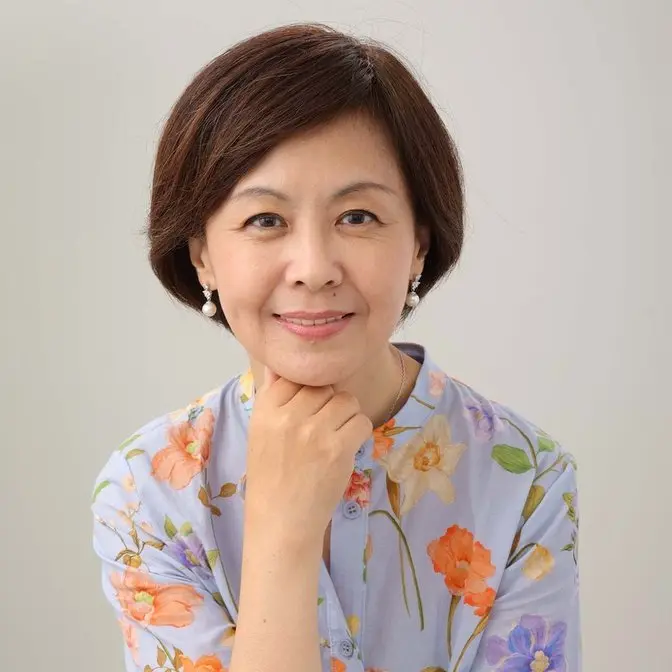
6 Video Views·Nov 1, 2023
Reggie Littlejohn was a litigation attorney in the 90s and got to learn about the CCP’s brutal forced abortion methods when she helped a Chinese client to apply for refugee. Later she became a human rights advocate and helped many Chinese victims and dissidents through her organization: Women’s Rights without Frontiers.
In this amazing interview, Reggie shared about her work to expose the cruelty behind CCP’s One-Child policy, her efforts to save the blind Chinese activist Chen Guang-cheng, her transforming experience working for Mother Teresa and some of the most rewarding moments during her years helping free the Chinese people.
Hi, welcome to Focus Talk.
Today we're going to have a conversation with none other than Ms. Reggie Littlejohn,
founder and president of Women's Rights Without Frontiers.
Ms. Littlejohn has dedicated her effort to oppose and end the Chinese Communist Party's
forced abortion policy in past decades, and has led an international campaign to free
the blind activist Chen Guangcheng.
Hi, Reggie.
Great to see you.
Thank you for coming on to my show.
Oh, thank you for having me, Jenny.
It's a great honor to be here.
Thank you.
So we'll dive into your very rich experience.
We'll start with the forced abortion policy in China.
Now in past decades, the Chinese Communist Party carried out forced abortions under the
one-child policy, and in China we have heard a lot of horrific stories about that.
However, I think those stories were rarely known to the Western world until people like
you who exposed them to the outside world.
So tell us, how did you get involved with exposing the cruelty of CCP's one-child policy?
Well, I'm an attorney.
I'm a graduate of Yale Law School, and I was practicing law in the San Francisco Bay Area,
and I was asked to take on an asylum case of a woman who had been persecuted for her
religion, persecuted as a Christian, and also forcibly sterilized.
So this was in the mid-90s, and this woman was a very small, very delicate, very...
She was so beautiful, she was like a doll.
And they literally dragged her out of her home, screaming and crying.
They held her down to a table.
They cut her open, they tied her fallopian tubes without any anesthesia, and she had
chronic back pain, chronic abdominal pain, and chronic migraines, I believe, for the
rest of her life, at least up to the time that I was representing her for asylum.
And so that's when I found out that the narrative that the Chinese Communist Party was pushing
out their propaganda that the one-child policy was voluntary.
That's just a big, fat lie.
That's how I found out that it was enforced abortion, forced sterilization, and even infanticide.
So Reggie, I know you've done a lot to expose the cruelty and how that the one-child policy
in China was absolutely not volunteer.
And I know that you have testified in front of Congress, the EU.
So tell us a bit more about your efforts in exposing that.
Well, in the beginning, again, I was very fortunate that another organization, the China
Aid Association, gave me a document that came from a man inside of China.
And my understanding is that his wife was forcibly aborted very late term.
And they were so shattered by this situation that he basically made a decision that he
didn't care what was going to happen to him.
He was going to expose this.
So he went around to the villages around his village and photographed and documented horrific
late-term forced abortions, people being beaten with hoses because they were a couple days
late for their cervical or their pregnancy checkup.
And so that document came into my hands.
We got it translated.
And that was the original document that I testified about in the Congress.
And that was what just basically ended the Chinese Communist Party's narrative of saying
that everything was voluntary.
Because there's somebody, Steve Mosher, in the past had demonstrated the coercion.
I think this was in the 80s.
He was the first one who came out about this.
But by the time I came along in the early or the mid-2000s, China had again sort of
lured everybody into thinking that it was voluntary.
And boy, did that document show that it was not voluntary.
And in that document, it also had a case of a woman lying on the bed with her baby, forced
aborted baby next to her, right?
Right.
So this woman, she was pregnant without a birth permit.
And they just grabbed her off the street, forcibly aborted her baby.
And then one of the medical personnel, I believe it was actually the doctor, came in holding
her baby and said, you need to pay for this abortion.
So they're forcing her to pay for her own forced abortion.
And she said she didn't have any money.
So they just laid the baby right down next to her in the bed.
And yeah, I have photographs of this poor woman and her forcibly aborted baby.
It's unbelievable what they do.
That was terrible.
So what were people's reaction when you told them about the story in front of Congress
or you?
Well, they were outraged.
Another one was in 2012, our organization was the one that broke the news of the late
term forced abortion of Feng Zhangmei, who also had a picture of herself with her forcibly
aborted baby next to her in the bed.
And that created a firestorm of controversy.
And the European Parliament actually went to the extent of passing a resolution condemning
forced abortion in China.
And I don't think that would have happened without Feng Zhangmei.
And these women are incredibly brave because this is why it's so difficult to get information
out of China.
If you do something like that, if you are the victim of an extreme human rights atrocity
and you go and get it out to the Western press, you're never going to hear the end of it.
You and your family are going to be heavily persecuted.
And so when these people do make the effort to get the information out, I feel we owe
it to them to do whatever we can to help their message get out and to help end these
atrocities.
Absolutely.
Then I know you also extend your work to help babies in China, and you call it Save a Child
campaign, right?
Tell us a bit about it.
Save a Girl.
Yeah.
So we have a Save a Girl campaign in China, and we are the only organization in the world
that has a network of field workers on the ground inside of China that is actively saving
baby girls from sex-selective abortion or abandonment or extreme poverty.
The field workers are incredibly brave.
They are able to go to these women and make sure that they will get these monthly stipends.
What we do is we go to the women and we say, we understand that you're pregnant with a
daughter and that your husband and your mother-in-law are trying to get you to abort or abandon
this baby girl, but we say congratulations on your daughter.
Girls are as good as boys, and we will give you a monthly stipend for a year to empower
you to keep your daughter.
And so these monthly stipends are the Chinese equivalent of $25 a month, and this money
enables the woman to go back to her husband and go back to her mother-in-law and say,
I can't abort.
I can't abandon this baby girl.
Look, she's a lucky girl.
She's already bringing money into the family, and we've saved hundreds of baby girls this way.
That's amazing.
Now, this effort, while it was going on, did the Chinese government try to block it, or
were you impacted by any way from the government?
People say to me, so what have your encounters with the authorities been like?
And my response to that is we have not had any encounters with the authorities.
Wow.
So, yeah, I mean, our field workers know how to fly under the radar screen, and they are,
they've never been caught.
We've never had a single encounter with an authority, and I think that that has a lot
to do with prayer.
I mean, we cover them with prayer.
We pray that God will hide him under the shadow of His wing, and so far, they have not had
any encounters with the authorities.
Yeah.
You told me a story earlier about the first time you have encountered with the CCP's brutality
in Tibet, right?
Tell us about the story.
Okay, so this was in 1987.
My husband and I went to Tibet because it was open to individual travel, meaning you
could just go to Tibet and go wherever you wanted.
That didn't last long, okay?
Right now, if you go to Tibet, you have to go on a very carefully choreographed trip
that's controlled by the Chinese Communist Party.
So we went on an expedition to Western Tibet, and we actually circumambulated Mount Kailash,
and that's its own story.
There's so much that happened on that trip, but we were gone from Lhasa for several weeks,
and when we got back, the city was under martial law.
So when we had left, the Jokhang Temple, the Potala Palace, all of the monasteries and
the temples were fully functional and vibrant with people of faith worshipping their god,
their god.
So when we came back, they were just empty.
And so what we heard was that all the monks had either been shot or detained, and the
city was basically under martial law.
So that was very shocking to us, and of course, the Chinese Communist Party was desperate
to get us out of Lhasa because they wanted to crack down more, and they didn't want any
Western eyes seeing what they were doing.
So they're trying to force us to leave.
We wanted to go to Nepal because we wanted to go trekking in the Himalayas.
They were trying to force us to fly from Lhasa to Kathmandu, which are very close, or like,
I don't know, Boston and New York.
I mean, I don't know the exact distance, but they're pretty close.
But they're trying to force us to fly from Lhasa to Kathmandu via Beijing, which would
have, that would have been the end of all of our money.
We couldn't afford to do that.
So I just said no, and we just had like a struggle with them for four days, and they
finally said, okay, have it your way.
You can walk.
And so we hired a four-wheel drive vehicle to the foot of the Himalayas, and we walked
out on the same road that the Dalai Lama took when he was escaping from Tibet.
And it was dangerous.
I mean, there were a lot of rock slides, and people have died on that path, but that's
how we got out between Lhasa and Kathmandu.
And I, at that time, I made a vow, and I just said, if I ever have the opportunity to tell
the world the truth about this, the Chinese Communist Party, I will do it.
Wow.
I think your vow has power, and you're doing exactly what you vowed to do, and you certainly
saw at the time what the Chinese Communist Party could do to its people.
So fast forward to later years.
I know that during your years, during the process when you helped to expose the China's
one-child policy, you got to know the blind activist Chen Guangcheng.
You led a four-year campaign to free Chen Guangcheng.
Now tell us, maybe just quickly, how did you get to know him?
Well, I didn't get to know him.
I mean, I didn't meet him until after he came to the United States.
So this has to do with, I left the practice of law on a medical leave of absence, and
I was very, very sick.
And during the time that I was very, very sick, I was doing a lot of reading, like I
couldn't stop reading about China and about the one-child policy and all the human rights
atrocities there.
I just, it's like I was obsessed with it.
And in the course of my reading, I found out about Chen Guangcheng.
And in my first governmental testimony, which was at the European Parliament, I think it
was in 2008, 2009, I raised his case and just didn't stop advocating for him until he set
foot in the United States.
Wow.
What, what touched you?
I mean, there, there were so many dissidents in China who were being persecuted.
Why him?
I don't, I don't know.
I think, I think part of it was that he was working on my, on the issue I was working
on.
So, you know, he had done a lot of things, but the thing that got him into real trouble
was when he exposed the fact that I think it was 230,000 forced abortions and forced
sterilizations in Linyu County, which is where he was in one year.
And when he went public with that, that's when they just came crashing down on him and
on his family, like a ton of bricks.
And I just was so, gosh, I guess I was in awe of his courage, the awe of his courage.
Because it's one thing people say to me, oh, you're so brave.
You know, I'm not brave.
I'm, I'm in a, you know, I am speaking from U.S. soil.
I have freedom of speech.
The people who are really brave are people like Chen Guangcheng, his wife, Yuan Weijing,
and people who are on Chinese soil, standing up to the Chinese Communist Party.
And that's what he was doing.
And his situation just was, just broke my heart.
And I just said, you know, I, I'm not going to stop until he's free.
Well, you know, I, I feel you, you probably have some kind of a predestined relationship
with China and Chinese people.
And you, you certainly have done a lot.
I mean, to me, those, that, that, that's courage.
I, I wanted to ask you what motivated you.
But before I ask you that, I wanted to, I have to ask you this one more thing.
Because this is also an amazing thing I want our audience to know.
That you have helped the Chinese dissident, Zhang Lin.
Now, we don't have time to go into Zhang Lin's story.
But while Zhang Lin was detained in China, you managed to get her two daughters out to
the United States.
And you even raised the younger one, Annie, in your home.
Ever since she got here, that was in 2013, she was 10 at the time.
Now, she's 18.
Now, raising a girl and embracing her to be part of the family is a major commitment.
What made you to make up your mind to do that?
Well, two things.
Number one, Zhang Lin is incredibly brave.
He's another one of these people just to be in awe of.
You know, and, and I, we, we don't have time to get into his story.
But he has been jailed and tortured repeatedly.
And every time he gets, he got out, he would go and again, expose more atrocities.
Knowing that he was going to get jailed and tortured again.
You know, so it, and, and so me, so he, so when he saw he's going to get jailed and
tortured again, he got word out to me through a mutual friend of ours saying,
look, could you please, you know, take Annie in the United States?
You know, she can't lead a normal life here.
It seemed to me the least I could do for this incredibly heroic dissident would be
to take his daughter and help him by raising her, you know, in, in our home and
giving her a normal life.
And that's what she got here in our home.
She was here between ages 10 and 18.
And she was not being chased by the CCP.
She was not being surveilled, harassed.
You know, she's called China's youngest prisoner of conscience.
And so, so, and she was able to dream dreams and just be a normal kid.
And she even played piano at Carnegie Hall, right?
This is the amazing thing is when she came to our home, we had, have a piano and
she just started sounding out tunes just with one finger and she did it over and
over again.
So I finally said to my husband, why don't we get her piano lessons?
You know, she doesn't speak English, so she can't do any schoolwork, but music is
a universal language and let's get her a Mandarin speaking piano teacher,
just so that she'll have something positive to do with her time until she
learns English.
And little did anyone know what a blazing talent she has.
And within three years, she won a competition to play it at Carnegie Hall.
So this, this to me is sort of symbolic of the, the, the girls that are being
aborted and abandoned in China, their beauty, their talent, their love.
Every one of them is a pearl, a pearl of China.
Yeah, and they're able to shine in America, in this land of opportunity and
land of freedom.
So what motivated you to do so many, so many things for people you have not met?
I have to ask you this question.
Well, I'll say this.
With respect to the one-child policy and the forced abortions, I had a couple of
miscarriages.
So, I mean, that's obviously very personal, but I had, I, of course, I had
never, I had never experienced the violence of a forced abortion.
But I had experienced losing babies that I wanted.
And so when I heard about the women who were being forcibly aborted in China or
pressured to abort their baby girls, it hit me on a gut level that I don't think
it would have if I had not suffered those miscarriages.
And in a lot of ways, you know, I feel like my, my mission in China is in honor
of the two babies that I lost.
But I also feel that, that in some ways that God blessed me with Annie and her
older sister, Rita, you know, that I lost two babies, but he gave me Annie and
Rita.
So God is good.
Wow.
I know you had the rare opportunity of volunteering for Mother Teresa's
Missionaries of Charity for six weeks.
So what was that experience like and did it inspire you for your future work?
Well, Mother Teresa is, was an incredible saint and we could do a whole episode
just on Mother Teresa.
I have so many stories because she was trying to encourage me to become a member
of her order.
And I probably would have if I hadn't been married, which is something my husband
and our son don't really like to hear.
But I would have had a very different life.
But, but she did inspire me in my work because she has a home called Shishabhavan
in Calcutta, and that is a home for abandoned babies.
And almost all of them are baby girls.
And she started that home, I understand, when she found a baby girl in a trash can.
And so going in there and helping with those, those Indian baby girls definitely
inspired me as well to want to help the baby girls in China.
Wow.
Tell us a bit more.
What was the experience like?
Like you worked with her for six weeks, right?
Or maybe not with her every day.
But what was the experience like?
OK, you're going to get me started.
I don't know if you're going to be able to stop me.
Oh, OK.
So Mother Teresa was an incredibly loving, humble soul.
So we went, my husband and I went to her home called Mother Teresa Bhavan to volunteer.
She personally greeted us.
She held our hands in her hands.
She made me her apostle of the rosary.
So I was in charge of handing out rosaries.
She called me heartful of love and invited me to join her order.
And like I said, I probably would have if I had not been married at the time.
So she was an amazing person and has had an indelible impact on my life
and in a lot of ways inspired the work that I do as well.
So in short, that was a transforming experience.
Oh, absolutely.
Yeah. Well, you know, I imagine you have
you have probably come across a lot of hardships
during all these years, the work you have done.
But you also probably have a lot of rewards, you know, like Annie's
on Carnegie Hall, you know, moment like those.
So can you share some of those hardships and rewards with us?
Well, I would say that in terms of rewards,
probably two of the most exciting moments of my entire life
were the moment that Chen Guangchen set foot on U.S.
soil, and then also when Annie set foot on U.S.
soil, and then, of course, Annie, Annie,
playing in Carnegie Hall.
So and then in terms of the hardships,
it's interesting because anybody who's a human rights activist knows that
that those those moments of joy
are very few and far between and you have to cherish them
because most of what goes on in your life is what I would call trudging.
I mean, I, you know, I sometimes I lead a very trudging existence.
You know, it's a very small organization.
I'm the only full time employee.
So basically, you know, I do everything from
I mean, I write all my own press releases.
I do all my own social media.
I mean, you just list everything that has to be done in an organization
that, you know, a bigger organization would have a separate person
on all these things.
I do it all.
And there's times I just feel totally overwhelmed.
So that's like the biggest challenge that I have is the feeling
of being overwhelmed and just like I just I can't do all of this.
So but so that's that's the hardest part for me.
But dealing with the Chinese Communist Party,
it's it's not like dealing with anything, anyone else.
I mean, you face the the information blockage, right?
It's very hard to get information outside of China.
You face the cruelty of the CCP
and even some harassment or things like those.
So sometimes do you feel discouraged when you don't see results
like like whatever the outside world do?
It seems like it doesn't change the CCP's behavior.
I believe that what we do does change the CCP's behavior.
You know, they say that it doesn't.
But you talk to Chen Guanchen, you talk to other dissidents
and they will tell you that when there is like a demonstration
on their behalf or a press conference on their behalf in the United States,
they get treated better in China.
And that was one of the reasons that when Zhang Lin was detained,
I went out of my way several times to have Annie and her older sister, Rita,
speaking of Voice of America and Epoch Times.
Probably I don't remember if New Tongue Dynasty did,
but I think they probably did interview them.
And so when he got out, Zhang Lin said that that he was treated better
this time than he had ever been treated in detention.
I don't think that's unrelated to the visibility that we gave his case.
So I don't think it's hopeless.
I actually think that that when we do things in other parts of the world,
including the United States, it does have an impact in China,
even though the CCP will deny it.
Well, it's so inspiring to hear that.
So what do you think are the root causes
of so much suffering in China?
Well, I personally, and this is just my opinion,
my my personal opinion is that the root causes of the suffering in China
is that the Chinese Communist Party
is a brutal totalitarian regime.
And they don't.
Number one, they are not elected.
They just took over.
OK, so there's no social contract between them and their people.
They you know, so so that's that.
And they don't believe in God.
So there's there's this very different approach between, for example,
the founders of our country, the United States and the founders
of the Chinese Communist Party,
where they believe that they are God.
They believe that you don't have a right unless they give it to you.
Whereas we believe that people are created in the image of God.
You know, by by God in his image.
And we believe that we have certain unalienable rights
that a government cannot take away.
So these are diametrically opposed worldviews,
and they lead to diametrically opposed societies.
Yeah, I think I think you're absolutely right.
They think I mean, oftentimes we say they're atheists,
but actually they think they're God.
So basically in China,
people are really suffering.
But it's the Chinese Communist Party regime
that's having all the power and the money.
That actually brings to a very important point,
because the West has often thought that
if they help the China, if they help the CCP to grow economically,
eventually the country will become democratic
or become more free or become more open.
Well, 40 years later, it proves to be absolutely wrong.
So going forward, how do you think the West,
particularly the US, should do about CCP and its
both its threats to the world and its gross human rights violations?
OK, the West has been very naive concerning the CCP.
Appeasement diplomacy does not work.
The nicer you are of them, the more they will take advantage of you.
So like, for example, in the United States, we have a very trusting
and open society.
The Chinese Communist Party will abuse that trust.
They will abuse that openness and use it to their advantage.
And so we need to stop being trusting
and we need to stop being, you know, so open.
So, number one,
because of their horrific abuse of the Uyghurs, which is genocide
and all and many other human rights atrocities, including COVID
and unleashing that on the world and so many people dying,
we need to either move or boycott the Olympic Games.
That's number one.
Number two, the Chinese Communist Party,
their corporations on Wall Street don't have to
disclose the same things that that American and Western corporations
have to disclose.
And so we're taking a big risk by investing in them
because we don't really know what's going on inside of those corporations.
So we should sever economic ties.
And number three, you know, the West believes in science
that we should be sharing and collaborating and everybody should add to,
you know, to the analysis and we're all we're better together.
Well, no, because what China does is they have this military civil fusion.
And any scientific information you give them can go to their military.
We need to cut, you know, cut scientific collaboration.
We need to just cut ties with them because they will use us
in every way that they can.
Yeah, you don't really collaborate with a thief, right?
Or a killer, basically. Right.
Yeah. Right.
So so, yeah, I'm sure that the work you have done
and the work you are doing will help more people to realize
the true nature of the Chinese Communist Party.
Now, you mentioned just now a couple of times
that you founded Women's Rights Without Frontiers.
So this year is its 10th year, right?
The 10th anniversary is coming up.
Tell us a bit more about what are your current focus
and what's your vision for this organization going forward?
Well, thank you for asking.
So we got our nonprofit letter
from the IRS on August 10th of 2011.
So August 10th of 2021 is going to be our official 10th birthday.
And, you know, we've talked about all the things that we've accomplished.
What going forward, we are continuing our Save a Girl campaign.
So we're continuing to save baby girls in China.
We have a Save a Widow campaign where abandoned widows in the countryside
are, you know, who are actually committing suicide.
We are also helping them and saving them.
We have we are we launched an initiative together
with a couple of other organizations to move or boycott the Olympic Games.
So you can find that website at GenocideGames.org.
And I just testified before the United States Congress
on that issue in May of this year.
We also see the way that that that Chinese communist tactics
could even infiltrate the United States through something
through something called the vaccine passport, because we don't oppose
the vaccines, but we oppose having a digital passport that says
whether or not you've been vaccinated because those passports, the digital ones
are the same platform as the China social credit system.
So we have launched a campaign called Stop Vax Passports
.org to stop that as well.
So those are some of our current initiatives that we just started this year.
And what we want to do is help individuals in China be free,
like the baby girls and widows that we're helping,
but also help the Chinese people be free.
I mean, one fifth of the world lives in China.
So one fifth of the world is under the boot of this brutal totalitarian regime.
And the world will not be free until the Chinese people are free.
Yeah, I mean, looking at things happening in China,
it's like watching tragedies repeating again and again, again.
So I think the work you have done and the work that your organization
is doing is so important.
Thank you so much, Reggie, for sharing your experience.
Personal experience and your, you know, all these
thoughts and great efforts with us.
Thank you for giving me the opportunity.
I really appreciate it, Jenny.
Thank you, everyone, for watching Focus Talk.
We'll see you next time.