
獨家地方臉譜系列- 煤鄉故事·菁桐篇
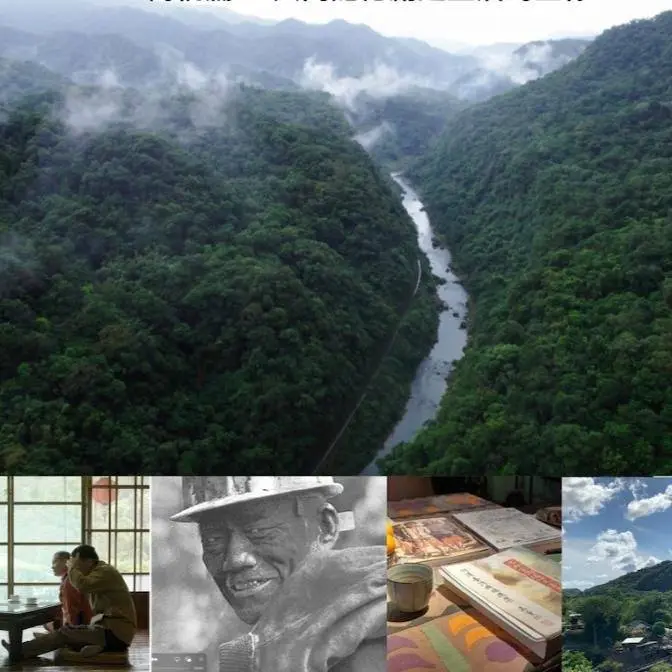
5.1K 觀看·2024年1月2日
台灣美麗風景的背後,有著深厚悠遠的歷史底蘊。 良善與傳統的生活態度,並不因地處
偏遠而消失。 當人們開始反思全球化風潮所帶來的問題,回歸傳統、回歸山林,成了很
多人心生嚮往的事 …… 讓我們從「石碇」出發,一起探索淡蘭古道的歷史人文與美景!
第三集 菁桐篇-- 共同記憶創造生活的坐標
2019-2021疫情期間紀錄片工作者池農深深入平溪山裡;這個在北台灣曾是黑鄉的小鎮,就像所有後工業的國家煤礦被新的能源取代後,礦區裡的城鎮遭受被廢棄的命運,而平溪尤其是菁桐這個當年有「台灣煤」代稱的小鎮最繁榮時曾數千人進出礦業凋零後菁桐小鎮人口只剩下百人。那麼他們又是怎麼因著記憶重新找回昔日的生活樣貌?復興家園呢?......
特此感謝:
台灣原住民歌謠“我們會好的一切都會好好的“
演唱者: 泰雅族 Yukan Yulaw Tranan Wulai
錄音: 舞炯恩
I'm starting to speak now.
After a hundred years, the Qing Dynasty was in turmoil.
After the Jiawu War, for 33 years,
Taiwan was already in the age of Japanese occupation.
The first Pingxi village head, Pan Bingzhu,
discovered coal fields again.
The mines were in good condition and were able to convince the Japanese to mine.
Finally, in the 7th year of the Republic of China,
coal mines were mined again.
In 1918, the Taiyang Mining Company was born.
Back then, the Pingxi area was the starting point for black gold.
The Taiyang Mining Company had a plan to mine,
which led to the development of Pingxi coal mines,
and created the Pingxi Railway.
Therefore, Pingxi has the name of the coal town.
And the high-quality coal of the Jintong city coal mine
is known as the representative of Taiwan coal.
The Jintong town has such a geographical environment.
It has gathered people from all over the world
and has flourished for half a century.
In the early days, when this mine was still being mined,
the Jilong River from this section
was called the Black Dragon River.
It's all black.
It's all coal.
But even though it's all black,
there's still a lot of tin in it.
It's all there.
Because coal itself is not chemical.
From the Japanese occupation to the 60th year of the Republic of China,
these towns have flourished for a century
and created economic production.
After the economic boom in Taiwan,
energy policy has become a necessity.
In the 1980s, the coal mine in Pingxi
officially entered the history
and ended the production cycle.
From 1950 to the 60th year of the Republic of China,
in the 1970s,
this long period of 20, 30 years
was the time when Taiwan's economy took off.
It was the time when the agricultural society
progressed to the industrial society.
At that time, all the energy,
the most important energy,
was coal.
Taiwan's coal provided the important energy
So that period was the most obvious
and specific period
Actually, the reason why there is a gold mine
is because of coal.
A hundred years ago,
it was because of coal.
So basically, the history of coal,
the history of gold is the history of coal.
At the end of the 1990s,
Chen Qingzhong, who was engaged in community planning,
stepped into Jingtong,
an almost deserted small town,
and began his journey
with coal and coal miners.
Because Taiwanese people don't know
that everyone has something to do
Since the Japanese colonial period,
the peak of Taiwan's mining industry
was when the Japanese colonial period
was at its peak.
Because of the need,
the need for industrialization.
The second peak was
in the age of Taiwan's economic miracle,
in the 1960s.
There were two peaks.
These two peaks created
Taiwan's economy later on.
The first was industrialization and modernization.
And then there was
the enjoyment of our generation.
Because it was a natural resource,
Taiwan was very lucky
because it didn't have to
buy anything from abroad,
or buy energy.
It could produce itself.
So you could have the conditions
to develop the economy.
We are all beneficiaries.
But no one knows.
Earlier, in the 1980s,
there was a photographer
who loved this land.
He walked into the mine
and recorded this dark period
This is the grace of God.
Maybe that's how it is.
I just love photographing.
And when I go there,
I focus on photographing.
I really want to photograph.
And what I see, I photograph.
What I see, I photograph.
It becomes a great job.
I don't know what I see,
but it becomes a great witness.
In this way,
Zhu Jianxuan has been traveling
and camping in the mines
in northern Taiwan.
He took more than
7,000 photos.
Today, the miners
who are still alive in Jintong
are countless.
Through a Jintong historian,
Yang Jingcong,
we found Mr. Xu Zhuchuan.
If you look at the jobs
in Dongdu Mine,
I don't think there are many.
I've done all kinds of jobs.
I can make electricity.
I can make stone.
I can dig coal.
At that time,
I was the richest in digging coal.
Digging coal is a scale.
How much do you spend?
There is a rule that
you can't spend more than 40 cents a day.
You can only spend
a little more than 30 cents.
Making stone is a rice.
Making stone,
how much is a rice?
How much is a rice?
Digging coal is expensive.
Digging stone is expensive.
Digging earthenware is expensive.
Earthenware requires
wood.
Wood needs to be transported
to dig coal.
So you have to dig and support.
I only found out recently
that before Juejing,
there was a place called
Xianjing.
Xianjing drill.
Xianjing drill is very important.
Before Juejing,
you had to use
a drill
to drill 7 meters deep.
Basically, you have to drill 7 meters deep.
Because
in some rock walls,
between the coal
and the coal mill,
a lot of gas will be stored.
Right, the gas.
He said that
before Juejing,
you have to dig a hole
to drill 7 meters deep.
So that the gas will come out.
After it comes out,
you can start drilling.
After drilling,
you can bury the coal.
Then,
1, 2, 3.
Explosion.
Then,
open a hole in the wall
and start drilling.
If there are a lot of gas,
you can only drill 1 meter deep
You can only drill 1 meter deep every day.
In other words,
the hole has to be 6 meters deep
for the gas to come out.
So every time,
you can only drill 1 meter deep.
Keep going.
Keep going until you see the coal.
Juejing, you have to dig until you see the coal
to let the coal go in.
The coal goes in from the bottom.
It goes down from the bottom.
The big one goes down from the bottom.
It's 800 meters.
It's 2,000 meters.
Once it goes down from the bottom,
there is a lane here.
Then, there is a lane here
Then, there is a lane there.
In Taipei, there are people who say that they have to dig a hole.
Because it takes a few hundred people
He said that
there are three or four hundred people
Under the dark ground,
everyone knows that
it won't be messy,
and it can't be messy.
Otherwise, everyone will die.
Every time a miner digs a hole,
he still has unfinished work to do.
People say that
the first thing to do
is to go to the pit field
and pick the pit wood.
Why do they have to use it the next day?
Tomorrow,
like in Juejinggong,
every time they dig a hole,
they have to put the stone slab
and the rock slab
together first.
Most of them are from Taichung and Hualien.
Because they can push the car inside.
Without them, they can't do it.
It's heavy and dangerous.
To push an empty car in,
sometimes it takes
about 1,000 meters.
At that time,
I thought that
my life was worthless.
I can't say anything
about that.
My life is still good.
People who make stones
are more prone to pneumonia.
Because the stone
has no layer,
it will go into the lungs.
So people who make stones
have more lung diseases.
People who make coal
have less lung diseases.
Because the coal has no layer.
If you cough,
it will come out.
Sometimes if you cough,
the whole group will come out.
But they don't have a layer.
When they come out,
there is only one group.
People who make stones
have 10 lung diseases.
10 miners,
11 of them must have
gastrointestinal diseases.
It's very serious.
No one can avoid it.
If you stay in the pit
for more than half a year,
no one can escape.
At first, I asked them,
isn't it useful to wear a mask?
Why don't you wear a mask?
They laughed at me.
Foreigners speak foreign languages.
Wear a mask?
Wear a mask in that place?
The mask is full of
dust.
Dust from the rocks.
Every two or three times,
the mask is covered
with dust.
The mask is covered with dust.
How do you breathe?
They said, how do you breathe?
They took it off in less than three minutes.
It usually takes 10 to 20 years
for it to explode.
It's very pitiful.
So,
every year,
the factory
needs to test
X-rays.
From time to time,
I was really lucky.
You know?
I took this picture.
Zhu Jianxuan took this picture
and posted it on the announcement
column of the mine.
The miners' X-ray tests
were full of secrets
and the number of patients
with lung diseases.
This is a historical witness.
The location
is like a horseshoe.
The mine is down here.
When it comes down,
it's all gathered together.
There's a truck underneath.
The mine is down here.
When it's full,
it's all gathered together.
At that time,
I was at the top.
There were about a dozen of mines.
I was at the top.
At the top,
the wind
was so strong
that I couldn't stand it.
I couldn't stand it,
so I went to dig for a day.
The next day, I didn't go.
The next day,
I dug a hole
and buried the mine.
I buried it.
I joined the industry
I started in the 1950s
and specialized
in mine safety.
The most impressive thing
was the two disasters
in 1973 and 1969.
Two explosions and one fire
killed 270 people.
That was the most impressive thing.
The other one
was on March 21, 1969
in Sijiaoting.
There was a mine
called Yun'an Mine.
The former director of the mine
recalled the mine disaster.
He said he hadn't been home
for more than a week.
When he was tired,
he would sleep on the table.
The rescue work
mobilized the navy to dig.
The rescue work
took half a year.
In the end,
they found 32 piles of bones.
Those days
were the most painful
and impressive
in his career.
In fact,
when I interviewed
the victims,
the families
and the victims'
relatives,
I was really worried.
You know
when a man dies,
it's a big blow
to a woman.
Especially for a
poor family,
they lost
their reliance.
They said
if you want to do it,
you have to do it.
If you want to do it,
you have to do it.
If you don't,
it's too dangerous.
Only 11 people died.
If you don't do it,
11 families will die.
It means
if you want to do it,
you have to do it.
If you don't,
one family will die.
If I don't do it,
the whole family will die.
In fact,
the role of women
is very important.
Why did I say
women are the most important?
You know,
after 20 years of mining,
many families
rely on women.
Because
Taiwanese coal is
the best coal.
On average,
two miners die
every year.
On average.
The casualties are not counted.
So will there be
some single mothers
or even
only mothers
who support this family?
So mothers are actually
very important.
In fact, in the early days,
even women went in to mine coal.
Later I heard
that Mrs. Jiang came
and found that
it was dangerous for miners,
so parents went in.
If it happens again,
parents will disappear.
That family will feel
even more sad.
That's why women can't go in.
But women workers
can't work.
As Zhou Chaolan said,
Chaolan said,
it's the government's fault.
But the government's fault
is that sometimes
they don't take care of
or understand
the families of the victims.
Every time I give a speech,
I always say
that they don't ask much
and silently say
half a day every night.
Chaolan said to me,
what half a day?
A whole day.
It's really a whole day.
Finally, in 1975,
the stone pit was closed.
In 1988,
the bronze pit was also closed.
At that time, the stone pit was not closed.
I think it's a pity
that the stone pit was closed.
But if you want
to restore it now,
it's a big project.
It's a pity to close it.
Otherwise, you can build a construction site now.
You can go down and see.
Even when I grew up in the mine,
they were all miners.
Do you know
that the whole way of life
is very similar
to that of the villagers?
So they have a feeling
that their life
is very similar to that of the villagers.
So their life in the village
can be quickly integrated into one.
After all,
for them now,
they still miss that life.
Because that life
takes them
out of a very bottomless,
very poor environment
to train a very tough
will.
For example,
after they leave,
although sometimes
they are not very depressed
but in the process of their life,
they are more likely to be under great pressure.
For them,
this is the strength
that the miners
bring to them.
These children
really make me miss them very much.
It's great.
Especially, you know,
I really like to hang out
in the palace.
It's a great pleasure
to take pictures of their eyes.
Especially when the eyes of those
who have been around for a long time
are looking at your camera.
When will the chrysanthemums be in full bloom?
Except during the Chinese New Year holiday,
the chrysanthemums will be in full bloom
because there is no flowering
or washing of the chrysanthemums.
Besides,
when someone is sick
or when a family member
is sick,
everyone
has to put down
their work
to help the sick.
At that time,
we had nothing,
but the only thing
we cared about each other.
When we were young,
we had nothing to play with.
The Chrysanthemums River
is our swimming pool.
The Chrysanthemums River
is our swimming pool.
The land is our courtyard.
Yang Jingcong recalls
the time when the chrysanthemums were young.
In 1921,
the chrysanthemums were electrified.
Along the streets of the chrysanthemums,
there were historical events
that were related to each stage.
In addition to Chinese,
there were English and Japanese.
The history of the place,
including how the chrysanthemum pit came,
when the railway was built,
when the electricity was used,
and so on.
When people enter the street,
there is the history of the town.
It is also a reflection of that era.
No wonder this is the favorite place
There are still traces of the railway
and the fish in the black box.
Many places come here to learn.
It can be seen that
our designer's vision
Yang Jingcong always
proudly told visitors
Yang Jingcong always proudly told visitors
Jintong, a small town
called Taiwan Mei,
has a lot of historical sights
and buildings from the Japanese colonial era.
has a lot of historical sights and buildings from the Japanese colonial era.
Now it has been cut off
and buried in the wild grass.
There are only three or four
public baths left.
The most regrettable thing is that
the Japanese cadres who lived here
have all been demolished.
At that time, the Japanese
might have taken this place
as their second hometown.
In the two buildings,
no matter which angle you look from,
you will see a mountain view
similar to Mount Fuji in Shurangjian.
you will see a mountain view similar to Mount Fuji in Shurangjian.
Maybe it's because of the private homes.
I always want to move the scenery of my hometown here.
The coal mine that was passed down from generation to generation
was transported to Japan.
There are cherry blossoms in the city.
This is recorded in the
mining history of Pingxi District.
Cherry blossoms.
Imagine that there are cherry blossoms
along Ganzhen Linxi, Pingxi,
and Jilong River.
This is the sightseeing resource
that can be achieved by building a bicycle path.
This is the sightseeing resource that can be achieved by building a bicycle path.
The mountain is surrounded by water.
The white clouds fly.
The cave is open.
Ancestors come and go.
The stone mirror is in full bloom.
This is a poem by
the poet of Wantang, Cao Tang.
In 1921,
the Japanese governor,
He Lai Zuo Lai Tai Lang,
carved the words on the south entrance
of the Cao Ling Tunnel in the early morning.
The words are engraved on the stone wall.
The north entrance has the word
Zhitianxian,
which was mentioned by the Minister of Railway.
The meaning of these Chinese characters
and the stone mirror
is the common historical memory
of people who lived and fought
on this island.
The history of mining industry
seems to be a necessity
The decline of Jin Tong Town
is also the fate of all
post-industrial towns.
It is not unique to Taiwan
How did the Jin Tong people
create the second spring of this town?
When these people
who used to be strangers
were scattered,
Jin Tong was almost forgotten.
However, there were some people
who witnessed the prosperity and change
and thought about
how to rebuild their homes.
There were those who stayed here
and those who left
to study abroad.
Just a few years ago,
they rebuilt Jin Tong.
Now Jin Tong has its own
lifestyle museum,
village history,
old streets,
railway station,
and common memories
to create the coordinates of life.
The action of rebuilding homes
finally brought the second spring
of the town,
or even the third spring.
We spent a whole year and a half
to explore the people's scenery
and past history of Pingxi Town.
We learned that
apart from its unique reputation
it is also the source of water
in Jilong River.
The water that Taipei people drink
comes from here.
There are abundant plants,
birds, and animals here.
Jin Tong is located
20.7 square kilometers
and is larger than Yonghe and Banqiao.
It is the breath of Taipei
and the backyard of Taipei.
How can we not cherish it?