
Story 16 a Few Crusted Characters: the Winters and the Palmleys
STORY 16 OF LIFE'S LITTLE IRONIES
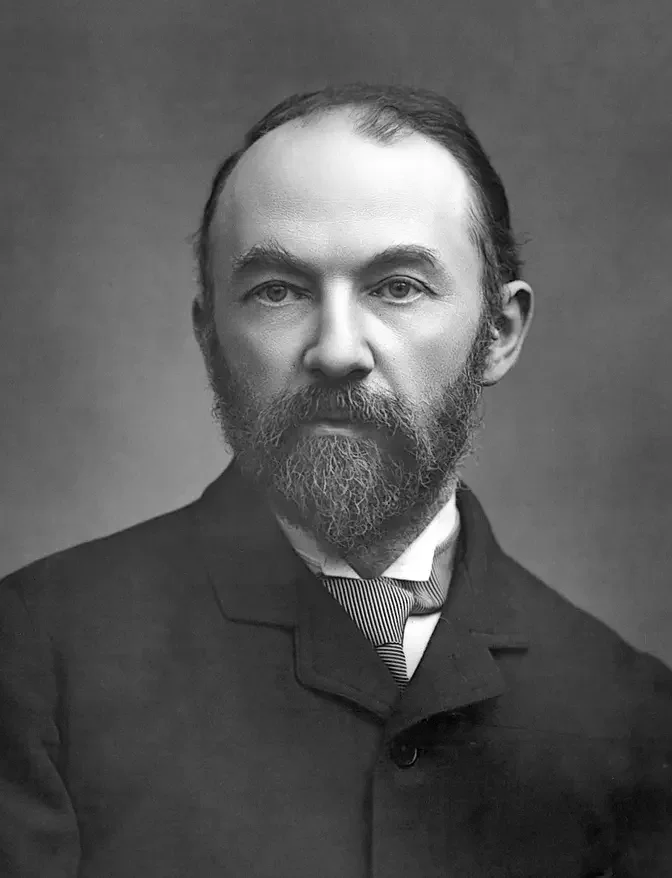
By Thomas Hardy
STORY 16 THE WINTERS AND THE PALMLEYS
To go back to the beginning, if one must, there were two women in the parish, when I
was a child, who were to a certain extent rivals in good looks.
Never mind particulars, but in consequence of this, they were at daggers drawn, and they
did not love each other any better when one of them tempted the other's lover away from
her and married him.
He was a young man of the name of Winter, and in due time they had a son.
The other woman did not marry for many years, but when she was about thirty, a quiet man
named Palmley asked her to be his wife, and she accepted him.
You don't mind when the Palmleys were long-puddled folk, but I do well.
She had a son also, who was, of course, nine or ten years younger than the son of the first.
The child proved to be of rather weak intellect, though his mother loved him as the apple of
her eye.
This woman's husband died when the child was eight years old, and left his widow and boy
in poverty.
Her former rival, also a widow now, but fairly well provided for, offered for pity's sake
to take the child as errand boy, small as he was, her own son Jack, being hard upon
seventeen.
Her poor neighbor could do no better than let the child go there, and to the richer
woman's house little Palmley straightway went.
Well, in some way or other, how it was never exactly known, the thriving woman, Mrs. Winter,
sent the little boy with a message to the next village, one December day, much against
his will.
It was getting dark, and the child prayed to be allowed not to go, because he would
be afraid coming home.
But the mistress insisted, more out of thoughtlessness than cruelty, and the child went.
On his way back he had to pass through Yalbury Wood, and something came out from behind a
tree and frightened him into fits.
The child was quite ruined by it, he became quite a driveling idiot, and soon afterward
died.
Then the other woman had nothing left to live for, and vowed vengeance against that rival,
who had first won away her lover, and now had been the cause of her bereavement.
This last affliction was certainly not intended by her thriving acquaintance, though it must
be owned that when it was done she seemed but little concerned.
Whatever vengeance poor Mrs. Palmley felt, she had no opportunity of carrying it out,
and time might have softened her feelings into forgetfulness of her supposed wrongs
as she dragged on her lonely life.
So matter stood when, a year after the death of the child, Mrs. Palmley's niece, who
had been born and bred in the city of Exenbury, came to live with her.
This young woman, Miss Harriet Palmley, was a proud and handsome girl, very well brought
up, and more stylish and genteel than the people of our village, as was natural, considering
where she came from.
She regarded herself as much above Mrs. Winter and her son in position, as Mrs. Winter and
her son considered themselves above poor Mrs. Palmley.
But love is an unceremonious thing, and what in the world should happen but that young
Jack Winter must fall woefully and wildly in love with Harriet Palmley, almost as soon
as he saw her?
She, being better educated than he, and caring nothing for the village notion of his mother's
superiority to her aunt, did not give him much encouragement.
But Long Puddle, being no very large world, the two could not help seeing a good deal
of each other, while she was staying there, and, disdainful young woman as she was, she
did seem to take a little pleasure in his attentions and advances.
One day, when they were picking apples together, he asked her to marry him.
She had not expected anything so practical as that, at so early a time, and was led by
her surprise into a half-promise.
At any rate, she did not absolutely refuse him, and accepted some little presents that
he made her.
But he saw that her view of him was rather as a simple village lad than as a young man
to look up to, and he felt that he must do something bold to secure her.
So he said one day, I am going away, to try to get into a better position than I can get
here.
In two or three weeks he wished her good-bye, and went away to Monksbury, to superintend
a farm, with a view to start as a farmer himself, and from there he wrote regularly to her,
as if their marriage were an understood thing.
Now Harriet liked the young man's presence and the admiration of his eyes, but on paper
he was less attractive to her.
Her mother had been a schoolmistress, and Harriet had, besides, a natural aptitude for
pen-and-ink work, in days when to be a ready writer was not such a common thing as it is
now, and when actual handwriting was valued as an accomplishment in itself.
Jack Winter's performances in the shape of love-letters quite jarred her city nerves
and her fine-earth taste, and when she answered one of them, in the lovely running hand that
she took such pride in, she very strictly and loftily bade him to practice with a pen
and spelling-book if he wished to please her.
Whether he listened to her request or not, nobody knows, but his letters did not improve.
He ventured to tell her in his clumsy way, that if her heart were more warm towards him,
she would not be so nice about his handwriting and spelling, which indeed was true enough.
Well, in Jack's absence the weak flame that had been set alight in Harriet's heart soon
sank low, and at last went out altogether.
He wrote and wrote, and begged and prayed her to give a reason for her coldness, and
then she told him plainly that she was town-born, and he was not sufficiently well educated
to please her.
Jack Winter's want of pen-and-ink training did not make him less thin-skinned than others.
In fact, he was terribly tender and touchy about anything.
This reason that she gave for finally throwing him over grieved him, shamed him, and mortified
him, more than can be told in these times, the pride of that day in being able to write
with beautiful flourishes, and the sorrow at not being able to do so, raging so high.
Jack replied to her with an angry note, and then she hit back with smart little stings,
telling him how many words he had misspelt in his last letter, and declaring again that
this alone was sufficient justification for any woman to put an end to an understanding
with him.
Her husband must be a better scholar.
He bore her rejection of him in silence, but his suffering was sharp, all the sharper in
being untold.
She communicated with Jack no more, and as his reason for going out into the world had
been only to provide a home worthy of her, he had no further object in planning such
a home now that she was lost to him.
He therefore gave up the farming occupation by which he had hoped to make himself a master
farmer, and left the spot to return to his mother.
As soon as he got back to Long Puddle, he found that Harriet had already looked with
favour upon another lover.
He was a young road-contractor, and Jack could not but admit that his rival was both in manners
and scholarship much ahead of him.
Indeed, a more sensible match for the beauty who had been dropped into the village by fate
could hardly have been found than this man, who could offer her so much better a chance
than Jack could have done, with his uncertain future and narrow abilities, for grappling
with the world.
The fact was so clear to him that he could hardly blame her.
One day by accident Jack saw on a scrap of paper the handwriting of Harriet's new beloved.
It was flowing like a stream, well spelt, the work of a man accustomed to the ink-bottle
and the dictionary, of a man already called in the parish a good scholar.
And then it struck all of a sudden into Jack's mind what a contrast the letters of this young
man must make to his own miserable old letters, and how ridiculous they must make his lines
appear.
He groaned, and wished he had never written to her, and wondered if she had ever kept
his poor performances.
Possibly she had kept them, for women are in the habit of doing that, he thought, and
whilst they were in her hands there was always a chance of his honest, stupid love-assurances
to her being joked over by Harriet with her present lover, or by anybody who should accidentally
uncover them.
The nervous, moody young man could not bear the thought of it, and at length decided to
ask her to return them, as was proper when engagements were broken off.
He was some hours in framing, copying, and recopying the short note in which he made
his request, and having finished it, he sent it to her house.
His messenger came back with the answer, by word of mouth, that Miss Palmley bade him
say, she should not part with what was hers, and wondered at his boldness in troubling
her.
Jack was much affronted at this, and determined to go for his letters himself.
He chose a time when he knew she was at home, and knocked, and went in, without much ceremony,
for though Harriet was so high and mighty, Jack had small respect for her aunt, Mrs.
Palmley, whose little child had been his boot-cleaner in earlier days.
Harriet was in the room, this being the first time they had met since she had jilted him.
He asked for his letters with a stern and bitter look at her.
At first she said he might have them, for all that she cared, and took them out of the
bureau where she kept them.
Then she glanced over the outside one of the packet, and, suddenly altering her mind, she
told him shortly that his request was a silly one, and slipped the letters into her aunt's
work-box, which stood open on the table, locking it, and saying, with a bantering laugh, that
of course she thought it best to keep them, since they might be useful to produce as evidence
that she had good cause for declining to marry him.
He blazed up hot.
Give me those letters, he said.
They are mine.
No, they are not, she replied.
They are mine.
Whosoever they are, I want them back, says he.
I don't want to be made sport of for my penmanship.
You've another young man now.
He has your confidence, and you pour all your tales into his ear.
You'll be showing them to him.
Perhaps, said my Lady Harriet, with calm coolness, like the heartless woman that she was.
Her manner so maddened him that he made a step towards the work-box, but she snatched
it up, locked it in the bureau, and turned upon him triumphant.
For a moment he seemed to be going to wrench the key of the bureau out of her hand, but
he stopped himself, and swung round upon his heel, and went away.
When he was out of doors alone, and it got night, he walked about restless, and stinging
with the sense of being beaten at all points by her.
He could not help fancying her telling her new lover, or her acquaintances, of this scene
with himself, and laughing with them over those poor blotted crooked lines of his, that
he had been so anxious to obtain.
As the evening passed on, he worked himself into a dogged resolution to have them back
at any price, come what might.
At the dead of night he came out of his mother's house by the back door, and creeping through
the garden hedge, went along the field adjoining, till he reached the back of her aunt's dwelling.
The moon struck bright and flat upon the walls, t'was said, and every shiny leaf of the creepers
was like a little looking-glass in the rays.
From long acquaintance Jack knew the arrangement and position of everything in Mrs. Palmley's
house, as well as in his own mother's.
The back window close to him was a casement with little leaded squares, as it is to this
day, and was, as now, one of two, lighting the sitting-room.
The other, being in front, was closed up with shutters, but this back one had not even a
blind, and the moonlight, as it streamed in, showed every article of the furniture to him
outside.
To the right of the room is the fireplace, as you may remember, to the left was the bureau
at that time.
Inside the bureau was Harriet's work-box, as he supposed, though it was really her aunt's,
and inside the work-box were his letters.
Well, he took out his pocket-knife, and without noise lifted the leading of one of the panes,
so that he could take out the glass, and putting his hand through the hole, he unfastened the
casement and climbed in through the opening.
All the household, that is to say, Mrs. Palmley, Harriet, and the little maidservant, were
asleep.
Jack went straight to the bureau, so he said, hoping it might have been unfastened again,
it not being kept locked in ordinary, but Harriet had never unfastened it since she
secured her letters there the day before.
Jack told afterward how he thought of her asleep upstairs, caring nothing for him, and
of the way she had made sport of him and of his letters, and having advanced so far, he
was not to be hindered now.
By forcing the large blade of his knife under the flap of the bureau, he burst the weak
lock.
Within was the rosewood work-box, just as she had placed it, in her hurry to keep it
from him.
There being no time to spare for getting the letters out of it then, he took it under his
arm, shut the bureau, and made the best of his way out of the house, latching the casement
behind him, and refixing the pane of glass in its place.
Winter found his way back to his mother's as he had come, and, being dog-tired, prepped
upstairs to bed, hiding the box till he could destroy its contents.
The next morning early, he set about doing this, and carried it to the lanai at the back
of his mother's dwelling.
Here by the hearth he opened the box, and began burning, one by one, the letters that
had cost him so much labor to write, and shame to think of, meaning to return the box to
Harriet, after repairing the slight damage he had caused it, by opening it without a
key, with a note, the last she would ever receive from him, telling her triumphantly
that in refusing to return what he had asked for, she had calculated too surely upon his
submission to her whims.
But on removing the last letter from the box, he received a shock, for underneath it, at
the very bottom, lay money, several golden guineas, doubtless Harriet's pocket-money,
he said to himself, though it was not, but Mrs. Palmley's.
Before he had got over his qualms at this discovery, he heard footsteps coming through
the house passage to where he was.
In haste he pushed the box and what was in it under some brushwood which lay in the lanai,
but Jack had been already seen.
Two constables entered the outhouse, and seized him as he knelt before the fireplace, securing
the work-box and all it contained at the same moment.
They had come to apprehend him on a charge of breaking into the dwelling-house of Mrs.
Palmley on the night preceding, and almost before the lad knew what had happened to him,
they were leading him along the lane that connected that end of the village with this
turnpike road, and along they marched him, between them, all the way to Casterbridge
Jail.
Jack's act amounted to night burglary, though he had never thought of it, and burglary was
felony and a capital offence in those days.
His figure had been seen by some one against the bright wall as he came away from Mrs.
Palmley's back window, and the box and money were found in his possession, while the evidence
of the broken bureau-lock and tinkered window-pane was more than enough for circumstantial detail.
Whether his protestation that he went only for his letters, which he believed to be wrongfully
kept from him, would have availed him anything if supported by other evidence, I do not know,
but the one person who could have borne it out was Harriet, and she acted entirely under
the sway of her aunt.
That aunt was deadly towards Jack Winter, Mrs. Palmley's time had come.
Here was her revenge upon the woman who had first won away her lover, and next ruined
and deprived her of her heart's treasure, her little son.
When the next assize week drew on, and Jack had to stand his trial, Harriet did not appear
in the case at all, which was allowed to take its course, Mrs. Palmley testifying to the
general facts of the burglary.
Whether Harriet would have come forward if Jack had appealed to her is not known.
Possibly she would have done it for pity's sake, but Jack was too proud to ask a single
favor of a girl who had jilted him, and he let her alone.
The trial was a short one, and the death sentence was passed.
The day of young Jack's execution was a cold, dusty Saturday in March.
He was so boyish and slim that they were obliged in mercy to hang him in the heaviest fetters
kept in the jail, lest his heft should not break his neck, and they weighed so upon him
that he could hardly drag himself up to the drop.
At that time the government was not strict about burying the body of an executed person
within the precincts of the prison, and at the earnest prayer of his poor mother his
body was allowed to be brought home.
All the parish waited at their cottage doors in the evening for its arrival.
I remember how, as a very little girl, I stood by my mother's side.
About eight o'clock, as we hearkened on our doorstones in the cold, bright starlight,
we could hear the faint crackle of a wagon from the direction of the Turnpike Road.
The noise was lost as the wagon dropped into a hollow, then it was plain again as it lumbered
down the next long incline, and presently it entered Longpuddle.
The coffin was laid in the belfry for the night, and the next day, Sunday, between the
services, we buried him.
A funeral sermon was preached the same afternoon, the text chosen being, he was the only son
of his mother, and she was a widow.
Oh, yes, they were cruel times.
As for Harriet, she and her lover were married in due time, but by all account her life was
no jokund one.
She and her good men found that they could not live comfortably at Longpuddle by reason
of her connection with Jack's misfortunes, and they settled in a distant town, and were
no more heard of by us.
Mrs. Palmley, too, found it advisable to join them shortly after.
The dark-eyed, gaunt old Mrs. Winter, remembered by the immigrant gentleman here, was, as you
will have foreseen, the Mrs. Winter of this story, and I can well call to mind how lonely
she was, how afraid the children were of her, and how she kept herself as a stranger among
us, though she lived so long.
Longpuddle has had her sad experiences as well as her sunny ones, said Mr. Lackland.
Yes, yes, but I am thankful to say not many like that, though good and bad have lived
among us.
There was George Crookle.
He was one of the shady sort, as I have reason to know, observed the registrar, with the
manner of a man who would like to have his say also.
I used to hear what he was as a boy at school.
Well, as he began, so he went on.
It never got so far as a hanging matter with him, to be sure, but he had some narrow escapes
of penal servitude, and once it was a case of the biter bit.
End of Story Sixteen