
How to Pair Wine and Cheese at The Cheese Store of Beverly Hills - "V is for Vino" Wine Show
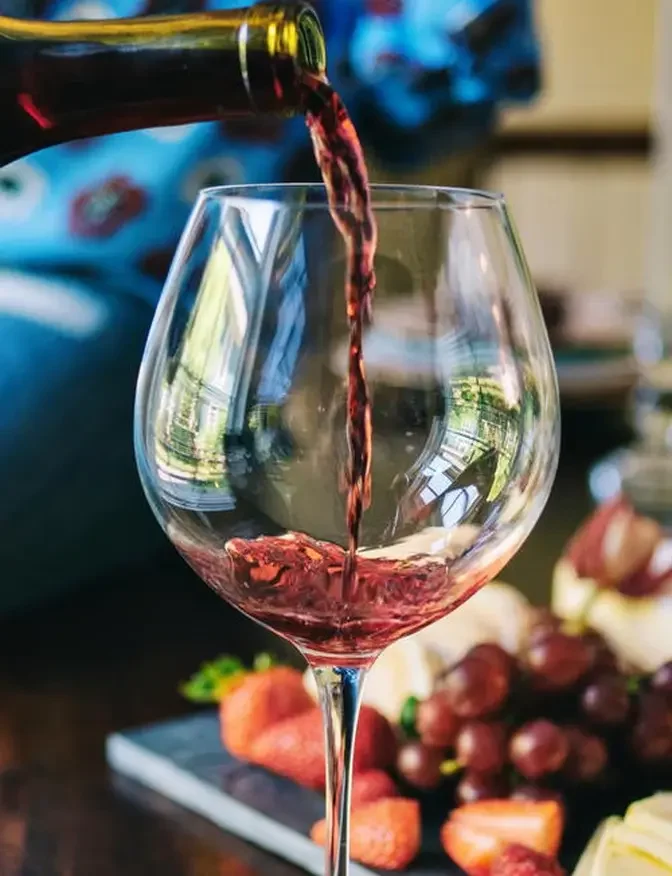
Learn how to pair Wine and Cheese with these tips from Vince of "V is for Vino". Blue, goat, brie, gouda, and gruyere; learn the perfect wines for them all!
#wineculture, #wineservice
Hey guys, Vince here.
And I'm Kristen.
And we're at the Beverly Hills Cheese Store because we're going to do some cheese tasting.
And drink some wine.
Let's do it.
Norbert, thanks for having us out today.
My pleasure.
This is awesome.
So nice to meet you.
Tell me how you got into this, how you got into this shop because you're kind of an institution
here in Beverly Hills.
That's only because I'm old.
A non-successful music career.
I had to get into something to make a living.
And I got a job here for $1.80 an hour and the rest is history.
I was able to buy it in 1978.
How many different types of cheeses do you have here?
Close to 600.
600?
Yeah.
We'll start out with this.
All right, let's do it.
Because you need something...
Look at that.
Look at the outside of that.
Look at the colors.
This is Gouliere style.
This is a Gouliere.
But this is a little more delicate.
Made at the base of the Alps, they've taken the local flowers, dried them, and pressed
them into the cheese.
And what does that do?
Does it kind of permeate into the cheese?
Absolutely.
Okay, very nice.
Long, long finish.
Oh yeah.
What is the vibe here being in the heart of Beverly Hills?
Consider this a little bit of an oasis in Beverly Hills, only because it's much more
casual.
So this is Brie de Meaux.
This is brie from the town where brie was first made, the little town of Meaux, which
is right next to Curly and Shem.
Okay.
Hey, because the lady called and there is no better.
You get a little bit of that mushroomy-like character and make sure you eat the rind.
Most rinds you can eat.
For example, parmesan, you definitely want to use the rind on a parmesan.
The rind has so much flavor in it.
It's great stock, it's wonderful in soup, and rate it up.
It's just as good as the inside.
Well, let's do a good goat.
So this is a clochette.
This is from the Loire Valley, which just means simply bell, and this we should eat
just as it is.
When you get a goat this fresh, it's not overly salted, you get the real flavor of the goat's
milk itself.
That is delicious.
In contrast to that, a fresh goat from Spain is also a real treat.
Much softer, less acidity.
The flavors?
Oh my goodness.
Marinating goat cheese is a very popular pastime.
This is from Bavaria, it's called ash blue, and it's called ashenblau because of the ash
on the outside.
I'm not a blue cheese person.
I don't want to scare you, but this is...
It's a very approachable blue.
The animals are eating well, animals eat well, make good milk, good cheese.
Not too bad, huh?
Why don't we do an aged gouda?
Yeah, sure.
Five years.
What we're tasting here, for something bold, is a five-year-old farmhouse gouda.
What we're noticing is, first of all the color, and then the little white specks, the moisture
is leaving, salt stays, and it's causing the casings to come together very tightly, and
that's what you...
That's that little crunch that you're getting.
Now all gouda is from Holland.
The crunch on it is great, isn't it?
Thank you so much.
This was absolutely fantastic.
It was my pleasure.
I've learned so much today.
So we're still here in Beverly Hills, now going to do a wine pairing with our cheese pairing.
So the first one we started with was the goat cheese, and this falls in a category of cheeses
called fresh cheeses.
So if you think goat, ricotta, mozzarella, any of those kind of soft, fresh, unaged cheeses,
you really need a fresh, lively wine to go with it.
This is a Sancerre by Reverdy.
So Sancerre Sauvignon Blanc from Loire Valley.
Saying in the wine space, it says, if it goes together, it grows together.
So this is a Loire Valley cheese, and this is a Loire Valley wine.
This cheese is a very high acid cheese, and the rule with pairing in general is that you
want to keep acid levels balanced.
So you need to have a wine that's got screaming high acid, like this Sancerre does.
Great.
Get a little sniffy sniff.
Let it air out.
It kind of smells like dirty rocks, creek rocks that have kind of been in the mud a
little bit.
Oh, yeah.
What do you think?
You just said the noise.
Oh, the...
Yeah.
That's just instinct now.
I'm like...
Perfect.
All right, so take a bite.
And you take a sip of the wine.
I already drank most of mine.
You did good.
What do you think?
Not bad?
We're one for one.
All right.
So next, let's go ahead and go to the Brie, which is one of my favorites.
You get a lot of like creamy kind of butter notes.
Definitely some butter notes.
And so we're going with a luxe pairing.
We're going to go with the semi-buttery wine to just kind of bring those out.
All right, so this is a Jay Wilkes Chardonnay from Santa Maria Valley.
So it's Santa Barbara Chardonnay, fabulous winemaker.
He does perfect old world style Chardonnays where it has a little restraint.
So it's a little bit of butter, a little bit of oak, but it's not like a butter bomb.
And like I said, just to bring out some of those buttery characteristics of this Brie,
it's going to be perfect.
Gosh, this Brie is so good.
Oh man, wait till you try it with the wine.
Put that in your mouth with the Brie at the same time.
They like one up each other.
It's like a flavor burst.
So this guy actually is one of the producers that we feature on V is for Vino.
Oh, amazing.
Yeah, which is awesome.
This one's going to be fun.
I'm excited.
Are you?
Because I don't know how to feel the blue.
Well, I'm not a blue fan, as I said before.
But this blue has made me a believer that blues can actually be good too.
And not just smelly.
Blues can be good too.
Feet cheese.
All right, so this is our blue.
And the key with funky cheeses is to pair it with a sweet.
Funky the key word.
Funky, yeah.
Is just pair it with a sweet wine.
So this sweet wine in particular is, it's not exactly Sauternes, but it might as well be.
It's right next door.
Sauternes is a sweet wine from Bordeaux.
But the really cool thing about this is it develops a fungus called Botrytis.
So just like you have mold and fungus in the cheese, this wine develops a fungus called Botrytis
that takes out the liquid from the wine, from the grapes, without actually affecting the sugar.
So you have a lot of sugar and very little water, and that's how you get this sweet wine.
Start with the wine.
As you can see, that color is gorgeous.
It's very amber.
To me, like the caramely, almost like caramelized orange peel.
It is.
Some wines act as like a palate cleanser, and some wines act as a compliment.
And this is definitely a compliment.
This is definitely a compliment.
So like these you want to do at the same time.
I feel like I could be at a fancy restaurant, and when dessert comes out,
I could literally just have these two things as my dessert.
So next we have an Alpenblumen.
Alpenblumen.
So I picked a Beaujolais for this one.
A Beaujolais.
So Beaujolais is a place in France right between Burgundy and Rhone,
and they make a grape called Gamay.
So Burgundy makes Pinot Noir, Rhone makes Syrah.
Right in between, you've got sandwiches, Beaujolais, and they make Gamay grapes,
and you get the cool funkiness of Burgundy with the peppery spice notes of Syrah.
I mean, it's smelling a little peppery-ness.
It reminds me of if Pinot and Syrah had a baby.
Yeah, that's exactly, that's a great descriptor.
I love Beaujolais.
I like when you say it.
Beaujolais.
Let's go ahead and do our aged Gouda.
It's like so bold and strong, and, you know, it's great.
So let's go ahead.
So bingo, bold and strong, right?
And in the land of wine, you've got to go bold and strong,
because anything like this, it would overpower.
You know, it would be too much.
You want to have a wine that's going to stand up to those kind of big caramelly flavors.
So this is a Cote de Rhone, so remember we were just talking about Rhone.
We said it goes Burgundy, then it goes Beaujolais, and now you're in Rhone.
Yes.
And so this is a big, it's very hot in Rhone,
so the heat means that the grapes get nice and ripe, you get big, bold wines, botanic wines.
It already smells to me like heaven.
And it's crazy, though.
It's not really earthy.
No, it's kind of floral.
It's kind of floral.
Kind of like ripe red fruits.
That is good cheese.
The crystals.
I think my favorite, absolute favorite, was the Chardonnay here with the Brie.
Yeah, I would agree.
That might be my favorite.
I love this cheese, and I think that with the Beaujolais is also really fantastic.
There's not too many wrong pairings you're going to get.
If you follow general guidelines, you're going to be fine.
So just to recap, we got the fresh, young cheeses with kind of a fresh, lively wine,
like a Sauvignon Blanc, high-acid wine.
The bloomy cheeses with a bigger, fuller white, like a Viognier or Chardonnay.
We got the blue.
With a more sweeter wine, like the dessert wine, which is an amazing pair.
Yeah, and then we got the semi-hard kind of cheeses with a lighter red,
something that doesn't have tannin.
And then we got the big, bold, aged cheese.
With a big, bold red.
Perfect.
Well, this was awesome.
Thank you so much.
You're great.
Cheers, guys.
I'm Vince with V is for Vino.
And I'm Kristen with Out With Kristen.
We'll see you next time.
See you next time.
Get the wine, full episodes, and more at visforvino.com.