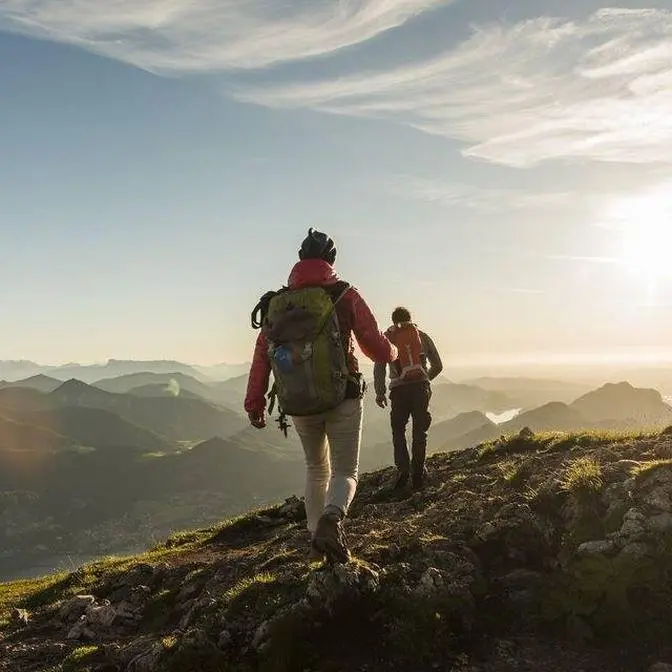
The video from two years ago is here: • Hiking Mt. Chokai | One of the Most Sacred... The video that I did on the Yamabushi is here: • Hiking the Three Most Sacred Mountains in ...
I made a patreon-exclusive drone video of this mountain on this day that is viewable by Patrons. Please consider supporting me on Patreon! / gonorthjapan
If you're interested in hiring me to guide you either on a hike or around town, send me an email through this channel or message me on Instagram or Twitter.
If you like my videos and would like to help me produce more and better videos, consider supporting me on Patreon! I also post monthly Patreon-exclusive drone videos, if that interests you! / gonorthjapan
I'd like to thank my top tier patrons for their continued support: Aaron Llorens Anette Barbara Smith Dave Swendeman Heather Halavais Luciano Arrieta Martins Manfred Marschik Margaret Washa Pete Reto Sceiben The Hunters Zee H 早苗阿部
Hi, this is Quinlan, and today I'm not up in Iwate, but down in Yamagata prefecture,
or rather right on the border between Akita and Yamagata prefectures, still in North Japan,
at the Hokodate trailhead of Mount Chokai, the second highest mountain in North Japan.
All right, let's get going. Compared to other mountains like Mount Iwate,
forgive me for comparing everything to Oniwate, it's rather gentle in the incline,
and there's, so far at least, no gravel, not really any mud. It's all this nice stony path.
There are all these mysterious lines carved into the rocks here. I haven't found someone who knows
what they are yet. Maybe I'll find the answer by the end of this hike. We'll see.
So, the mystery of the strange holes or grooves cut into the rocks is solved.
I guess just, I don't know, maybe 70 years ago, something like that, just pre-war, they
drilled into there with iron, put a little bit of gunpowder, some sort of explosive in there,
blew them open in order to make these rocks flat to walk on.
It's my second time visiting here. The first time was a couple of years ago,
and it's a good three and a half hour drive from Morioka, where I live, so I can't just make a
quick day trip here. I usually spend the night before or afterwards. Mount Chokai has erupted
twice in the last hundred years. The last eruption was just a steam eruption, and not a big deal.
It's not exactly steaming, though it is technically still an active volcano. I'm here
right now, a little over an hour into the hike, in front of Lake Chokai, which is a little pond
in a caldera in this really beautiful, glorious volcanic landscape that we find ourselves in here.
You can see Gassan hanging in the distance there, one of the three
sacred mountains of the Dewa Sanzan. Gassan represents the past and death.
This part right here of the hike, where you're walking on this stone stairway down,
you can see the hill in the distance with this continuous stone pathway going up towards the
craggy summit, really reminds me of Lord of the Rings or something. It's only my second time
coming here, and I'm taking the exact same trail that I took the first time, even though there's
lots of trails. Why would I do that? Because it was just so good, you want to do it again.
It's like if you go to a restaurant, you order something, and it's just amazing. The next time
you go to the restaurant, do you try something new, or do you order the thing that blew you away
last time? Well, I tend to stick to my favorites, I admit, for better or for worse. Once in a while,
I'll try something else. You can see up here, there is the junction at last between the
Gairinzan, the Rim Walk, on the right, and the descent into Senjadani, the Valley of a Thousand
Serpents, here on the left. If you're curious, Thousand Serpent Valley entrance, Senjadani
Iriguchi. But instead, I'm going to turn right and first go into the outer rim, or the outer ring,
Gairinzan. This is kind of a scramble up to the top of this. It's really similar to the Onikojo
area of Mount Iwate, in that they're both sort of the outer rim of enormous calderas from ancient
volcanoes that erupted hundreds of thousands of years ago. And so in both cases, you've got this
gorgeous ridge walk with cliffs on one side and a more gradual slope on the other. I really love
them. They just feel like a magical landscape. It's unlike anything that I get to experience
back in the Midwest of the United States, in Wisconsin. So this mountain was sacred to the
Yamabushi in ancient times. And not only the Yamabushi themselves, but other people who
followed the same faith, which was a lot of local people, would come up here to purify their luck
and to maybe have an encounter with the sacred. People would dress in all white and hike up here
hundreds of years ago, up to the summit, and pray to the gods that resided here. It's an
interesting blend of Buddhism and, I guess, Shinto, what you call it. This sort of faith in
the various gods and animistic tradition, in that the first god or kami to be established here was
actually the Chokai Gongen, which is basically the Buddha incarnated as an avatar of a local
Shinto god. And so it's both a Shinto god, but also the Buddha incarnate as that god. It's a
trick that Buddhism does in a number of different cultures. In fact, in Tibet itself, there is a
shamanic tradition known as bun, which predates Buddhism's arrival in Tibet, but which Buddhism
didn't erase. It just sort of blended with. And in the same way, Buddhism and Shinto have reached
a harmony here in Japan. Really lucked out on the weather. Perfect view of the summit from here.
And then if you look at this sea of clouds, this unkai, as they say in Japanese, it just goes,
you know, like 360 degrees. A couple of ladders. That's neat. Would be easier to do this if I wasn't
holding a camera or two. This little area here is called Fushi Ogami Dake. Literally, it would mean
lying prostrate in prayer summit. And many people in the olden days didn't quite have the endurance
to go all the way to the main summit up there. So they would come to here, pray to Chokai Gongen
Sama, that avatar, that incarnation of Buddha as a local god here at this summit, and then return.
Oh, this is a cliff cliff here, I think.
Yeah. Yeah, it is.
And up here is the junction where you would turn left to go down towards the new summit,
where you can see people up there, Shinzan. But first, I'm just going to zip ahead a little bit
to tag Shichiko-san, the other summit. This area is just dreamy. Makes sense that it's so popular.
Love, love, love, love, love it. And up there, you can see the second highest of the summits here.
So this right here is Shichiko-san. This is the second highest summit here at Chokai-san.
And it's just this little spot right here. This is the highest one. The other side of this cliff,
you can see right here. It's hard to believe that in just a couple weeks, tourism is going to get
back to normal. After what feels like nearly three years of closed borders, we're finally
going to see the gates open again, and everybody coming in again. If you do have a chance to come
to Japan now, in the next coming months or year or two, and you want to do some hiking up here in
Japan, I think you should. I think it's a great idea to come and hike in Japan. Of course, you
could go hiking in any country. What's so special about Japan? Why here? Well, that's true. That's
fair argument. But at the same time, what I think is really nice about hiking in Japan is that
everything is so compact. You've got so many different landscapes in a really small area.
And so within an hour or two by car, you could have an enormous volcano like this that you could
hike. You could go to the coast and hike a coastal trail. You can see whether it's alpine wetlands,
or active volcanoes, or places that used to be sulfur mines with like gases spewing out,
or any number of things, all on the same day. And in some cases, you can see like flowers
blooming, the cherry blossoms, then you go up high and there's still snow. And so I think,
yeah, what makes Japan special, maybe not unique, but at least quite special, is how many things you
can see in such a short time on the same day in the same area. If you do go hiking and you're
not sure about how to get out there in terms of getting to the trailhead, renting a car,
it seems like a headache, hire a guide. I do a lot of guiding work. There's a lot of mountain guides
and you'll probably get a better experience with a guide anyways, as they can explain and tell you
stories about the history of the mountain, the plant life, the cultural and religious history
here, all sorts of things like that. And you may get more out of it. Plus, it's just fun.
But okay, I'm gonna eat a little bit of lunch and then try and head over there to the main summit,
the Shinzan, the new summit. Now it's time to go down and then back up to the summit.
Helpful chain for the descent. Of course, my hands are full with cameras. This is interesting. The
last time I came to this area, there was a huge shelf of snow. Well, that shelf of snow extended,
I should say, and covered this entire area. I remember being very unclear about where the
was last time. But now there's just so many people you can kind of tell.
So that's the actual summit right up there. And I think I'll go up now. Hopefully,
it's not too crowded. You can see there's people hanging out up there.
Let's see. Follow the white arrows. I remember being a little steeper than this, but
I guess my sense of what is steep has been changing over the last couple years.
And this seems less dramatic than it did back then. There's all these places that are rather
adventurous near the summit of Mt. Tokai. Here's another sort of, not a tunnel, but a crevice of
rocks that you're going climbing up or down through. It's pretty damn cool.
Konnichiwa!
I'm doing this without any hands, but it'd be easier if you had your hands free and could
scramble. Down here is a complex of buildings. There's a lodge you can stay in, a shrine,
and I don't know, a bunch of stuff lying around. I guess those are water tanks. I'm always a little
bit hesitant to leave the summit area because it's just so gorgeous, but it's getting later
and I still gotta drive like three and a half hours home, so I'm gonna start heading back
towards the trailhead, I guess. But at least it's a different route for part of the way.
There are lots of trails you can access Mt. Tokai from, but I really recommend the
Hokodate trailhead, the one that starts right on the ocean in the city of Nikko. Again,
links to all that in the description so you can easily find it. But that is, I think,
the most stunningly beautiful one. It starts out in the open, there's not a forest that you have
to go through first, and you've got just glorious views of the summit through the whole ascent and
this magnificent stone pathway. And if you go earlier in the year, say June or July, there's
just tons of snow left. Come to Mt. Tokai and then come up to Iwate and experience some of the great
mountains up there. It's all downhill from here, so I think I'm just gonna put the cameras away
and stroll back down toward the ocean. Thank you so much for watching, and I'll see you on the trails.