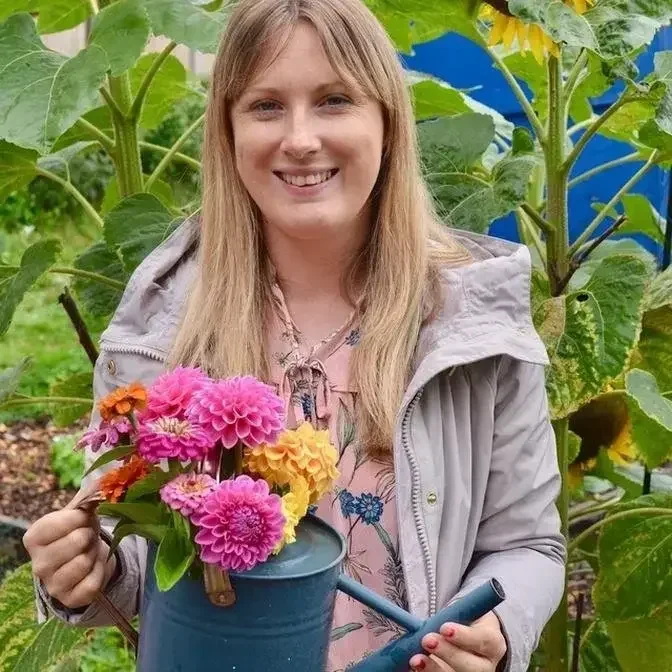
In this video I explain the no dig gardening method as simply and effectively as I can. I list the benefits and disadvantages of this method as well as show you how to make the quickest and simplest no dig raised bed ever!
Welcome to my allotment gardening channel. My name is Emma and these vlogs are my allotment diaries. 2022 is is my third year on my plot. I'm learning as I go and would love for you to follow my allotment gardening journey by SUBSCRIBING to my channel!
What is the no-dig gardening method and how do you start a no-dig allotment plot?
Well I'm here to answer all your questions.
Hi my name's Emma, I've had my allotment for about three years and a year ago I decided to
turn it into a no-dig allotment garden. If you enjoy this video you might enjoy some of my others
so don't forget to hit the subscribe button. So the no-dig gardening method was less invented
and more discovered by a man called Charles Dowding. Dowding started to question why we dug
in our gardens in the first place and what are the benefits of digging and what are the
disadvantages of digging. From what I've read there are two main benefits from the no-dig
gardening method. Firstly Dowding discovered that underneath our soil is a very very carefully
balanced ecosystem. This ecosystem is made up of millions of bacteria, microorganisms, insects.
Digging disrupts this ecosystem, it moves things about, it disrupts the pH level of the soil,
it disrupts the entire ecosystem and the health of our crops rely on that ecosystem. Secondly
underneath our soil is a chemical element called carbon. When we dig into our soil the carbon is
released and when it's released into the oxygen it turns into carbon dioxide which rises up into
the atmosphere and is one of the causes of global warming. There are tons and tons of
carbon stored underneath the soil but none more so than in peat bogs. Peat is a gardener's best
friend. Full of rich dead plant material it makes a fantastic growing material but peat
bogs are capable of storing large amounts of carbon dioxide and we need to preserve them.
You can help by making sure you use a peat-free compost. So how do we start a no-dig raised bed?
Well this is my allotment plot and in my first year I did no no-dig. Basically I dug all the time.
During my second and third year I've slowly started to turn a lot of my raised beds into
no-dig and I have seen so many benefits which I will go into a little bit later on in this video
but for now I'm going to show you how I'm going to turn this raised bed at the front of my allotment
plot into a no-dig raised bed. It used to have my strawberries in. As you can see there are loads
and loads of little weeds all coming up in it. I want to turn this entire bed into a no-dig bed.
I don't want to be digging us out anymore. To make a successful no-dig gardening bed
it's all about the layers. The first layer I'm going to put down is cardboard. I find cardboard
a fantastic first layer to put down on a raised bed not only because it's a great organic material
and it's obviously brown and if you think about your compost you need a mixture of green and brown
so putting that into my raised bed is just going to help it and help all of the nutrients in that
bed. Secondly all the worms love cardboard for some reason. To me I think it's like chocolate
cake to a human. Worms just love a cardboard treat and thirdly it actually helps to repress
the weeds in a raised bed as well I find so I'm going to put this down first. Just make sure that
you remove all of the sticky labels and sticky tape from your cardboard before you put it into
your raised bed. I water my cardboard once I've laid it out and this just helps it to start to
rot down a little bit quicker. Now you might notice that I'm just putting my cardboard straight
over the weeds. I'm not bothering to pull them out or dig them out beforehand and it's not because
I'm lazy or I forgot. Now according to Dowding there's no need to weed before you start a no-dig
bed. You can just put your layers straight over the top of the weeds and it will block out the
light, block out the nutrients and kill the weeds anyway. In fact starting a no-dig garden actually
reduces the number of weeds not only because you're putting layers and layers of mulch on the
top of your beds at regular intervals throughout the year and like I said blocking out the light
and blocking out the nutrients but also because when you dig in your soil you're actually moving
around seeds. Weeds usually spread in the wind they get blown all around your allotment plot
and when you're digging you're moving around those seeds which in turn is just making more and more
weeds come up. So when you stop digging you stop spreading the weeds. Definitely a positive if you're
like me and you can't stand weeding. And of course the only problem with weeds isn't just that they're
really hard work for us humans to get rid of they also compete directly with our crops for light,
for room, for nutrients in the soil. So with a no-dig bed having less weeds is just beneficial
for everyone, for you, for your crops, for the soil, for everything. So less weeds better crops.
And now that your cardboard is on and if you don't want to use cardboard you could use something
like shredded paper. Now that that first layer is on it's a matter of layering up as many organic
materials as you can find. Try and think about it in terms of composting. Anything you can compost
you can put into a raised bed. Even things like eggshells, old vegetables, manure, a bag of compost,
homemade compost. I've even put an old Christmas tree on one of mine as well.
This could probably do with a few more organic layers going in there. That's the beauty of a
raised bed you can come back to it and just chop it up. But I hope that kind of shows you just how
easy it is to get started with a no frills, no fuss, really really simple no-dig raised bed.
A lot of people ask me can I plant straight into that? My answer is yes you probably can.
As long as your top layer is compost I found that you can just start sowing into it straight away.
Don't worry about the cardboard, the roots of plants can go through the cardboard. So I think
yes you can plant straight into a raised bed. If you're using manure in your raised bed make sure
that it is old manure, it's been well rotted. Fresh manure will probably burn the roots as the
go down because it gets very very hot under there. So just be aware of that but otherwise go for it.
So let's talk about some of the advantages versus some of the disadvantages of starting a no-dig
allotment plot. So only half of my beds are no-dig at the moment and half of them are still
traditional kind of dug-in beds. It's definitely easy to see which ones are no-dig and which ones
are dig just because of the amount of weeds coming up in the ones that are dig. I've definitely
noticed a reduction in the weeds in the beds that I've made into no-dig beds and that I've
layered up and I've continued to layer up as well and that has just been absolutely fantastic. The
beds that have got weeds in have gone absolutely crazy with weeds this year thanks to the hot
weather and everything but the no-dig beds have remained weed free pretty much. I've definitely
noticed some benefits in my crops on the no-dig beds as well. Less disease, less bugs, less pests.
The crops have been healthier. Things that didn't work in my first year because I was doing a whole
dig allotment have actually worked in my second and third year. I don't know if that's totally
because of no-dig but I do like to think that I am improving the condition of the soil which is
resulting in better crops. Thirdly it's just significantly less work to do no-dig. It's so
much easier to pour some compost over. I wish that I could make my own compost but I haven't quite
mastered that art yet but when I do it will be totally free as well. Now I'm going to talk about
one of the disadvantages I have found from starting a no-dig allotment garden. First of all once you
start you can't really go back again. I think I just feel guilty now if I dig. I think when you
start an allotment plot one of the last things that you want to feel is guilt. Everybody will
have an opinion on exactly how you should garden and when you do start no-dig people expect that
you're going to completely stick with that gardening method forever and you're not going to
change up. So when I do change up and I think actually this isn't really working in this bed
I'm going to try something else I do kind of feel a little bit guilty. That might just be a personal
problem but there we go. Secondly it can be expensive. Now I'm quite lucky at my allotment
plot that we actually get things like wood chip and horse manure for free so I have been able to
top up most of my beds for free. Cardboard is obviously very cheap it's cardboard boxes or just
from parcels. Making sure you remove all the sticky tape and sticky labels. But compost I've had a
problem with. My compost heap is in absolute shambles. I am so ashamed of it. I think if I was
making my own compost successfully it would be much easier but for the amount of raised beds that
I've got here and I've got about 10 or 11 I'd have to make a lot of homemade compost to fill them up
sufficiently each year. Also I found that the no dig method kind of needs to be topped up regularly
so though Charles Dowding kind of says spring and autumn time you should be topping up your beds
I actually find that I need to top them up three or four times a year. The levels just go down the
worms come up they eat everything they bring it all down and the level of the soil just starts to
go down so it just needs a lot more topping up than I first anticipated it would. So definitely
a couple of things to bear in mind if you are starting a no dig allotment plot however I do
believe that the advantages do outweigh the disadvantages it's just a personal choice.
Overall I have really enjoyed experimenting with the idea of a no dig allotment plot over the last
couple of years. I think gardening is all about experimentation finding what works for you what
works for your plot for your garden. There are definitely advantages definitely a few disadvantages
I hope this video has been really informative to you if it has do subscribe to my youtube
channel for lots more allotment tips and tricks and ideas and fun. Share this video with a friend
if you think it will be useful to them and let me know in the comments if you are team dig
or team no dig I would love to know. I'll see you in my next video thanks for watching guys bye