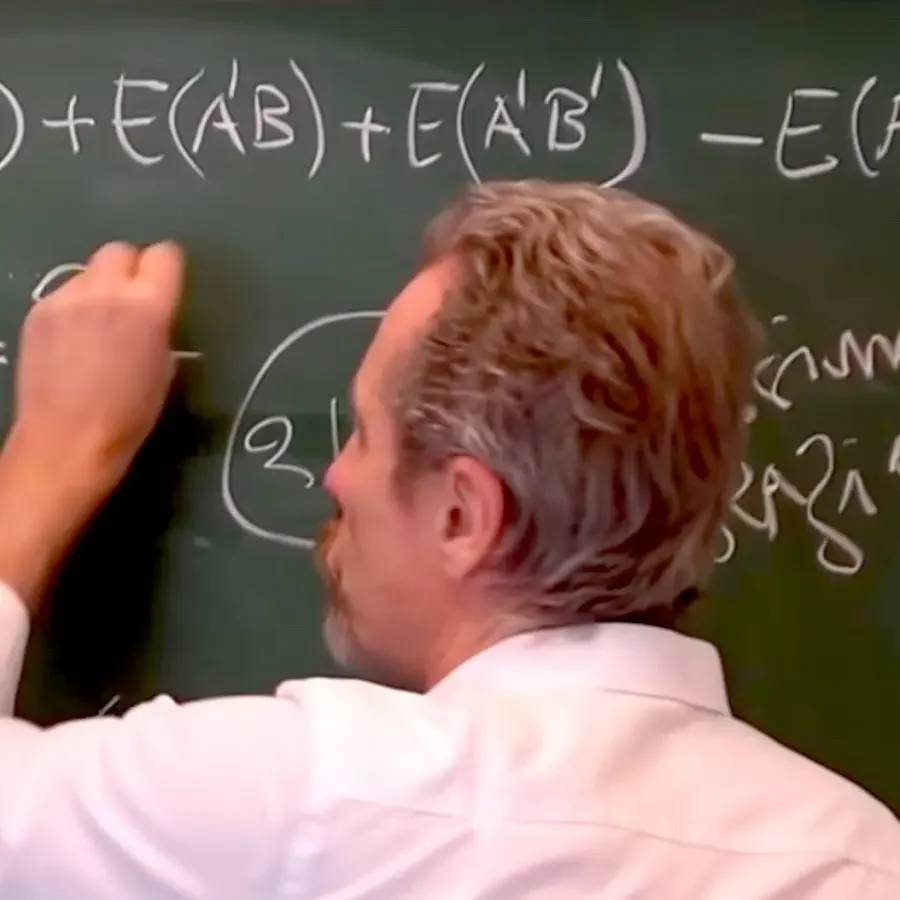
Un breve estratto (con la giornalista Sara Chessa) della prima parte di una docuserie prodotta da Inner Innovation Project, con delle riflessioni sul tema della Ricerca della Verità e dell’articolazione tra le conoscenze provenienti dalle tradizioni del passato e quelle che emergono dalle più recenti indagini scientifiche.
What you are about to see is a brief excerpt from the first part of a documentary series produced by Inner Innovation Project
with reflections on the theme of the search for truth, to be understood in the broad sense of the term,
and the articulation between the knowledge from the past, that of spiritual traditions, to be clear,
and the knowledge that emerges from the most recent scientific investigations.
In this first part, which has just been published, you will find interviews that I would dare to call unusual,
thanks also to the very relevant questions posed by the journalist Sara Kessa.
In this fragment, Sara asks me how she has managed in my path to articulate scientific research and inner research.
I invite you, of course, to go and see my full interview on the Inner Innovation Project channel
and, of course, I will put the link at the end of the video and in the description.
In the full documentary, in addition to my intervention, you will find the point of view of another theoretical physicist
open to the themes of spirituality, Ilya Musko, an expert in primordial cosmology.
But above all, there will be the precious interventions of Andrea Di Terlizzi,
whom I personally consider one of the greatest experts in the field of inner disciplines,
with whom I recently had the pleasure of writing a book, of which you will always find the link in the description.
Well, then, enjoy and I renew my invitation to watch the full documentary, it is really worth it.
And, of course, there are no contraindications in sharing it with people who may be interested.
Welcome to Massimiliano Sassoli de Bianchi, theoretical physicist, author of numerous academic articles
on the themes of the foundations of quantum physics, relativity, quantum cognition, and so on.
Listen, Massimiliano, you have carried out some interesting research in the field of quantum physics,
but you have also turned to the area of inner research and founded the self-research laboratory.
How did this fascinating transition from science, from scientific research, to inner research, come about?
There has not been, in my case, I think, a real transition between scientific research and inner research.
Both have always been part of my personal research path.
I remember, for example, that as a child I was fascinated by the phenomenon of consciousness.
I was certainly not able, as a child, to formulate a real scientific or philosophical question,
but I remember how surprised, at times, I was simply aware that I existed.
It was a condition that, on the one hand, seemed natural to me, in a certain sense necessary,
on the other, really surprising, so much so that I wondered if my playmates had the same kind of perceptions.
Now, it may be that this initial sensitivity to consciousness,
here it would be better to say self-awareness,
then stimulated an interest in the mysteries of the cosmos and the life it contains in general.
Then, as a teenager, some informative readings,
in particular on the fascinating figure of Einstein,
somehow convinced me that a well-trained mind could somehow penetrate the mysteries of reality and existence.
So then, later on, I enrolled in physics,
being physics the scientific discipline par excellence.
Of course, I soon realized that investigating matter and energy could not be enough
to solve, so to speak, the great enigma of consciousness and existence.
For this reason, it was certainly necessary, and are necessary, dedicated spaces,
real and proper scientific laboratories,
where the instruments are not electronic devices, but our own human machine.
How to make, for example, these perceptions that I had as a child more stable,
and what happens when this happens?
Here, it is in these places, in these scientific laboratories,
where we can try to answer this kind of questions
and try to reach a slightly more objective understanding of what we are,
which I consider to be something multidimensional and even multi-material.
Certainly very fascinating.
However, it is spontaneous to wonder how scientific research can combine
with something so subjective, so personal, such as interior research.
Is there no conflict between the two?
Well, if you adopt an extremely reductionist vision of scientific research
and its purpose, then undoubtedly there will be a conflict.