
Fengya Collection] Missing You on a Moonlit Night by Du Fu. The moonlight illuminates the homeland,
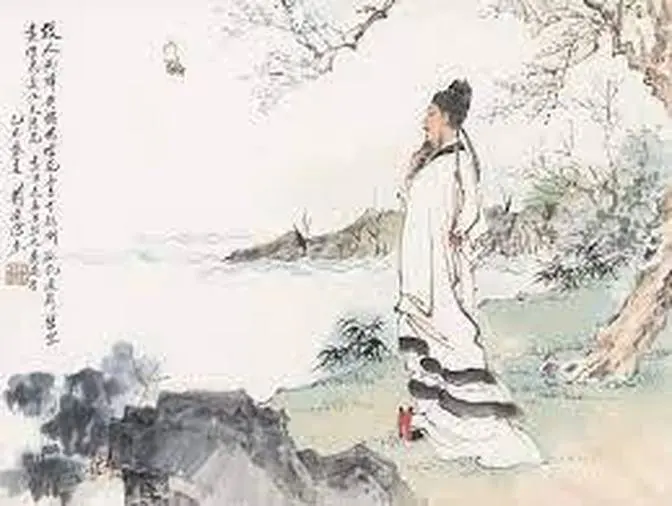
Hello everyone, welcome to Fengyaji
I am Zhang Yi
The reason why Du Fu, the great poet of the Tang Dynasty, is called the Saint of Poetry
It is because of the feelings of family and country that run through his poems.
Worry about the country and the people all my life
Du Fu's poems are simple and unpretentious
But it often resonates
He wrote many poems about homesickness
But the most touching
It must be when he was 48 years old
The moonlight night as written also shoots the dew on the ground, and it turns white tonight
The moon is the brightness of my hometown
These two sentences directly hit the people who are displaced abroad.
The softest place in the heart
It can be called an eternal song
Today we are going to talk about this poem
Let's first appreciate the moonlight night recalling his younger brother Tang Dufu
Guarding drums and stopping people walking
The sound of wild geese in autumn
The dew is white tonight
The moon is the brightness of my hometown
All land is scattered
Homeless and asking about life and death
Sending a book does not take long
Kuang Nai did not cease his troops
This poem was written by Du Fu during the white dew season in 759 AD.
Made when he was in Qinzhou, Shaanxi
It was the Anshi Rebellion at that time
Shandong and his hometown Henan are both in war
Several of Du Fu's younger brothers are scattered in this area
separated by war
Lost of communication
causing him intense worry and longing
The main idea of this poem is
After the sound of geng drums on the tree tower
curfew starts
Cut off the human form
The mournful cry of lonely geese came from the border fortress on an autumn night
From tonight we have entered the Bailu solar term
The moon is still the brightest in my hometown
Although there are brothers
But they all separated and went their separate ways
Home is gone
There is no way to know the news of each other's life and death.
In the past, letters home from Luoyang City could never be delivered.
What’s more, wars are frequent
hasn't stopped yet
The most touching part of the poem is "The dew turns white tonight"
The moon is my hometown Ming couplets
Profoundly expresses the poet's feelings for his hometown
These two poems seem indifferent
Lu Cong Tonight Bai seems to just point out the season
It has nothing to do with missing relatives in my hometown
actually not
Jiang Yan, a great writer in the Wei, Jin, Southern and Northern Dynasties
Wrote a famous poem called "Bie Fu Qi"
There is a bright moon and white dew
Time passes
Difference from son
Wandering thoughts
So the four words "Ming Yue Bai Lu"
Just to exaggerate the sadness of separation
And Du Fu said that dew will turn white tonight
The moon is the brightness of my hometown
It also incorporates strong subjective feelings
Why is the dew turning white today?
In fact, it’s because today happens to be the Bailu solar term
And I am missing my brothers far away
When I miss you
It’s as if the dew has also infected the sadness of longing
So it became white
The moon is inherently impartial
does not vary from place to place
But in my opinion
Nothing is as bright as the moon in my hometown
Late night clear dew
chilling
Moonlight shines on people
It's also cold
Both of them exaggerated the poet's
Because of the desolate feeling that my brother is not around
People often say that the word "sorrow" means separation from people's hearts
superior colliculus indeed
Read Lu Cong Bai Tonight
The moon is my hometown Ming these two sentences
It really reminds me of my hometown.
And the moonlight night also shines on the other scenes selected in this poem
It’s also touching
For example, the image of a wild goose
In ancient times, it represented separated brothers.
Because when geese fly, they have to line up
It's like brothers come first and then last
Another example is Wenshu’s ancient letters to his family, etc.
It can be said that every word in the poem is in a different place
Every sentence is sentimental
Okay, that’s all I’ll talk to you about today.
Thanks for liking and following Fengyaji
You are also welcome to leave us a message in the comment area. See you soon.