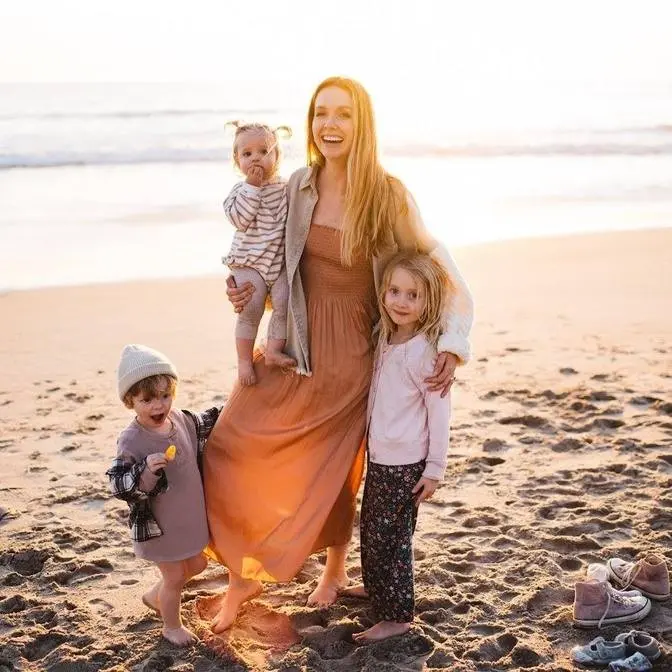
Welcome to motherhood. 🤍 If you’re having a harder time than you expected, or finding yourself comparing your experience to other moms and wondering “why is this so much harder for me?” this video is for you.
Because the truth is: Not all motherhood experiences start from the same place.
In this video, I walk through the real factors that shape how motherhood feels, starting even before postpartum begins.
We talk about: Your journey to getting pregnant (easy, unexpected, IVF, loss) What pregnancy was like in your body How your birth experience impacted you Sleep, support, and your relationship Mental health, finances, and life load Why one mom might feel okay… and another feels like she’s drowning
This isn’t about complaining or staying stuck.
It’s about understanding your experience so you can release comparison, let go of shame, and get the support you actually need.
You are not broken. You are not doing this wrong.
You just need the right context. If you are a mother who wants more support join my Tuesday group coaching calls for moms in Very Good Mothers Club, first call is free! https://www.verygoodmothersclub.com/
Well, I imagine early motherhood to be a very beautiful stage of life.
The view in early motherhood is just so precious.
But you know what?
If you're drowning, even in the most beautiful sea,
you're not going to experience the bliss of the beauty around you.
You're just drowning.
Inside, you're like, I don't know how I'm going to do this.
You're looking ahead and people are saying like,
oh, it'll get easier in a couple months.
And inside, you're like, a couple months?
A couple months feels like a thousand years away.
How am I going to survive until then?
So I want to help teach you how to swim.
I want to like throw you a life raft and be like, no, no.
It's beautiful here, but it's okay if you don't see it yet.
You'll see it really soon.
Let's just get you set up to feel as good as you can inside of this water.
And I promise eventually you'll be able to see the beauty that your life is.
Welcome to my new house.
Welcome to our couch.
If you haven't seen me in a while,
because I've been stressed out of my mind with moving
and not knowing where we're going to go,
wondering if we have to leave California.
It was a long story.
Maybe I'll tell you about it sometime.
But what I can say is we have found a place to live.
It's here.
It's adorable and small and meets our needs so well.
And we are very happy here and I'm way less stressed.
And so I finally feel like I have bandwidth to hang out with you,
which is all I've wanted to do.
And this video is not only a welcome to my home,
it's a welcome to motherhood.
And maybe this is your first time.
You just had your very first baby welcome.
Maybe it's motherhood round two or four.
I just felt like I needed to make a video that is everything I feel
when I see a mom in a grocery store and she has her little baby there
and I'm just overcome with compassion and curiosity.
Like I really deeply want to know how she's doing.
And then I have just an arsenal of encouragement
that I would like to deliver to her.
But I refrain because she's at the grocery store
and that was hard enough to get that baby out of the house and go shopping.
There might be a mom who just had a baby
and she could use a little bit of encouragement and context.
Somebody to remind her that life is going to be okay.
And that's what this video is.
Okay.
I remember when I was little, how old would I have been?
Old enough to be aware.
So maybe middle school age.
I was hanging out with a woman that I really looked up to.
I was raised by lesbian moms.
If you're new here, welcome.
So I have a lot of moms in my life.
Eventually those moms split up.
They have new wives, partners.
So my kids joke that we have a thousand grandmas
because I've also adopted honorary moms along the way.
And I just love all these women.
Okay.
But one time I was hanging out with a woman, a friend of my mom's
and I really thought she was awesome.
She didn't seem to think she was awesome, but I thought she was awesome.
And she was telling me about her life pre-kids
and she was telling me about all the fun she had
and the cool stuff she did and her relationship with her partner
and like all of these different things.
It was basically like one amazing story after the other.
And they all concluded with like, yeah.
And then I had kids and it wasn't positive.
It wasn't like having kids was the cherry on top of an amazing experience.
It was like everything was awesome.
And then I had kids.
My body was amazing.
And then I had kids.
My relationships were so good.
And then I had kids.
And I, in that moment, tucked that deeply in my soul.
I was like, okay, learning from you as much as she loves her kids
because she would never say that she doesn't.
It seemed very evident to me at the time that having kids ruined her life.
That's what I perceived.
That's truly like how I registered this interaction.
And it stayed with me so much that when I married Sean,
I was 20 years old.
So we were little babies.
He was excited to be a dad.
He's a great dad.
And he has been comfortable with the idea of fatherhood since he was really young.
So we get married.
I'm 20.
He's 22.
And we were married like one month.
And he was like, you know, if we get pregnant,
we, meaning if I get pregnant and we're going to have a baby, it'll be okay.
He was like, I just want you to know, like, as far as I'm concerned, it'll be okay.
He wasn't asking me if we could have kids then.
We weren't trying to have kids then.
But he was trying to reassure me that as far as he was concerned, we'd be fine,
which is very sweet.
I think that's great.
If we had both been like me, maybe we still wouldn't have kids.
But I felt so afraid of that.
I never imagined myself being a mom.
I also didn't imagine not being one per se.
I think the way I saw the future was like, yes, someday having kids is like what you do,
especially getting married so young, like probably having a family would make sense.
But I can tell you that when I was younger, like teenage years,
I thought that getting married equals is the same as getting divorced.
Like you're going to get married and you're going to get divorced.
That's just how it works.
All my parents have been with multiple people all throughout their lives.
And so for me, there wasn't this strong belief in a marriage that lasts.
It was more like you're going to have a marriage that's going to last as long as it lasts,
however long it needs to be, and then it will end.
And then you'll move on and you'll do something else.
And so for me, I didn't have this strong sense that like,
I really want to go and find my life partner.
I sort of thought that was a fickle pursuit.
Like why choose that when you know you're choosing a thing that's going to end?
So then add to that my belief around having kids ruining your lives.
And it is sort of a romantic comedy that we're even here, isn't it?
Because what happened was around 18 years old, I became a Christian.
That's its whole story.
And I went to this Christian-based nonprofit in Los Angeles.
Really, I just wanted to be in LA because I wanted to be near the industry.
And I thought I would be in arts or entertainment in some capacity.
And my way there was to enroll in this six-month school with a nonprofit.
And that's where I met Sean.
It was an amazing experience, like truly life-changing.
And I do believe that there is a God who loves us who had a hand in all of that.
But it didn't feel like super spiritual.
In my preparations, it really felt like I want to be in LA.
What's a way I could do that and not be going to college?
And then someone told me about this experience.
And I was like, oh, cool.
You go to LA, you volunteer, you travel the world.
Sounds awesome.
And I met Sean the very first day.
So I get to this place.
And there's all these people who have really beautiful families
and marriages that really are lasting a long time.
And I think that kindled something in me that was like, oh, marriage could be really cool.
I never really thought about that.
Not to mention, I just thought Sean was really attractive.
And he's really good with people.
And I was like, OK, this guy.
And yeah, he wanted to be married for life.
And I was like, you're six foot four.
I'll be married for life.
Let's do that.
And so, no, there was a lot more that went into it.
But I did marry him at 20 years old.
And that was a good decision.
We've been married almost 17 years.
Fast forward, I had my first baby at 27.
27, no, incorrect.
26 is when we had Eloise.
And by that time, I did feel ready to have a baby.
But I didn't have a clue what that meant.
I was very afraid.
In between when I was 20 and when I was 26, there were a lot of tears that I cried to
Sean of like, I'm really afraid of having kids.
I'm afraid it's going to ruin my life.
Like, in between there, we were traveling the world.
I was working backstage at Fashion Week.
I was leading these different organizations.
Like, to me, I felt very fulfilled in the life we were living.
And I liked our relationship.
And so the idea of growing a family and basically flipping everything upside down was very scary.
But I got to a point where I felt peace about it.
I told him I was ready to have a kid.
He was like, let's do it.
And we did.
And then we got pregnant immediately.
So that was a miracle.
That wasn't the case with my second baby.
Just for context, it took four years before I got pregnant.
Or rather, four years was the gap between Eloise and Wilson.
So that would be three years and some months before I got pregnant again.
And then Jules, my third one, is a surprise.
And she was born just over a year after Wilson was born.
Like 15 months, I think, is the math.
Anyway, I'm giving you a lot of context for my life.
But basically, what I want to communicate to you is that I had really big, scary feelings
around becoming a mom.
And then I got to the point where I was like, OK, I think I can do this.
This looks really meaningful.
This looks really important.
My husband's going to be excited.
I also had this amazing dream where I had a dream that I had a little girl.
And her name was Eloise.
And I knew I was her mom.
And I knew, like, we were on the beach.
And it was this really profound moment where I was like, oh, I think I'm going to have
a daughter.
And I think I'm going to name her Eloise.
And that was before anyone was naming their kid Eloise.
Eloise was a more common name in Europe.
But I'm saying here in America, when I told people I was naming her Eloise, they were
like, hmm?
You mean like Eloise at the plaza?
And I actually hadn't even seen that then or read that.
I'm like, I guess.
I don't know.
My best friend Marie in Switzerland, her little sister was Eloise.
And I loved the way Marie talked about her Eloise.
It was just so sweet.
And so anyway, that's where I got the name.
And then there was a beautiful story attached to that that I could share sometime.
But I had Eloise.
I was very afraid of any motherhood information.
Like, people would give me books about it.
And I was like, no, no, no, no, no.
I don't want books.
Because for some reason, I felt like the more I knew, the more freaked out I would be.
I didn't want to know anything about labor and delivery.
I didn't.
I was like, moms all over the world are having kids.
I'm sure I can figure this out.
It's a natural progression of life.
Definitely, I can do this.
I've done hard things before.
I have a million moms.
What could go wrong?
And oh my gosh, a lot went wrong.
Mainly in me.
Externally, a lot went right.
I had a beautiful baby, a beautiful family.
We moved to Spain.
That was part of what made me feel so crazy.
So many things were right on paper.
But in my body, in my mind, in my own experience of my life, I became deeply depressed.
And that ended up leading me to need professional help, brought me to a 10-day stint at a mental
hospital, which I've made videos about.
It was an outpatient program.
Anyway, long story long, what I'm getting at is I really fumbled through that transition
of becoming a mom, loved my daughter, did not love how I felt.
It took me a while to regain a sense of self and identity.
And my marriage suffered.
My career felt really confusing.
My friendships felt really confusing.
All of it.
My body, there's so many changes.
It's the best thing, but like, wow, it is so, you know, you're in it.
Then I get the help that I need.
Fast forward, I have Wilson.
He was born six years ago.
He's almost seven.
And that's what brought me here to YouTube making mom content, was that transition to
having my second baby went really well.
A lot different than my first.
I was so much more supported.
And at that point, I was like, oh wow, I should really help moms not feel the way that I felt
when Eloise was born, because there's a lot we could do differently.
And at that point, there wasn't a lot of content on the internet for mothers.
Now there's so much.
But if you look, a lot of this started around six years ago.
I was even just Googling some things before beginning, like looking for videos that might
be helpful for you guys.
And it is interesting that there's this influx of motherhood content that begins right before
COVID and then really multiplies during COVID, which is great.
We all need that.
So after I had Wilson, surprise, I have Juliet.
We call her Jules.
And I become a doula.
And I start coaching moms online and then coaching moms in person.
And I lead a community of moms here in LA.
I don't actually anymore.
But for two years, I had a shop here where I'm hosting moms all throughout the week.
Moms and their babies, moms and their toddlers, their husbands, whoever will come.
I'm like, let's go.
Let's gather.
Let's feel better.
And I have learned so much.
Just this week, I have coached.
I did the math right before this.
I think it was 33 moms that I've coached just this week, all virtually.
So I hang out with them on the computer.
And we talk.
And people pour out their hearts.
And it's really beautiful.
I've learned so much from you guys.
And I feel like there's a lot I want to say to welcome you into this new stage of life.
And the first thing I'll share is that a lot is normal.
I want to say everything is normal.
But there's like a little asterisk I feel I should put.
When I say everything is normal, what I don't mean is that everything should remain.
Because sometimes you go, well, yeah, depression is normal postpartum.
So I should just live with this.
And yeah, more than half of moms experience some version of postpartum depression or postpartum
anxiety.
There are statistics on that.
But just because it's common doesn't mean it should remain.
Doesn't mean there's nothing to be done about it.
There is something to be done about it.
But the reason why it's good to tell a new mom that everything is normal is because comparison
happens really fast.
Because we are new here.
Because we are insecure.
We care so deeply about this child.
We want to do a good job.
But that can get weird when you are having one experience of motherhood that looks your
particular way.
And then the mom next to you could be having an entirely different transition.
And so while the transition that we're experiencing is universal, like the life flip and the number
of changes, that's a pretty universal thing.
The way it affects a mother is very, very personal.
So it's universal in that we're all experiencing some version of it.
But it is so personal that it makes us nervous to share.
Because it just happened this week.
I talked to multiple moms who had their first baby.
And the reactions I was getting from them are so different.
One of them told me that this is the happiest stage of her entire life.
She has never felt happier.
Another mom, through tears, was like, I don't feel like myself at all.
I actually kind of hate what I feel like.
Love my baby.
Would not not want my baby.
But I do not like how I feel like even an ounce.
Logistically, those moms are living quite similar lives.
And yet, what they're feeling inside are dramatically different.
Night and day different, right?
What makes us have a different experience?
So many things.
Let me just talk about some of them.
Because I would like to normalize some of this for you so that you don't feel ashamed
or embarrassed or I don't know.
Like you have any reason to hide what you're going through, okay?
The way your pregnancy went affects how you're going to feel postpartum.
So if you had an amazing pregnancy and then postpartum is really hard, the contrast of
that throws you for a loop.
But if you had a terrible pregnancy, if you felt awful and anxious and sick and wobbly
and achy and like you had lightning crotch, like all of these things, and then baby arrives,
there's a good chance you're going to say the newborn stage was easier for you than
the pregnancy.
This is very common.
So the way your pregnancy went affects you.
Also, if you are adopting or if you have a surrogate, the way you feel physically is
going to be different than the mom who just gave birth, right?
But emotionally, you're going to be carrying different feelings around this.
And so you may feel better or worse than the woman next to you, depending on the story
that led to your motherhood.
Beyond that, there's how easy it was for you to have this baby.
So if you or someone like me with Eloise were like, yep, first time we got pregnant, that
was crazy, didn't have to try beyond that, like there it was.
From conception to birth, there were no issues.
That's crazy.
That would make me feel better than the person who might have experienced some sort of loss,
struggled with infertility, like the journey that gets you to having your baby is going
to affect the early months, right?
And if you had a very hard time getting pregnant, and then now you have your baby and
she's healthy and beautiful, or he's healthy and beautiful, there's also going to be a
level of appreciation that you will have that the woman who got pregnant really fast may
not have because she has no idea what it would be like if she had to try harder or go to
doctor's appointments or inject herself with things just to have this baby, right?
But then I'm going to add another layer to this.
Some of you who had fertility treatment in order to have your baby, you now feel ashamed
when you are struggling with postpartum because you're thinking, but I wanted this.
I wanted this so badly that I paid a lot of money and I sacrificed a lot, and here I am
with this baby that I literally cried out to God for with full tears, and I am unhappy.
How could that be?
So the shame that you feel could vary from the woman next to you who didn't have to go
through that journey in order to have her baby, and now she's not feeling good, but
she's not feeling it in the way you are.
I hope this is helping.
I'm just trying to add some color to what you're going through and hopefully help you
understand what some of these other people are going through too.
Also, how supported are you financially?
How's your finances?
If you guys are really stressed financially, that's going to affect your postpartum.
If you're doing great, if the lady next to you is doing great, she's not going to be
as stressed as the person who is really not knowing how she's going to pull this off,
right?
If you have a short maternity leave or no maternity leave or you have a year-long maternity
leave, all of this is going to affect your mental well-being.
How much support do you have emotionally from your partner, from your family, from your
immediate community?
Do you have friends who have kids?
If you're the first person in your friend group who has kids, there's a good chance
that people around you have no clue what you're going through.
I remember talking to a mom who was the first of her friend group to have a baby, and she
said that somebody came over to her house after she had her kid and brought her some
candy.
I was like, here you go.
There's the gift, and good to see you, and then sort of uncomfortably left.
That's cute.
I mean, they meant well, clearly, but once that person had kids, they realized like,
oh, that was a funny thing to do.
I even had it where I had my son, and someone came over and brought him a coloring book
and crayons, and then was, I'm laughing because that was cute, and then this person was like,
oh, he probably can't color yet, right?
Just imagine like a newborn little guy.
I'm like, well, not yet, but we'll keep it.
He will color, and you know, six years later, he's a coloring machine, so that was just
a premature gift.
How understood are you by the people around you?
How isolated do you feel?
How was your birth?
Oh my gosh, this is a huge one.
If you had a traumatic birth story, if you had an expectation for how birth was going
to go, and then reality didn't match it at all, that is going to affect you mentally.
Even if physically you're healing up really well, mentally, that's a lot, and if physically
you're not doing well, or you didn't do well immediately after, some of you were hospitalized
again after you had a baby, some of you had allergic reactions to stitches and things,
like I've heard so many wild stories.
Some of you went home with baby, and then baby wasn't doing well, and you had to go
back.
Some of you had NICU time.
I had that with my third.
All of that is going to shape the way you feel.
Plus, we've got hormones inside us doing their own thing.
We've got the baby needing to eat, and how that's going to go.
How is milk production for you?
Were you able to breastfeed?
Are you needing formula?
How do you feel about that?
Were you able to accept it right away?
Did you have expectations that now are being unmet?
Again, all of this is going to shape how you are experiencing this stage of your life.
Then we get into temperament of your sweet little baby who is so cute, and that affects
us.
If we've got a baby who is crying a lot, maybe has gas issues, maybe has colic, for
Jules, she had really bad reflex, and so feeding was just such a big journey, and it took so
long, and involved pumping, and formula, and being up a lot.
It felt like I was having my first baby.
This was a brand new experience for us.
If you're having something like that, where there's a lot of extra challenges that you're
facing beyond just the normal lack of sleep and being needed around the clock, that's
going to affect you.
The other part of this is your personality.
Some of us are more wired to love that early stage of motherhood.
Some of us love babies.
Some of us grew up around babies.
Some of us are quite chill.
We're able to just go with the flow and be like, yeah, what sleep?
Whatever.
Everything's fine.
Some of you are very type A. You like to have control.
It really throws you off that this baby is not as easy to control as we thought they
were going to be.
They actually just kind of do their own thing, and then we're having to adapt all the time.
It's very hard that our days no longer begin and end.
They just sort of bleed into each other.
For some of us, we're like, yeah, cool.
We're surfing from one day to the next, but for many of us, we're like, no, no, no.
I would like a chunk of time where I go to sleep and everything in me resets.
I will say this.
One thing I noticed from moms who absolutely love motherhood, I'm saying in all the thousands
of moms that I've worked with one-on-one, this is a high number of moms because I was
a doula, and I've been a coach, and I do group coaching sessions, and I went to a big corporation
in London and coached those moms.
Of all of the moms that I've coached, there are two moms that stand out to me who loved
early motherhood and talk about it as if it was so smooth, they almost didn't feel it.
Almost didn't feel it, okay?
The one thing these two ladies had in common was they had a night nanny.
They had, every single night, a person who cared for their baby from bedtime till the
morning.
These women had a full night's sleep and were really able to reset their minds and bodies.
Now, I don't know, I've worked with other moms who had night nurses who didn't feel
that level of bliss around early motherhood, but I just want to point out that sleep deprivation
really does affect the way you experience early motherhood.
You probably know this already, but a lot of times if a woman goes to a psychiatrist
because she's feeling super, super low, before they prescribe any medication, often what
they'll do is prescribe several nights of sleep.
They'll say, okay, great, you're here.
We clearly have a crisis of your mental health.
You're not doing well.
We want to take care of you.
The most urgent need is that we figure out how to get you a few nights of sleep because
when we do that, we'll be able to better have a read on what is going on inside your body,
and then they will prescribe medicine from there.
I'm not a psychiatrist or a psychologist.
I'm saying this just from experience of working with moms and working with therapists, and
they say that sleep is very healing.
So if we're talking to a group of brand new moms, what?
Where's our sleep?
We don't sleep very well.
Some of us have babies who eat well and sleep well, and we're getting longer stretches,
but even still, to have a newborn means you're having broken up sleep.
You have all of these factors that are playing a role in how good you feel postpartum.
It is not as simple as you, sweet one, comparing yourself to the friend over here who also
has a baby the same age as you, and she goes, I am in the best state of my life, and you're
like, I don't really recognize myself, and I'm sort of embarrassed to admit that.
There's nothing to be embarrassed about.
What we want to do together is figure out how many of these challenges need to stay
because we're just in a hard stage of life, and there's no going around that.
If you and I were marathon runners and I'm your marathon coach, there's no amount of
cheering you on and getting better shoes and making sure you're hydrated that's going to
take away from the challenge of running such a long distance.
It's still going to be a challenging experience, but what we can do is everything in our power
to help set you up for success so that when you do this, you don't feel like you're suffering.
We don't want moms to suffer.
I feel like everything I went through made me sort of a lifeguard for moms, right?
If we imagine early motherhood as this beautiful sea and people are like, oh my gosh, it's so
beautiful.
Look at the view of this sea.
I'm imagining when we lived in Barcelona, the sea that we lived right by was like a
10-minute walk from the ocean.
It was so beautiful, and people would often talk about the view.
Well, I imagine early motherhood to be a very beautiful stage of life.
The view in early motherhood is just so precious, but you know what?
If you're drowning, even in the most beautiful sea, you're not going to experience the bliss
of the beauty around you.
You're just drowning.
You're just trying not to D-I-E, right?
You're trying to stay alive, and that is what we're doing here is I want to talk to anyone
who is swimming in the sea of early motherhood and feeling inside a little panicky like,
I don't think this is working.
I don't know if I'm going to get through this.
Not despair like, I literally don't know if I'm going to get through this.
If you feel that, sweet one, go talk to a doctor.
There's help for you today, okay?
In fact, you can go to the ER.
I have done it before.
You can go there and say, I'm not doing well.
I need help instantly, and they will help you if you are to that level, but I'm talking
to moms who aren't there in the sense that they don't know if they're going to survive
literally, but maybe inside you're like, I don't know how I'm going to do this.
You're looking ahead, and people are saying like, oh, it'll get easier in a couple months,
and inside you're like, a couple months?
A couple months feels like a thousand years away.
How am I going to survive until then?
I want to help teach you how to swim.
I want to throw you a life raft and be like, no, no, it's beautiful here, but it's okay
if you don't see it yet.
You'll see it really soon.
Let's just get you set up to feel as good as you can inside of this water, and I promise
eventually you'll be able to see the beauty that your life is.
How can we do that?
Just from the start, a few things we can do is address the basics, and the basics right
now are the same basics that you had before you had kids, and they're going to be the
same basics when you're an empty nester, when you're an old lady.
It's all the same.
It's human stuff.
The basics would be isolation.
If you're in isolation, we want to get you out.
We want to get you in some version of community, even if it's a virtual community where you're
joining Zoom calls with me.
I'd love to have you.
Some version of community because you are designed to be in community.
You are designed to be in a village, in your social species.
We want you not to be isolated.
Second, food, water, fresh air.
I know it sounds like I'm describing a flower, which you sort of are.
Okay, beautiful.
You, my darling flower, you need the same stuff you needed before.
You need to make sure you're hydrated, especially if you're breastfeeding.
You need even more water in your body.
You need fresh air.
You need movement.
Unless you're healing and you need to rest.
But if your body is able to go for walks, that would be really healthy.
Nourishing food.
Yeah, a spiritual life.
Some version of a social life.
Sleep, obviously.
But doesn't that feel rude when people are like, make sure you're getting sleep?
And your baby's like, make sure you're not.
But no, I think it would be good for you to prioritize sleep.
And some of you need to be told that and reminded that because you're not very good at letting
sleep be a task and count as something meaningful.
You think it's more meaningful to go get a bunch of stuff done or work a job or something.
We want you to lean into resting because that will help your mind a lot.
Do you know that the first few years postpartum are pretty tough on marriages?
This isn't just me saying this as Jessica, your friend, but it's also statistically true.
The Gottman Institute put out some sort of statistic.
I could try and find it.
But basically, it's more than half of couples report that the quality of their marriage
declines for the first three years after you have a baby.
And that extends for every three years.
So say you're on your fourth kid.
You're still now.
You've restarted the three-year period that could potentially be challenging.
Doesn't mean it's going to be.
There's a lot of couples who have kids and they're like, oh my gosh, no,
I actually like them more now.
And that's amazing.
But if you're in the time frame where the relationship feels like it's struggling
and you're caught off guard by that, you're like, no, we were doing so good.
And now I don't know what happened.
All that happened was you guys had a kid and you did a great job.
Really beautiful.
Now you're having to learn how to be parents together.
And it's something I've compared it to a grocery bag, which almost makes no sense.
But it does make sense.
You know, the paper bags that they give you at like Trader Joe's,
you load them up with groceries and they work as long as they're not too heavy.
If once they start getting heavy, they don't work anymore.
But if you load it up with the appropriate amount of stuff,
mainly like popcorn and seaweed, they'll hold.
But once you start adding more stuff to it,
you need to double bag that bag in order for it to work.
Right.
So the problem isn't the bag itself.
The problem is the amount of stuff we're putting in.
It needs to be reinforced.
Otherwise, the bag will break.
So my analogy is your relationship is a Trader Joe's bag,
but it's more sturdy than a Trader Joe's bag.
Don't be insulted.
I have had people be like, those bags are so flimsy.
No, honey, your marriage isn't flimsy.
But you've just now added more weight to it.
You've had a baby or multiple babies and you're in,
if you're in a stage of life that involves so many transitions.
And so we need to reinforce this relationship with community,
possibly with therapy, maybe with like a church,
if you're church folk or a friend group.
I know for my husband, he got really lonely.
After one of our kids was born, a bunch of people had moved away
and it was his first time in life that he really didn't have community.
And oh man, we felt it.
We really struggled.
It was crazy how that season, like that was one of the root problems.
But then the other problems surfaced and were much louder
because it felt like there were other problems.
Sorry, I'm not doing a great job explaining.
I'm not trying to blast my husband's struggles.
But basically what I'm saying is we realized later that isolation was the issue.
And once he started going to this one skate park where there were all these skate dads
and it was connected to a playground, now they have their own little community
and all the kids are learning how to skate and it's very sweet.
What I'm saying to you is that this matters as much for your person,
your partner, as it does for you.
We need people.
We need friends.
We need to be understood and known and loved.
And again, if you don't have that in your life
or you don't have strength to go and find it,
will you join Very Good Mother's Club?
I lead coaching calls every single week
and the moms are from different parts of the world and they're so awesome.
I will be there to help ensure that you do not feel awkward.
I'm passionate about you not feeling awkward in that setting.
I want you to feel safe and known.
And sometimes what happens is people come and they borrow courage from us
and they're like, oh yeah, cool.
I am cool.
I am fun.
I could make friends.
And it gives them the strength that they need to go and make real friends.
What's another thing?
Make sure you're talking to your doctor if you need any sort of support,
if your body feels off, if feeding isn't working.
There are professionals who know a lot more than we do
that can help make motherhood smoother.
Oh, sorry.
I did not know we were going to be talking so long.
I'm passionate.
Here's the thing.
What I want you to do, baby cakes, please, do not fake it till you make it.
I am all about a positive perspective.
Definitely have a positive outlook on life.
That is going to take you so far.
But what I don't want you to do is lie to yourself
and deny how you're actually feeling.
So if you are feeling continually overwhelmed,
if you are feeling stressed out, if you are feeling really scared,
if you have intrusive thoughts, if you feel really low,
if you are looking around your house and you're like,
oh my gosh, I don't know how to manage all of this.
If you go to work and you secretly cry
because people there don't understand what you're going through.
Just if inside you are feeling off, but outside you're forcing a smile
because you feel like that's what people expect of you
and that's what will make other people more comfortable
and that's what is required of you in this hard stage.
I want to please ask you to not do that.
You don't have to tell everyone how you're doing.
You don't need to become someone who complains.
You don't need to lead with your struggle to everyone.
But please find some safe people in your life and be honest today.
Like if you're watching this and you're like, oh Jess, that is me.
Write me if you want.
I don't care.
I'll be that person for you.
I want you to be honest about the pain inside of you because it's fixable.
It's like, you know, I had cancer, right?
The way that I knew initially was I was having consistent pain.
I was like, something feels off.
Something feels off.
Now, if I had been like, oh, that's going to make a doctor uncomfortable
if I tell them that something feels off, like I can power through,
which I'm saying this, but actually I probably would have done that.
That is kind of my personality.
The reason why I didn't do that is because when I had Jules,
that's when they were able to see that something was different about my cervix.
And I had just had a baby a year before and they were like,
oh, your cervix was fine a year ago.
And now you're having precancerous cells.
And that happened really quickly.
We should really pay attention to that.
The thing that triggered me to say something though was pain.
And imagine if I had gone to the doctor and they're like, so how are you doing?
And instead of being like, you know what?
I'm having some pretty consistent pain.
I even had a bit of bleeding.
I don't know if, if I didn't do that, no one would have looked twice.
And if nobody looked twice, we wouldn't have found the cancer.
And if we didn't find the cancer, well, you know, the timeline of all of this,
like it would play out into a very sad story for my family
because I was able to identify the pain and then we could look closely at it.
We were able to find the problem and then find a solution.
And here I am healthy and so thankful.
Your problems, however uncomfortable you may be about sharing them,
they are very likely fixable or at least we could relieve some level of the pain you're
experiencing just by normalizing them, by processing them with other people who understand.
And so I want you to know that whatever you're going through,
there are trusted people who can help carry you through.
And I would love to be one of them if you need it.
I'm really excited.
However, it's going for you.
If it's going amazing, perfect.
It's going to continue to be amazing.
And I'm so excited for you.
If it's really hard right now, I want you to know from the bottom of my heart, it gets better.
It's going to get better.
It's going to be so fun and special.
And part of it is just going to be that your body is going to start to feel better.
And then that will help everything.
But yeah, you're doing such a good job.
This is not easy.
It's not hard because you're doing it wrong.
It's hard because it's literally a hard job.
I say this all the time.
Now, I've heard other people say it on the internet.
But I think they got it from me because I didn't hear anyone say it before I said it.
But motherhood is not hard because you're doing it wrong.
Motherhood is hard because it's hard.
And I want you to have so much grace and compassion for yourself
because this is one of your biggest transitions of your entire life.
And it's not small.
And it's not meant to be easy.
And you don't have to pretend that everything's OK.
You're allowed to not be OK sometimes.
And we're going to help you through.
So hang out with me on this channel if you want.
I am going to make more videos just for you.
And I am so excited to get to know you.
So join our coaching if you want to.
And if you don't want to, I'll get to know you through here, OK?
You're doing really great.
I believe in you.
Bye.
Today, I'm making a video called Welcome to Motherhood.
These are two-thirds of my children.
Tell them about my third child.
Crazy.
She's amazing.
Oh, she is amazing.
She's also skateboarding with her friend right now.
So that's why she's not here.
Do you guys have a message for the new moms?
Be OK because I was a mommy.
I had a kid.
I'd be pretty scared.
But I would try to be really brave.
Be good, Mothers Club!