What if there was a new frontier in diabetes care that could help with insulin resistance, wound healing, muscle loss, and even nerve health? 🤯
They're called **peptides**—and some of them are already being prescribed by doctors today.
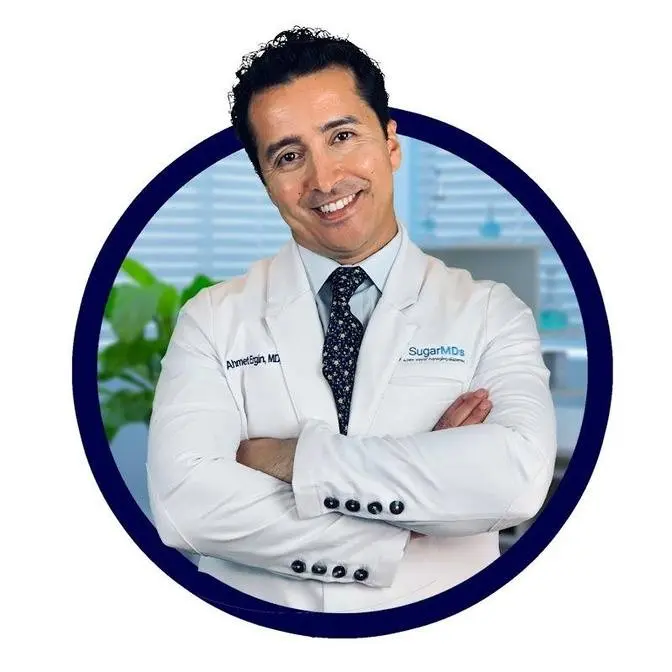
In this video, Dr. Ahmet Ergin breaks down: ✅ The "exercise peptide" scientists are excited about ✅ Peptides that may support wound healing and circulation ✅ Why diabetics should pay special attention to this emerging field ✅ The peptides that can actually make blood sugar WORSE ✅ The dangerous truth about buying "research peptides" online
⚠️ Not all peptides are safe. Some are FDA-approved. Others could land you in the ER.
If you or someone you love has diabetes, this is a conversation worth having with your doctor.
👇 Would you ever consider peptides as part of your diabetes care plan?
If you have diabetes, your body is already fighting a war on multiple fronts. Blood sugar,
circulation, nerve damage, slow healing, muscle loss. And right now, there is a class of compounds
that scientists have been quietly studying for decades that could be a serious game changer
for you specifically. They're called peptides. Some are FDA approved, some are being prescribed
by doctors today, and some are being sold in sketchy corners of the internet that look legitimate.
And that could land you in the ER. So we are covering all of that right now. Hello everyone,
this is Dr. Ahmet Ergin. I'm an endocrinologist, weight loss and hormone specialist. And today,
we have a very exciting topic for you. So what are the peptides? We're going to do a fast version.
You may already know what peptides are, but here it is. Your body already makes peptides, right?
So you make peptides. That's normal biology. They're basically short amino acids, tiny protein
fragments that act like biological text messages. They tell your cells to heal, grow, regenerate,
produce hormones, reduce inflammation, build muscle. Here's what blows most people's minds,
by the way. Did you know insulin is a peptide? You already know one, right? And peptides can be
great for you at the right amount. Too much of it is not good for you, just like insulin, right?
So peptides are not necessarily a foreign thing to your body. Now, when scientists figured out
how to synthesize specific peptides in a lab, medicine got very interesting. Now we can
potentially target specific functions, such as wound healing, metabolic dysregulation,
nerve repair, muscle retention. So for a diabetic, that list reads like a wishlist, right?
So why diabetics should pay attention more than anyone to the peptides? Well,
diabetes does four things that make peptides particularly relevant to you. By the way,
forgot to mention, Mondrata, Ozempic, Rigoli, Azepam, those are all peptides too. So what does
diabetes do to you, right? So one is it destroys the microcirculation, which are the tiny blood
vessels that feed your skin, your nerves, your feet, your kidneys. That is why diabetic wounds
don't heal. That's why amputations happen because the roads are blocked. Two, it causes chronic
low-grade inflammation. Your healing cascade gets stuck. The wounds stall and tissue breaks down.
Number three, it drives insulin resistance in muscle. Your muscles cannot take up glucose
efficiently. So over time, you lose muscle mass, and this is called sarcopenic obesity,
and it's extremely common in type 2 diabetics. You gain fat, you lose muscle, and it accelerates
everything else. Number four, it damages nerves, right? Peripheral neuropathy, we call it. Numbness,
pain, burning in the feet. This is where people stop moving and stop exercising,
and the whole spiral gets worse. Peptides touch all four of these. That is why this conversation
matters to you. So what are the peptides worth knowing about? Because there's so many of them.
MOTS-C, this one is produced by your own mitochondria, which is the energy-producing
units in your cells, in response to exercise. That's why I've been screaming, telling, repeating,
exercise, exercise, exercise, exercise. Research shows that it dramatically improves insulin
sensitivity, specifically in muscle tissue, which is exactly what diabetics needed most.
So animal studies on MOTS-C showed that older subjects, given MOTS-C, started showing the
insulin sensitivity of younger subjects. It also blocks obesity-related muscle loss.
It reduces inflammatory markers like IL-6 or TNF-alpha. This is one of the most exciting
metabolic peptides being studied right now. And then there is BPC-157 or 157, which is,
I call it the body protection compound. It promotes angiogenesis, which means it helps
grow new blood vessels. So this is great for a lot of people, but if you have bleeding eye vessels,
you don't want to do that, like retinopathy. If you have cancer or suspected cancer,
you don't want to do that because anything that helps your body will help the cancer as well.
But for a diabetic with compromised circulation and a wound that won't close, this mechanism is
very relevant, especially when used short-term. It also, you know, BPC-157 activates the fibroblasts,
which are the cells that lay down the new tissue. So most of the data is basically animal-based
right now, but the mechanisms make complete sense and human research is basically building up.
Thymosin beta-4, which is involved in cell migration and tissue remodeling,
that is another peptide. Early research suggests that it may help with wound repair
and reducing inflammation. Now, limited human data, but it is being studied in clinical settings
and anecdotally used in many clinics with great success. There's another one, LL37,
an antimicrobial peptide your body naturally produces. It can reduce bacterial bioburden
in chronic wounds while simultaneously supporting tissue repair. So for diabetic foot ulcers,
where infection is the primary threat, this is a peptide worth watching for.
So what are the peptides diabetics should be careful with? Not everything in the peptide world plays nicely
with diabetes, prediabetes, insulin resistance. Now, growth hormone-releasing peptides, things like GHRP-2,
GHRP-6, or epamoralin, stimulate growth hormone release. Growth hormone can raise blood glucose
levels, unfortunately. Now, for a diabetic, this means that you could be fighting your blood sugar while
trying to get a therapeutic benefit. It doesn't mean they're completely off the table, so if you're
a very stable diabetic, it means that you just absolutely need a doctor managing this,
not just a YouTube video or some online place that you buy from, which you should not. Now, IGF-1 is
the compound, right? So that is as a result of these compounds, IGF-1 is produced. So IGF-1
stimulating compounds are the same thing. They interact with insulin signaling pathways. The
balance is basically very delicate in a diabetic system, and it needs a lot of clinical oversight.
Anything that suppresses appetite aggressively without accounting for your medication can cause
dangerous, dangerous outcomes, especially if you're on insulin or sulfonylureas such as
glucoside, glycolide, glomerulide. This is not theoretical. This is a real risk. Now, the rule
is simple. The more powerful the metabolic effect, the more dangerous it is to self-administer when
you already have a metabolic disease. And here's a problem called the gray market problem, and this
is important. Here's where we have to be completely straight with you. There is an enormous market of
so-called research peptides being sold online. There are even some stores in my own town who can
go and grab a peptide as if they're grabbing a supplement. Well, the sellers will show you a
certificate of analysis. It's easy to deceive someone who's not educated about these things.
They'll show you third-party lab testing to make it convincing. They will look professional. They
will have like super slick websites that looks very scientific. Let me tell you, do not buy them. The
majority of these products are manufactured overseas, often in facilities with zero, zero
oversight. COAs can be falsified, or they only test for one or two contaminants and they call it a day.
Well, there are a lot of documented intoxication reports, hospitalizations, contaminated batches,
incorrect dosing, bacterial endotoxins that cause severe immune reactions. Your kidneys are already
under stress. If you're a diabetic, right? Your immune system is already compromised to a degree.
An infection of a contaminated peptide does not just cause a bad day. It can cause sepsis, organ
stress, organ failure, or worse. Now, if a compound is not FDA approved and is not being prescribed by
a licensed physician through a compounding pharmacy with proper oversight, you do not
put it in your body. Not everything has to be FDA approved. Supplements are not FDA approved.
You know, peptides are not FDA approved, most peptides. But here's the question. Where do you
get your supplements? What brand are you buying from? Because there, there is limited oversight.
And if you are getting your supplements, your peptides, peptides are worse because
peptides are injectable. Supplements, okay, if there's a toxin, maybe your liver can't handle
it because anything you eat goes through your liver. Anything you inject bypasses the liver.
So your protection mechanisms are gone. So you do not put those shady things in your body. That's
not fear-mongering. That's just simple logic and simple math, right? Simple risk-taking behavior.
So if you're a person who don't mind jumping the cliff, okay, go for it. But not my first choice.
Now, peptides typically represent the genuinely exciting frontier. It's available at compounding
pharmacies, 503A, 503B, through your physician, et cetera. But for the right patient, patient
selection is very important, especially for diabetics dealing with wound healing, muscle
loss, insulin resistance, and inflammation. It can help. The science is real. The mechanisms
make sense. The future is likely very bright. They may never become a medication, but FDA,
actually in July, is sitting down trying to legalize some of these peptides totally. But
right now, the right move is to bring this conversation to your doctor. So print this
out. Ask about MOTC, M-O-T-S dash C. Ask about VPC-157. Ask about TB500 or TB4. Ask if these
are compounding, if there are compounding pharmacies, basically, or clinical trials
that apply to your situation. The fundamentals still run the show, right? You got to care
about your blood sugar, blood sugar control, nutrition, movement, sleep, because no peptide
can replace these things, okay? People have these expectations that they're going to take
a peptide, they're going to turn into a Superman. No, it's not going to happen. But as an adjunct,
as part of a supervised plan, the potential is big and real. So stay curious, stay skeptical
of what you buy online, and stay in the room with your doctor long enough to have this conversation.
That's it. Let's go. See you in the next video.