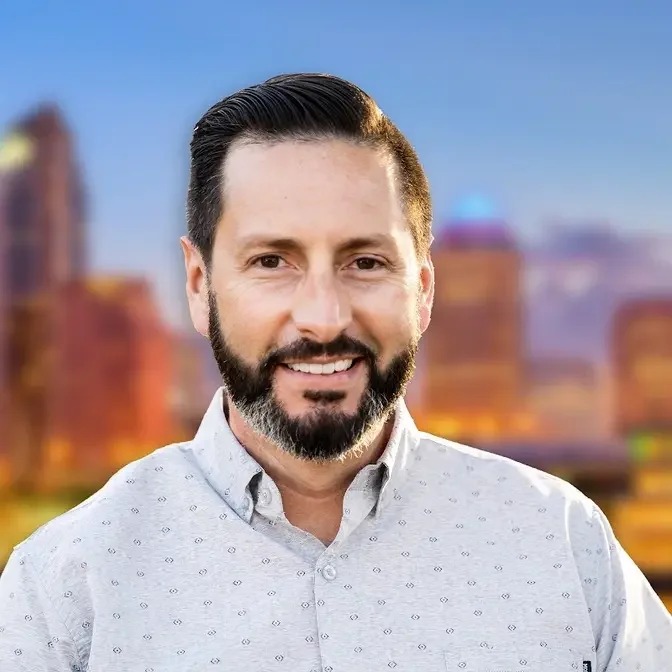
Moving to the Tampa Bay area in 2026? Contact Juan Alcala and the Tru Living Group at Real Broker, LLC to protect your family, your capital, and your future home from critical environmental blind spots.
In this updated guide, Juan Alcala looks back on 7 years of living in Tampa Bay, delivering an unvarnished review of the market. This isn't theoretical advice from an out-of-state blogger—this is a raw, boots-on-the-ground breakdown from a local agent who personally navigated Hurricanes Helene and Milton in late 2024 and watched exactly which real estate strategies held up and which ones failed.
Ready to make a move? LET’S TALK!
If you're considering buying, selling, or investing in the Tampa Bay area, we'd love to be your real estate team of choice!
Juan Alcalá | Tampa Bay REALTOR® | Tru Living Group at Real Broker, LLC 283 families served • $129M sold • 108 five-star reviews on Google, Zillow & realtor.com.
00:00 What They're STILL Not Telling You About Moving to Tampa Bay 02:35 Weather 05:44 Bugs & Wildlife 08:37 Insurance 12:14 Hurricanes 15:55 Traffic & Driving 20:33 Water & Cost of Ownership 24:38 Red Tide 26:47 Understanding What You're Actually Buying Into 27:35 Reach Out to Us
Real estate agent Juan Alcala provides a transparent guide to relocating to the Tampa Bay area. He balances the region's high quality of life and market opportunities against challenges such as oppressive summer humidity, pest management, and hurricane risks, urging prospective residents to make informed decisions based on their specific lifestyle needs and risk tolerance.
So you're considering making a move to Florida.
Well, you're not alone.
Hundreds of thousands of people have made
that exact same move over the last few years.
And right now, Florida is still one
of the top relocation destinations in the country.
And here in Tampa Bay, where I live,
it keeps landing on the best places to live list.
So you must be onto something, right?
And I remember saying this when I made the previous version
of this video a few years back.
And it's even more true now than ever.
Life here isn't all about the beaches, boats,
flip-flops, and margaritas, even though I wish it was.
Now, I first made a similar video to this
at our five-year mark of making the relocation ourselves.
And now we're almost eight years in.
And in between then and now,
something happened that changed everything,
and I wanna honestly share with you.
We lived through Hurricane Helene and Milton,
the two storms every relocation video
on the internet warned you about.
And they literally came 13 days apart.
So what I'm sharing with you today isn't from theory,
and this isn't a strict hurricane video,
but this is what they're still not telling you
about moving to Florida from someone who's now been
through the thing you're probably most afraid of.
So let's get into it.
And if we've never met before, my name is Juan Alcala.
I make videos that are all things Tampa Bay,
what it's like to live here, what it's like to work here,
what it's like to play here.
And a little over seven and a half years ago,
my wife Kate and I packed up our family of five,
moved 1200 miles south here to the Tampa Bay area,
and we haven't looked back since.
I'm also a licensed real estate agent
and a team leader here with the True Living Group,
where we help people just like you buy, sell, relocate,
and invest all over the greater Tampa Bay area.
And the goal with these videos is the same as always,
I'm trying to be as transparent as humanly possible.
And that starts with recognizing that I have bias.
I love where I live, we chose this.
Not everyone is going to love it.
And I make these videos to help you
make a qualified decision, not steer you into one.
And when I first made this video,
I was calling out an article that talked about
the really nice things about Tampa.
It was action-packed, plenty to do,
and it was extremely affordable.
Back then, the median home price was around 381,000.
Well, here we are a couple years later,
and that number's now sitting in the mid 440s.
And honestly, home prices here have actually cooled slightly
over the past year since the market
has really started to normalize again.
But here's the thing that holds true,
you're still going to get a lot of house for your money
compared to where most of you are coming from.
But I want to make sure that we get into
what most people aren't telling you
about living here in Tampa Bay.
And this first one is what everybody usually trips up on,
and it's the weather.
And I know what I used to think,
it's too hot, it's too sweaty, it's muggy all the time,
and I don't want any part of it.
And I was kind of one of those people,
I was really afraid more than anything else.
And if that's you, I totally get it.
But what we learned is this really depends
on where you live.
Florida is a humongous state.
Literally, there are mornings in the panhandle
that get snow advisory.
Heck, there was snow in the panhandle
a couple times over the last three years.
But eight months out of the year,
it's gonna be warm to hot.
And that depends on who you are.
I know everybody's gonna say a different thing about it.
Look in the comments, they'll tell you all about it.
The best word I can use to describe this
is oppressive in July, August, and September.
And I remember the first winter we were here,
and we were still in our honeymoon phase,
and I had a friend of mine over on the East Coast say,
hey Juan, have you ever lived
through a Gulf Coast summer before?
And I said, no, why?
He's like, well, you're gonna learn
because it's like waking up to a Labrador retriever
breathing three inches from your face.
And I remember that first summer,
and man, it was difficult, right?
It was an adjustment because I was so used to having
cooler nights where you could have a bonfire up north.
And here, that's not a thing in the summer.
It's still 83 degrees at 2 a.m. in the morning,
and sometimes the humidity's still up at 80%.
That's the reality of it.
And it rains most afternoons during the rainy season,
and that's during that summer section.
It's not gloomy all day long
like it was up north where I was from.
Sometime between three and five o'clock,
basically, it's going to rain, which is a good thing
because it helps cool things back down.
But it can also make you feel like you're walking around
in a bag of clams.
And I remember the first time I heard that,
I'm like, yeah, that's pretty fair.
But the area I moved from was cold and dreary.
There was sleet and snow for eight months out of the years.
And I'm just gonna be honest,
I hate the cold way more than I dislike being hot.
And now, November through April,
it's freaking glorious here.
We've got 70 degree weather here on average.
I turn my heat on maybe twice a year, literally.
I don't even have a furnace.
We have what's called an emergency heat.
Most people have a heat pump.
It's just something you do on those mornings
when it gets really cold.
Because we do have somewhere between 10 days
and two weeks of real winter here.
It does not snow, none of that stuff.
But we'll have one night when it gets close to freezing.
I don't know, one night.
And the rest of the days will be somewhere
between mid-50s and 70 degrees.
So it's pretty nice.
And I'm glad we made that trade.
So how do you frame this?
Well, it's gonna be hotter than you probably think
for longer than you're used to.
And it's gonna be way better than you ever imagined
on the other side for a heck of a lot longer
than you're used to.
So the best way to think about it
is count the whole year, right?
What is the advantage versus the disadvantage over time?
And if you're just sick and tired of dreary
and you can handle the heat for four months out of the year,
this trade is going to be well worth it.
And the weather's easy.
Everybody talks about it.
We all cover it.
But let me get into where this actually costs you
a little bit of money.
When it comes to bugs in wildlife,
if you come from somewhere that had a hard winter freeze,
you got spoiled.
The freeze kills a lot of bugs off.
We're subtropical here, so this area is ripe to grow things.
We have things like termites and fire ants,
and I didn't have to deal with any of that stuff
where we came from.
I remember my son, when he was about six years old,
he found this out the hard way.
He's walking out in the yard with no shoes on,
stepped on a pile of fire ants, and they lit him up, man.
And it was an experience, to say the least.
And there's these other creatures called no-see-ums,
and I didn't even know what the heck those were.
I'd never even heard that term before,
and they are literally so small
that you can barely see them, hence the word no-see-ums.
They're super tiny,
and these are the things you need to watch out for.
Everybody's worried about mosquitoes.
No, you don't need to be worried about mosquitoes.
You need to be worried about the no-see-ums,
because they are way worse.
And I came from the Great Lakes State.
We had mosquitoes everywhere,
and honestly, the mosquitoes were way worse up north
than they are where I live,
and I'm only about a mile and a half away from the Gulf.
I live in a very suburban area that is very coastal.
We always have a really nice breeze,
and that does a really good job of keeping the bugs down.
I also don't live in wetlands, but if you choose to,
you're going to deal with a lot more bugs.
That's just the reality of it.
If you decide to live near standing water or on wetlands,
then everything you heard about Florida
is probably gonna come true,
which, by the way, is the same reason
you don't want to live in a flood zone anyways.
But the wildlife you actually come for,
the egrets running through your neighborhood,
cranes in your driveway, the peacock fanning its feather
on the Dunedin Playground the first day we visited,
and gators are definitely real here, y'all.
You can find all the stories,
but in the over seven years we've lived here,
we've never had a gator situation in our neighborhood.
Now, we've helped over 200 families
make this relocation journey a reality.
They definitely have,
but we have clients that choose to live on retention ponds,
others that have bought onto lakes,
and they know what they're getting into.
But they're not problems.
They haven't had any of them come in their homes,
and this is just the reality of living in Florida.
You know, and there's so much more.
You know, we're right in the middle of a summer,
and we have the turtles nesting right now.
We've got the rays back in the Gulf,
and you gotta respect these things
and be mindful of your surroundings.
You know, the kids do the stingray shuffle
when they're out on the water,
but none of them have ever been stung,
and they get to see dolphins every day.
It's just awesome, man.
So make sure that you're thinking through that
when you come in.
Make sure you budget for your pest people
to come out monthly.
That's something that most people don't understand.
You can get these things mitigated
or completely taken care of.
This is not something you have to worry about
on a day-in, day-out basis.
And if you are seriously considering making the move,
don't hesitate to reach out to me.
If you look down below,
all of my contact information is down there.
Including a link to my calendar
so you can schedule a time that is most convenient for you.
Let's get back into the video.
The next one is insurance.
When I first made this video,
this was a really scary topic.
And I think it still is for some people,
but the reality doesn't match up with people's fears
in our current environment.
And what I shared with you then
is companies were leaving Florida.
You were gonna have to pay more for insurance.
And the internet was full of people
who didn't even live here,
saying Florida is sinking.
You'll never get insured.
I'm sure you've run across all of those things.
And that last part was false then,
and it's even more false now.
But here's what I couldn't share with you two years ago,
and it's one of the biggest updates in this video.
The insurance market has really turned around.
After some state reforms,
we have something like 20 new insurance companies
that have come into the state to compete for our business.
Citizens, which was the state-backed insurer,
the one of Last Resort, that was my insurance company,
has dropped from about 1.4 million policies
to roughly 400,000 as of 2026.
That's the lowest since 2012,
because people are moving back into private market,
just like mine.
And instead of all of the insurance companies
filing to raise rates,
state regulators have been approving companies
to hold them flat or cut rates.
And we've seen real relief through 2026.
My insurance personally has dropped.
My auto insurance has dropped for two straight years.
And in case you didn't know, I'm a data guy,
so here's what that actually means for you.
One of the things that you were probably most afraid of
has been quietly getting better
while you've been researching.
Insurance isn't free.
Florida will never be the cheapest place to insure a home.
But the trend is finally turning in our favor.
So right now you're probably thinking,
okay, Juan, but how do I not get the ugly quote?
And it's the same answer as always.
It comes down to the house.
And let me share my homeowner numbers with you.
You know, I own a four bedroom, two and a half bath,
2200 square foot home with a pool
less than a mile and a half from the Gulf.
So for most insurance companies,
if you were just thinking out loud,
you would think that that home is a fairly risky bet.
But it's in a non-flood zone,
which means I'm not required to carry flood insurance.
I do.
It's also in a non-hurricane evacuation zone.
And it sits about 43 feet above sea level,
which in Florida is basically a mountain.
Now I pay about $2,800 a year for my homeowner's portion
of my insurance policy.
And then I also have a separate flood policy.
We're gonna get into that story later.
That policy cost me about $650 this year.
All right, now I'm not required to carry it,
but I do because most policies don't cover your home
in the event of rising water.
We're gonna get into that later.
Meanwhile, I've seen clients try to buy right on the water
and get quoted $10,000 or more just for their flood policy.
This is the same market,
but a wildly different insurance bill.
And this all has to do with the location,
with the condition of the home, the age of the home.
There's a lot of factors.
And if you wanna go deeper, feel free to reach out
or ask questions in the comments below.
I'm happy to get to it.
You know, if you add a new roof,
if you've got hurricane impact windows
and you're close to the coast,
all those things drive that number down.
There's a ton of factors.
And I've gone into detail on this channel about roofs.
You know, at the end of the day,
insurance companies don't wanna see a roof
over 13 years old.
Really, they don't wanna see one over 10.
They're not legally required to write a new policy
on a roof that's older than 15.
And there's a whole set of landmines
you have to learn how to navigate,
but you can just reach out to somebody like us
who can walk you through that.
So just having a basic understanding
of how to approach this,
you can really mitigate not only your risk,
but obviously the insurance costs
that come along with the home that you're considering buying.
Next up is everybody's favorite topic
if you don't live here, and that's hurricanes.
And I have to be honest
about what I told you guys last time because it matters.
The last time I made this video,
I told you I scared myself half to death
on Dr. Google before we moved,
typing in worst places for hurricanes in Florida
and then spiraling out of control with my thoughts
about all of the things that were gonna happen.
It's like WebMD, just don't do it.
And I shared with you then
that Tampa Bay had been incredibly blessed,
that 1921 was the last time
that we had taken a direct hit from a hurricane.
Over 100 years, I think it was 105 as a matter of fact.
Well, in the fall of 2024, that streak met reality.
Hurricane Helene came up the Gulf Coast
and pushed a record storm surge
into the low coastal parts of Tampa Bay.
And we had massive floodings in areas
like Indian Rocks Beach, which is my home beach,
Clearwater Beach, Madeira Beach.
Y'all, I was down there helping people
remove all of their belongings from their home
to throw them away.
And about two weeks later,
Hurricane Milton made landfall just to our south
and dropped close to 20 inches of rain on St. Pete.
And y'all, I'm not gonna sugarcoat it.
People got hurt, the coast got hit,
and it was a real test that Tampa Bay
hasn't faced in over a century.
And my home was even flooded from the rainwater.
We shared our entire rebuild journey here.
It was definitely a difficult time.
So I wanted to share a transparent update on this,
and it's the whole point of this video.
Everything I told you about how to buy held up.
The people whose homes were really damaged
overwhelmingly were in low waterfront evacuation zones.
The people a few miles inland on higher ground
in solid homes on newer roofs,
most of them were fortunate enough to clean up branches,
they lost power for a bit, and they got back to life.
Same storm, same week,
two completely different experiences
decided by a line on a flood map
that they looked at before they ever bought.
And there's an old Florida saying here,
You hide from the wind, you run from the water.
And a well-built modern block home handles Florida wind.
What you're really managing is water.
And water can be predictable, not always.
There were definitely rivers that overflowed.
I mean, y'all, we can look anywhere in the country
and point to flooding, it happens everywhere.
The Northeast, the West Coast, we've seen,
what do they call those things?
Bomb cyclones or something.
We all have funky names for when we get flooded
everywhere in this country.
So when you're looking in the area,
make sure you've got flood zones mapped out.
Make sure you have evacuation zones mapped out.
And the elevation of a property
is something that you can look up
before you even make an offer.
All of those things are documented at the county.
Where that foundation sits has been surveyed.
And the unique thing is
everybody prepares for these differently.
And if you're wondering how to prepare for these things,
there is a plan.
All of the counties have websites
on how to manage these things, how to prepare.
You know, for our family, the rule really hasn't changed.
If it's a category three or stronger hurricane
predicted to make landfall in our area, we're gonna leave.
I'm taking my family, I'm taking my dog,
and I'm taking my guitars and we're out of here.
Everything else can be replaced, period.
Because the reality is no one can promise you
a storm-proof house that is on a peninsula.
And y'all, I live in Pinellas County.
I live on a peninsula, on a peninsula in the ocean.
And Florida is a giant peninsula.
So what I'm sharing with you now with proof and not theory
is that you can stack the odds heavily in your favor.
People who got burned in 2024
simply didn't know these things were choices
and or they made those decisions.
And now you do.
So the question was never, is Florida safe?
It's which side of the line
am I comfortable buying a home on?
Now I wanna get into traffic and commute times
because this is the one that I think
people still try to sugarcoat.
And it definitely is way worse than you think.
And it can also be better than you realize.
You have to know how to navigate it.
So I'm gonna walk you through it here.
The reality is with the amount of growth we've had,
if you look over the last 10 years,
there's been about a million people who have moved here,
which is wild.
That is a lot of growth
that almost no city can handle real well.
And with all that growth,
our infrastructure has been stretched.
Tampa is an older city.
And the surrounding areas wasn't built
for 3.4 million people.
And as a matter of fact,
I think downtown Tampa was originally built out
for about 60,000 daily commuters.
And now they're somewhere in the range of 200,000.
Now there's a lot of projects taking place.
They're reworking Malfunction Junction.
We just had an expansion of I-275
and a lot of good things that are happening here.
And the roads themselves are actually really good.
As someone who's moved from Metro Detroit
where there are some of the worst roads
in the entire country,
which is crazy to live in the Motor City
and recognize that you have the worst roads in the world.
I mean, that was a place
where potholes could literally swallow your car.
You'd be driving down I-96
and there would be five or six cars pulled over
because a pothole opened up
and everybody broke their rims and wheels
on the way to work.
It was just a nonsense and it was a mess.
And here, our roads are great.
Do you run across the occasional pothole?
Of course you do,
but they are much more of a divot
than they are a pothole.
But for the most part,
our roads are glorious here.
I love it.
But one of the things that took me a long time
to get used to was the lights here.
Some of them you can sit at for a minute and a half,
two and a half minutes
while you're waiting for other traffic to move.
I swear to goodness you can answer emails
or knit a blanket at these lights.
It's wild.
And Florida drivers,
I mean, you hear a lot about,
hey, it's crazy here,
but in all fairness,
there is some truth to that.
I always tell people it's a full contact sport.
I literally don't think that,
but y'all, we had a rough start here.
The first three years we lived here,
my vehicles were hit every year
for that first three years.
No, no, no.
I didn't run into people.
My vehicles were hit twice in a parking lot.
And once while I was on the highway,
someone rear-ended me.
Now it's been almost five years without it.
I'm knocking on wood.
So that continues.
But there are so many people who move to this area
from other places in the country
and they have different driving techniques there.
They have different road types.
And yes, we all know how to drive straight.
Well, in theory, most of us do,
but there are different habits
and different ways of doing things.
There are U-turns that are available here.
Not everybody is moved from areas
where U-turns are possible.
We used to have a thing called the Michigan Left.
If you're from Michigan,
you know exactly what I'm talking about.
You have to drive really far to turn around.
Here, you can literally make a U-turn at a light
and it throws people off.
And there's an adjustment period when it comes to that.
And a lot of the times, let's be honest,
not everyone on the road belongs there.
We have younger kids who may be distracted
by a lot of things going on.
Heck, we've got everybody in between
who's distracted by things
that are happening inside of their cars.
And we also have senior citizens
who some of them probably, you know,
they should have a little bit more testing
about when they're driving, but I get it.
And I'm not here to beat on anybody at all.
Let's just be real.
23 million people live in this state.
You're gonna see a lot of different driving techniques
and you're gonna see a lot of different things.
So when I say Florida driving is a full contact sport,
I don't literally mean you need a helmet to play.
You're definitely gonna wanna keep your head on a swivel.
And here's something I'm gonna help you with right now.
If you're on I-75 or I-275,
please don't stay in the left lane if you're only doing 80.
And yes, I said that,
because people will literally try
to push you out of that lane.
That is for passing only.
Florida does not play games when it comes to that.
So make sure you keep that in mind.
And if you're used to a world
where 30 minutes equals 30 miles,
that's not the reality here anymore.
Most often you hear people talk in terms of time here,
not in terms of mileage.
Hey, I'm going to blank.
It takes about an hour to get there.
And that may be completely normal where you're from,
but here you're definitely gonna wanna get used to that
because the mileage to time ratio
is gonna be entirely different
than where you're moving from, I'm sure.
If you're moving from areas like LA or Chicago or New York,
then Tampa traffic's not gonna be a big deal.
I think we're in the top 20 now
in terms of congestion and drive times.
It's not that bad,
but you do have to know how to work around things,
and there's a lot of ways to do it.
So budget a little bit more time for your daily commute.
If you're a remote worker,
this isn't gonna affect you at all.
Here are a couple of things
that I think most people don't ever mention.
First is the water quality.
And I'm just gonna be frank.
The water quality in the state of Florida
coming out of your tap is brutal.
Now, Tampa's about to open up
one of the first treatment facilities of its kind
in the entire United States.
So heck, in a year, this video already might be outdated,
and they may have incredible water,
but I'm telling you right now, prepare for it.
It's very unique in a few different ways.
The water's very hard.
There is a ton of rust in certain areas and calcium,
and we sit on these limestone aquifers, which are wonderful,
but you need to prepare for treated water in these areas.
And it took us a long time to get adjusted to this stuff.
We ended up with a full water treatment system
for our house, and my wife, Kate,
complained about how her skin felt.
She complained about how her hair felt.
And once we got that water treatment system in our home,
all of that changed.
It's been awesome ever since,
but it was really hard on our appliances.
There was staining inside of the dishwasher.
You never felt like you got the dishes clean.
The glasses would always have spots on them,
but since we've made the treatment, it's been a ton better.
So make sure you budget for that
when you're buying a home here.
A reverse osmosis system is a great way to go.
Not super cheap.
You can also, of course, do the salt treatments
and a lot of other things.
We used to keep the five-gallon Zephyr Hills jugs
of water in our home, so we could just drink from that,
and then we would shower in the other water
until we got the treatment system.
But now it's just been a game changer,
so I can't ever look back the other way.
The second thing, if you're not used to it,
is gonna be the cost of ownership
because of what the sun and the salty air
can do to your properties.
Now, if you're further inland,
you won't experience this as much,
but if you live in areas like Clearwater or St. Pete
or in Tampa proper and you're close to the Gulf,
you're gonna have salty air,
and that's really gonna affect things.
The sun is really hard.
Anything that's made of petroleum,
which is almost all plastics on this planet,
including your roof, or has a glue in it,
it's affected by the sun.
So UV beats it up, it doesn't last as long.
You know, if you're from an area
where you can get 30 years out of a 30-year roof,
you're not gonna see that here.
A great asphalt roof is gonna last you
somewhere between 15 and 25 years,
give or take, depends on what's going on.
But I want you to think through that.
You'll see a lot of people who choose
to do terracotta or metal roofs because of that.
The humidity is another thing.
Again, there's salt in the air.
You're gonna wanna do a lot of power washing
on the concrete around your home.
We do our pool deck and our concrete twice a year,
along with our fence, because on the north side,
it will tend to build up mildew on it.
We have a white vinyl fence.
It's about 10 years old now,
and it's starting to show those stress cracks,
so we're gonna be looking to replace that here pretty soon.
Also, if you're used to getting 15 or 20 years
out of your air conditioner,
know that that's gonna be a bit of a stretch.
Are there ACs that make it that?
Of course there are,
but remember, these things run constantly.
They're just not running randomly for six months
or four months out of the year,
if that's what you're used to.
And same thing.
You may not even have a furnace here.
It depends on where you move to.
We live far enough south, like I've shared,
but we turn on the furnace probably twice a year.
And none of it's really scary.
It's just different,
and you have to understand how to maintain a house.
We don't have ice damming and crazy things
that you may experience if you're
from the Northeast or the Midwest.
You know, we don't have mudslides here,
so if you're from the West Coast,
we don't typically have concern of fire.
We did have fires this year,
which is really rare in Florida,
but it's not usually a thing
that anybody has to worry about.
No one has a fire insurance policy
on their home here in Florida.
So just go in knowing that
so you're never really caught off guard
when it comes to the cost of ownership for your homes.
And this is one that I'm happy to report
hasn't really affected us over the last few years,
like it did the first few years we were here,
and that's red tide, which sucks.
I'm not gonna lie.
And I don't think we've really dealt with red tide here
in the last four years, honestly,
and again, I'm gonna knock on some more wood,
because it really is not a fun thing to do.
It kills the marine life.
I mean, you can see some gnarly fish
floating all over the place.
It smells terrible.
It can affect your breathing.
There's a lot of things.
It is obviously much worse closer to the coast
as you get there,
but there were times over the last seven and a half years
where I was sitting on my patio,
again, almost a mile and a half away from the coast,
and you could smell it,
and you could feel it in your chest a little bit,
so that's tough,
and it's something that if you have health concerns
or respiratory issues at all,
you definitely need to check into,
but this is not a daily concern.
I know people talk about it, and we should,
and I don't think anybody shouldn't share the things
that we get challenged with here.
You know, that happen naturally.
These algae blooms do happen naturally.
Now, are they accelerated by what we do?
I'm pretty sure they are.
They feed off of nitrogen.
Well, everybody loves to fertilize our beautiful lawns here,
and when it rains, where does all that run off?
It runs off into the bay,
so if there's one of these algae blooms,
and they're ready to eat,
and we start feeding them because of the rain
and the runoff, that can be a challenge,
but again, we've been very fortunate
over the last few years,
and I'm very grateful for it,
and when it does happen,
it's typically during the peak of the summer
because of the temperatures.
Obviously, bacteria loves to grow
when things are super warm,
and the Gulf is super warm as well,
so it's not something that you should have
to concern yourself with dealing with all the time.
Again, it has been sporadic the time we've been here,
but I think it is something that you should be aware of,
especially if you're someone who has sensitivity
and respiratory issues.
I wouldn't want anybody to have to deal
with things like that.
Again, you can move further inland.
It shouldn't be an issue for you.
I'm not a doctor.
I don't play one on YouTube.
I just wanna make sure that you are fully aware
of what you guys are walking into
when it comes to moving here to Florida,
and I know this has been one of our longer videos,
but man, I really hope you guys get value out of this,
and so after seven and a half years
living through back-to-back hurricanes
and helping over 200 families
make the exact same move that we did,
here's my personal honest share on moving to Florida.
We absolutely still love it here.
We think we made the best decision ever.
Yes, we had to live through one of the hardest things
we ever could have imagined,
but we didn't turn around, pack up, sell our home,
and move back up north with our tail tucked
between our legs, and I'm not saying
that anybody who did that is wrong for doing it.
We knew the risk when we moved here,
and we were willing to accept it,
and unfortunately, we had to meet that reality.
Now, the good thing is out of the 200 families
we moved here, none of them experienced that.
We were the only ones,
so if you can learn anything from this video,
it's learn our lessons and let me wear the scars,
and if you're considering moving to the area
and you have more questions or you wanna go deeper,
that's what we're here for.
That's why we make these videos.
If you look down below, you'll see a link.
That'll allow you to book a Zoom call with me personally.
During that call, we'll open up Google Maps,
point you towards the communities
that you're describing to us,
make sure that you don't step on landmines along this way
and end up in a situation that you regret.
We wanna make sure that if you're going
to make this move, it's a heck yes,
and you only have to do it once.
So if you wanna take us up on that, feel free to do it,
and I'm gonna put two more videos up here
that I know are gonna help you with your relocation journey,
and as always, until next time,
go out and live that Tampa life.