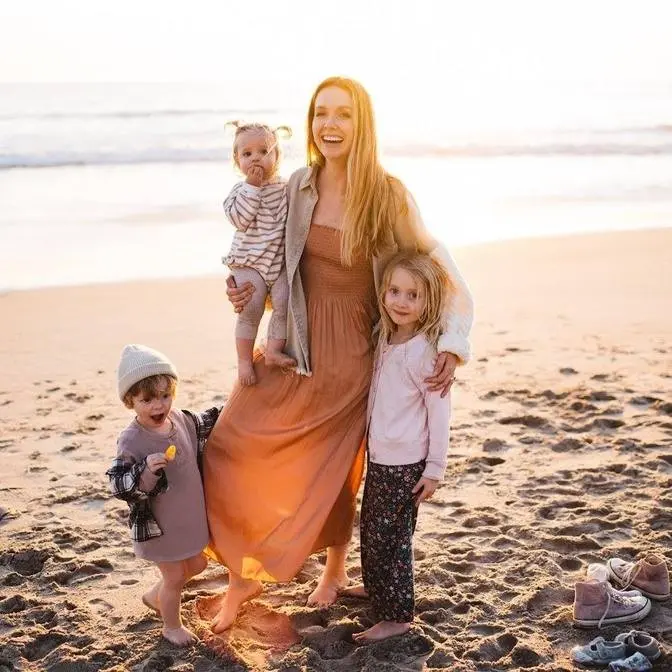
Special guest (in an accidentally VERY zoomed in video) the wonderful Layne Deyling Cherland eloquently shares her insights about toddlers and their big feelings.
How do we react when our toddlers have a tantrum? What do we do when our little one freaks out? What about when our child is melting down in a public place or we are experiencing the heartache of separation during what many call the "terrible twos"? Early childhood educator and consultant Layne Deylind Cherland of @enquiryco (on instagram) shares her insights on how a young child is developing and why they are the way they are. This video is for moms, dads, childcare providers and early childhood educators. ❤️ __________________
Hi you guys, welcome back to my channel. My name is Jessica. If you're new, it's so nice to meet you.
If you're returning, it's great to see you. Today, I have a very special guest with me. We're going
to be talking about toddler feelings, which I am a mom of two toddlers at the moment,
and they have big feelings. And a lot of times as a parent, it can be really hard to understand what
they're going through, make sense of it, and know how to respond to the things that are happening
in their lives. And this friend of mine is a new friend. So recently, we got connected through
someone I love very, very dearly. And he was like, Jess, I met this girl. You have to meet her. The
stuff she says is so valuable and poetic. We decided she speaks in a very poetic way. No,
she's beautiful. And the stuff that she brings is really important to moms of young kids. So
Lane used to be a preschool teacher. She creates curriculum for young children ages like two to
four. We're going to do a series of videos together on my channel focusing on two-year-olds
and three-year-olds. And then if you are not yet a part of the Very Good Mothers Club
paid community, we're going to have Lane do a Zoom call in there where she is talking about
play with young ones. Today's video, though, is about big feelings. So Lane is going to introduce
herself. I'm starting the filming right here on my phone like this so you can see how lovely
she is. And I'm here too. Okay, great. But we're actually going to be switching and filming on a
camera that has a lens that's very close up today. So you're going to get right in on the faces.
And I just wanted to prepare you for that so that we didn't jump straight into like this close.
But you're going to love it. She has a very pretty face. She's going to do most of the
talking today. And if you have any questions, she wants to be able to answer those questions.
So she's going to open it up for you to ask her questions in the comments. But also if you want
to do kind of a consulting call with her, she's going to make herself available for that too.
And as somebody who has met with her firsthand and now again, I just I recommend it. If you
are a parent and you're looking for some more support with your toddler with your young child,
she's got some really good insights. Now we're going to jump into the video filming
from the camera right over there. See you in a second. Hi, Lane. Hi, guys. How do you like our
faces? So Lane, we're talking about toddler feelings. You actually are going to be talking
to a group of moms about this tonight as well. Super fun. Yeah. So will you just kind of jump
in? I'll ask questions along the way if I see space for that. But we just want to hear from you.
Cool. Sounds good. So toddlers are my favorite kind of people in the whole wide world. I never
meant to work with them. It's kind of an accident. Somebody just plucked me out of one job and into
the next. And I ended up in this room with 12 two-year-olds. Wild. And discovered there that
they are this kind of raw form of humanity. I think it's one of the only times in human
development that we're like really able to tell the truth in this very powerful way. They're so
raw and they're so complete. And it's the first time that they can communicate and they don't
have any artifices. So that's the poetry thing. When was the last time you said artifices?
That's the power to me of the toddlers. Artifice free. Okay. But like the wholeness of who they
are gets to come out in this really powerful moment because it's the first time that they
get to express it. So I feel very passionately about them. I do feel like they're pretty
misunderstood. They get called all kinds of terrible names and things. For me, the thing
that sort of unlocked the terribleness of this crazy wild time is learning what they're doing.
What the moment of development means for them. So really your toddlers are big and volatile like
this because humans get born too early. Unlike other kinds of mammals who are born like ready
to run away from cheetahs and swim in the ocean and things like that, we have super huge brains.
So we come out when our heads can still fit through the birth canal, not when we're actually
ready to live in the world, which is why infants are so, they need you so badly. It also means that
the mother or the primary caregiver for an infant, they think that you're the same. They start out
thinking that the whole world is just them. Everything that happens is them. And then they
can kind of separate from the world, but you're the same as them. And then they go through some
phases of this like moving away, away, away from you thing that really kind of culminates when
you're two. Two is, well, that early toddlerhood is them really doing the thing of like, who am I?
Who are you? Who am I? Who are you? And sort of exploring the world from coming out and then back
to you to touch in and out and then back to you. That's where you get the sort of separation anxiety
and then the no comes in that like, I need to say no to you because now I know that I can't. I could.
Yeah. You're not the same as me. So then two years old is this big exploration of that,
of like, if I'm not you, then who am I? What is this? It's this learning that there are edges
between me and you and me and the world. And now I have to go find all the edges,
um, which is tough. Yeah. I will, I will say that I encounter a lot of moms who are nervous
about that stage, but I have found in my parenting that that stage is one of my favorites because I
love, there's like such a cuteness in, and a sweetness in them learning how to speak and
learning how to relate. And it's like, it's a time when they say, I love you. And they,
they like choose you and they choose to be away from you. But when they choose you,
knowing that they could also choose to be away, there's something much more powerful in that.
I don't know. I find that stage to be really exciting. And I want people to know that because
of what you said, like it gets all kinds of names and I mean the main one being like terrible twos
and there are aspects of it that feel pretty bad in the moment. Totally. But I also think that in
every stage of parenting I've experienced, there's sweetness that I love and there's challenges that
I really don't like. But in the two stage, I love seeing their personality come out and hearing them
communicate and all of that. It's so fun. I'm so happy to hear that. I want people to like it
so bad because I like it so much. Um, but also I'm, I'm not their mother. So there is, of course,
if you are that mother or primary caregiver, the pulling away piece, they also felt like you when
they were infants too. It was so you are me and now it's becoming like you and me where you have,
you still have this relationship because they're small. That is so intimate, but it's not,
it's not a mesh anymore. Now it's you and me as opposed to you are me. And that the separation
there has a pain to it. Um, it's scary for them and it can be very painful for parents and
caregivers. So there's big adult feelings along with the big child feelings, um, which needs to
be respected and just, um, just acknowledged and addressed within yourself and within your child.
One of the things that is, um, really important in this twos phase, as you were sort of now
sure buying them through the rocky terrain of being on your own person in the world is that,
um, adults, you get met with behaviors that are intense. And if another adult were to treat you
that way, it would be deeply offensive and uncool. These are not other adults. Yeah. These are
children. So learning to regulate inside of yourself, whether it's the feeling of like,
I don't want you to go be little still, or like, how dare you speak to me that way? When we
escalate an adult who's escalated cannot deescalate an escalated child, right? You have only two
people who are up here like this now. That's really good. So that's understanding what they're
doing and where they're coming from. And then also being confident to like in an airplane,
like put your own mask on first. Like you've got to handle the escalation inside yourself
so that you can then be bigger than the feeling that the child is having. Cause you can be bigger
than your own feelings first. Yeah. So, so like in a practical sense, like the little child maybe
is throwing some sort of tantrum in a public place. That's one of the hardest moments to
navigate because eyes are on the mom. And it's almost like the feeling is like someone's probably
watching you to handle it wrong, you know? And you know what they are. Yeah. It's just how I feel.
There are people in the grocery store who are not going to be respectful of the moment that you're
having with your child or understanding. Yeah. And so in the moment, any moment like that,
would you have kind of any practical guidance for us? Um, like, Oh, tell us. I think that's
one of the most common kind of freaky scenarios as a mom is like, well, I'd like to go run this
errand, but what if it all goes South and I'm about to embarrass myself and really get frazzled.
Yeah. The grocery store and the playground are the two biggest questions I feel that come up
for toddler parents. Um, the first thing I would say is you, again, to, you need to be bigger than
the feeling, the feelings that are coming up for you in a situation like that, as the adults are,
of course, like mostly other adult feelings of like, how do I not be embarrassed? So if there's
the possibility for you to model letting go of your ego and saying like, my only responsibility
is to myself and to the child who I'm trying to teach how to be a person. Yeah. I, what you already
have done there is like diffuse shame for yourself. And then also not added any shame in for
a child who is tantruming. They're not doing that on purpose. There's, there's a level you can see
it like goes up, up, up this part is still behavior. And then at some point you tip and
they're in an absolute, like they're in the back part of their brain in like total panic state.
And they're not trying to embarrass you and they're not trying to do anything terrible.
You can suck all the shame out for yourself and for your child, then you're now deescalated and
can be like, okay, are we in the middle of the grocery store? Could I scoop you to the car
quickly where you can have your tantrum? Do I need to just sit on the floor and be like,
yeah, we're going to let this wave crash over us. I think one of the biggest things,
let's say this emotional regulation, social, emotional skills, all of these big concepts
that can be complicated. I think they can be boiled down to, I exist. I'm a person. I'm having
a feeling. I'm not this feeling. This feeling will be gone soon. And I can solve this problem.
I, that, that's, that's being a human. That's all of it. And that's what it is,
is moving through life with a toddler is remembering the respect of this is just you
being a human. I'm being a human over here. You're being a human over there. It's your first time.
It's not my first time. So I can be larger than this feeling. I can show you what that looks like
for me to do it. And then I can walk you slowly through that process. And that will look different
in each situation. I wish there was like a quick unlock. Here's how you make a tantrum go away.
But I can't make a tantrum go away because it's not a tantrum. It's a person having a feeling,
you know, so what it is, is how do I be next to you in this and like move you through this
in a way that's respectful and as quick as it can be. Right. Um, which isn't to say that they
just get to take over and share whatever there are ways where this could, this process becomes
too porous. Yeah. Because part of them finding their edges is they're crashing up against you.
Yeah. Almost like a wave against a sea cliff and you get to just like be this sea cliff and say
like, I'm not going to move. Yeah. And that's actually the thing though. Of course they will
be like upset. They're having a tantrum. They don't let they in the moment they're like move,
but you consistently and calmly saying like, I don't move. That's actually the safest thing for
them. They really want to know that you're bigger than the feeling that you're bigger than them
and that it's, you're the safe place for them to give all of this feeling, this feeling,
this feeling. And it teaches them how to sort of feel their own skin and know what the edges are.
And then you're reflecting appropriate boundaries to them just by saying like, I know where the
edges, this is where it's safe. You can't treat my body that way. I'm here for you. All of those
kinds of like sturdy, peaceful things. Because if you're constantly in flex, then what they learn is
maybe there aren't any edges. Maybe there is no space between me and her or me and the world.
So you being able to handle your own emotions, be there for them, let them sort of crush the
wave of those feelings up against you and kind of draw the boundary line. Then they get to learn
where the edges are and they get to comfortably differentiate and be their own person. That's
he said that he started doing something when Wilson would have, we call them freak out moments,
just kind of this tantruming moments, um, that Sean started to like in the moment, talk to him
and then be like, okay, buddy, we're not going to have a freak out with everyone here because
it's disrupting everyone. So if we're going to have a freak out moment, it's going to be over
here and in a different room. And so he started doing that every single time. Like, okay, we're
going to have a freak out moment. It's over here. And it has helped so much. And sometimes he,
now Wilson will say he's almost three now, but he'll, he'll be like, like, okay, I'm not,
I'm not having the freak out. Like, cause he's, he's like getting to a point where I'm like,
I don't, I don't need to go to the other room. Sometimes he does want it actually.
If he needs some alone time, we call it alone time too. If you need alone time. Um, but I've
just noticed the consistency of Sean being like, okay, if you're going to have a freak out, we're
going to switch rooms. Then it helped him. It really did. And so now Joel is she's a year and a
half. I, we can kind of see her creeping into some of this stuff, but she's not yet responding quite
the same way. Like we don't feel as comfortable being like, okay, now you're going to go have a
freak out in another room. I don't think she's totally grasping it. I've still done it with her.
Sometimes we're like, okay, if you're going to throw a big fit, she does these like lay down
fits now where we're like, well, we'll take her into, there's like a soft cushion in another room,
like, okay, well you can do that right here. Um, because we live in a small space. I mean,
you're here and there's five of us. And so with big feelers, the way Sean and I have talked about
it is that we want to allow space for all these feelings to happen, but also teach that just
because you're feeling something big doesn't mean that it needs to kind of disrupt everything
that's going on. So I guess maybe that's an edge thing. And we have an older daughter now, she's
six, almost seven. And we're practicing the same with her in a, in a more grown way of like,
if you're having these big feelings, that's okay. You want to talk about it. Let's figure this out.
But then now do you need some time to go read or draw or just be away from your siblings? Um,
so far, so good. It's all like, you know, there are moments where I lose my temper and I go and
like, I'm so sorry, guys, I reacted way too big to something that was very small. I've done that
on numerous occasions. Um, but even that I try and remind myself, like, they're going to have
moments of that too, as they grow, where they react way too big to something that didn't require
it. Uh, and if we can learn like quick, I'm sorry, and resilience in that way. And like,
do you forgive me? Or, you know, whatever needs to take place to make amends for whatever
trying anyway. So that's my two cents on that. I love that because what that says is it's not
no to your emotions. It's not no to this freak out. It's yes, you're having a feeling and you're
in that's real. That's happening. You're entitled to it. You're a whole person where it can't be
what it can't do. You're just showing like, yes to you and what's happening. This is the place for
it. Yeah. But I also love the ability to step away. And I know that there's a lot of discussion
about timeouts or take a break or like those kinds of things. And sometimes a lot of us experience
that as very punitive. And, uh, I feel like a lot of people have questions for me about like,
my sister does take a break, but it's always in the same chair. So isn't that just a time?
Um, but the, if you can do it in a way that is respectful, what you're offering is let's get
you to a place where you can have these big feelings. I can focus with you. You can focus
with me. You can do this in private, which is a super powerful tool for adults. Oh yeah. Like
these are all future adults. What we're doing is practicing here. They're just practicing being a
person for the very first time. So if you can instill in them the practices that work for you
as an adult in like an age appropriate and reasonable way, that's really good. That's what
we're doing. Crafting powerful people who are able to be bigger than their feelings and move
through life. Not not having feelings, but deciding what to do with their feelings because they know
they have options and they've practiced. Yeah, that's really good. What could we leave them with?
Because all of this is so helpful. Yeah. I think the most helpful thing for me that I learned in
learning about children and spending time with them was to recognize that we're all just practicing
and not practicing in the sense of like the way that you would practice a skill or a sport in
order to like be great at it, but practicing in the yoga sense where even the most master level
person in yoga every day simply returns to their practice. Like the entire way that you spend that
time. This is my practice. So for adults and for children, like initially it was taught to me as
remember that they're all just practicing, but really what's true about a two-year-old is true
about me. So the grace for myself comes with today maybe I didn't practice so well and I will return
to my practice in the morning and that's true for your two-year-old as well. Whether it was a 45
minute tantrum today or we got through it nicely, like tomorrow she will wake up again and we will
return to the practice without ever needing to arrive. That's so good because it's so real
as a mom to end the day head on the pillow and you just start recounting all of the ways that you
didn't do it and it becomes a scary thing at least in my mind of like but we're running out of time
like they're growing and I'm not going to be able to redo this but if you can just remind yourself
like no this is a practice we're all just practicing then it's it's much more grace filled.
Yeah I love that that's beautiful. Yeah and if you don't like the way that you practice that day
you still get to say I did my best today with what I had. Every day I do my best some of the days my
best is lower than what I would like my best to be but you move that up with better information
and more practice. You're like today not go the way I wanted it to I perhaps I should read a book
perhaps I should chat with a friend perhaps I should whatever some input and then you just
return to the practice again. That's really good. I also liked when I first met with you
you mentioned that kids are little scientists and that helped me a lot uh when I got home
observing the way my kids play and realizing how much of that is exploration. That's helpful
making a mess even realizing like watching them make a mess and realizing that they're exploring
it. Yes everyone's least favorite thing other than tantruming that small children do is um the dump
the toy dump like I if you can't hear the sound of legos falling like dumping out maybe you haven't
because I feel like we all know that's like sort of horrible and they go everywhere and but what
they're doing and they don't know anything right we come into the world too early heads are too big
you do the mom thing you see you separate you come back you separate come back every single
thing that you know that I know I learned like I look around the room and I can see the different
fabrics and I know what they feel like because at some time I touched them yeah and before I
touched them I didn't know so that dumping that sound like they didn't know that sound before
even stepping on the legos like they don't know what it feels like if you watch them sometimes
they will roll their feet over toys that are clearly uncomfortable to step on they're having
taken all of that sensory information so they come into this world pre-wired to move through
it like little scientists and they're wholly committed to that work because they need it to
survive it's their driving force that's the cutest thing and what I'm picturing is my kids
like if they get a hold of a cereal box which they really shouldn't what happens next is a dump and
then a crunch under their feet but I've never thought of it like they're just exploring that
that's that makes it easier when I'm sweeping it up to be like oh my god they're so bright and
brilliant yeah you still have to tell them no thank you sure of course if you want yeah but
perspective yeah that's good they're doing something yeah they're doing something that's
really cool I like that so much so in a few weeks you are leading a zoom call in our community do
you want to tell us a little bit about that and um and even maybe invite people to access you
through that group yeah absolutely um I am going to talk about my other favorite topic which is
play um toddlers included and we will talk more about that little scientist feeling and the
practice uh element of it but play is really the way that children like play is the method for the
science really that's what the brain is doing is taking in all this info and the way like their
scientific method is play so we'll talk a little more specifically age group wise about that and
do some overarching principles and also just talk about how we get to be part of it awesome that's
so cool and by being a part of a zoom call there will be a place for you to ask questions if you
want to and engage with both of us so we'd love to have you there i'll include the link below
for the very good mother's club community i'll show you there's a facebook group you can get in
for free her instagram will be available to you any resources you need from us i will share all
of that below and uh thank you for being here it's my absolute pleasure this is so fun to talk about
yeah we're gonna do this again um guys thanks for watching if you have anything that you want to
respond with we will read your comments and do our best to get back to you and we'll see you soon
thanks bye