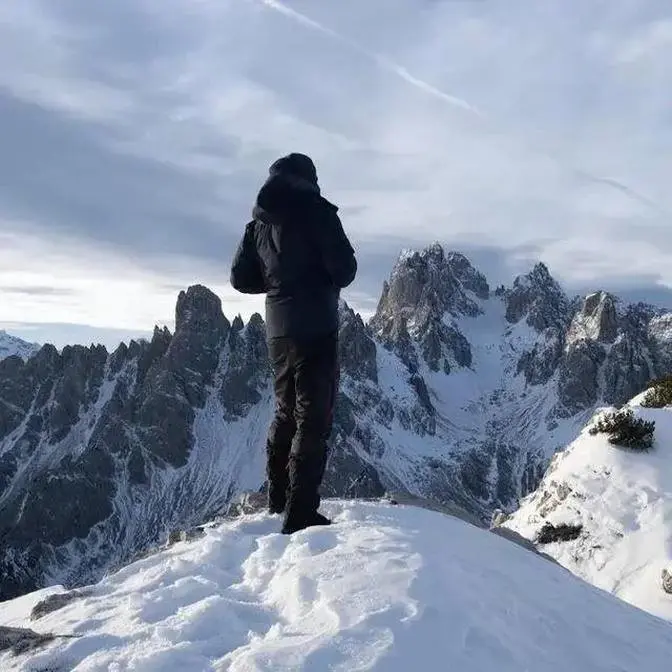
It's been a couple of years since I last did an overview of all my gear for photography and what I take with me on trips, so here's what I'll be using for my photography this year.
Apologies for the audio. Trying to get the microphone off the table so every bang when I put something down wasn't magnified meant moving it quite far away from me, and with high ceilings the sound is quite "boomy", even after running it through DeReverb in Audition. 0:00 Intro 0:49 Backpack 2:21 Camera Gear 5:08 L Bracket 6:20 Camera Strap 7:02 Filters 10:44 Drone 11:51 Other Essentials 14:11 Spare Clothing 15:28 More Essentials 18:31 Tripods 22:31 Conclusion
If you’d like to join me for a landscape photography workshop, my 2024 trips are just about to open. Check my website for more information https://www.andymumford.com/workshops/
If you're interested in purchasing any of the gear I use in this video, and you enjoy my videos, please support my work by clicking on the affiliate links below.
So it's a new year and it's a new gear video and it's a while since I've done a video about what
I take with me and what I've got in my backpack. In a couple of years I think the last one that I did
was on the stuff that I take with me when I'm camping and backpacking which is a different
set of gear because then I'm specifically trying to go as light as possible and I think since then
my gear has evolved quite a bit. I think like most photographers your gear is constantly evolving as
you find new ways of working and new things that work and also I don't really have one set of gear
that works for everything. I find on different trips to different places like things like going
to the arctic is very different to going to to the mountains and I take different gear with me
for different trips sometimes different lenses things like that. So what I want to do in this
video is look at pretty much all the gear that I've got what goes with me for which particular
trips and why I use it. So the first thing that I've got is this is my my camera backpack this
is the f-stop on your backpack it's about 35 37 liters it's not a huge backpack it's one of the
smaller backpacks that they make because I tend to prefer smaller backpacks if possible because I
take with me the least amount of gear possible. What I like about f-stop backpacks is that they
have first of all they have an internal camera unit so you can put different size camera units
in depending on how much different gear that you want to take and these come out so I've got various
different ones a small one a medium one and a large one for when I want to take everything
and generally when I'm traveling this falls up flat in my in my suitcase and I just take with
me the ICU as my carry-on luggage. But there's a lot of things I like about the backpack they're
really well designed in terms of their pockets the way that everything's arranged they're very very
sturdy very very resilient comfortable to carry with quite a large amount of weight in them
they've got waist straps waistbands because most of the weight that you're carrying should be on
your hips you don't really want all the weight of the backpack on your shoulders you can get
tired really quickly you should be carrying the weight through here and I've used a couple of
f-stop backpacks over the years and I've just found them to be really useful. Alright so let's
have a look at the gear that I'm carrying in here now inside this is the large pro ICU this is the
biggest ICU that I've got it's pretty much got all of my gear in it I would never take all of this
with me on a trip it's just too much it's too heavy and I just don't need this amount of gear
but when I'm at home pretty much everything lives inside here anyway and I just take what I need and
put it in whichever ICU works best for the particular trip. So let's start with the camera
gear so this is the GFX 100s with the 100 to 200 millimeter lens the GF 20 to 35 ultra wide angle
zoom for the GFX system so this is my medium format system there's a telephoto zoom here
and a wide angle zoom here I'm not going to go into loads of detail on the lenses and the camera
because I've reviewed the camera and I've talked about the lenses in other videos I tend to shoot
most of the time either ultra wide angle landscapes or with a telephoto so these are the most commonly
used lenses I've also got a mid-range zoom for the GFX system the 35 to 70 but these are the
this is the two lenses that go with me on most trips I don't take these everywhere if I'm going
somewhere where there's going to be a lot of hiking a lot of climbing this gear this gear
system is just a little bit too heavy so this tends to stay at home so when weight is more of
an issue then I will just take the APS-C the smaller camera system so for that I've got the
X-T5 here and also the X-S10 which is the camera that I'm recording this video on I really love
these cameras I've been using the Fuji APS-C system for years seven or eight years now I've
done videos on them before which you can find and I've reviewed both of these cameras and the lenses
so again I'm not going to go into great detail about these particular cameras and why I choose
these cameras but basically in terms of the lenses there's the 10-24 will go with me on
most trips and also a telephoto so the telephoto that I use is a 55 to 200 here I've got the 16
to 80 which is a mid-range zoom this kind of sometimes goes with me if I take the GFX system
with a wide angle and the telephoto then this will be the second camera with the mid-range zoom which
kind of covers the area this doesn't cover and then also in here I've got this Viltrox 13mm
f1.4 now this is a very specialist lens I only really take this with me on places where I'm
going to be shooting either Astro or the Aurora so for winter workshops like Lofoten next month
I'm going to be in Iceland and Greenland in March then I'll take this lens with me for the Aurora
because you really want to have a wide focal range 13mm and you want to have a very fast
aperture this is f1.4 because you want to get the light in as quickly as possible so you don't have
to use a high ISO it's the same when you're shooting Astro when you're shooting stars and
I tend to do that in Namibia so again this lens goes with me with the X-T5 for that trip and
that's pretty much it in terms of cameras and lenses always a telephoto always a wide angle
ultra wide angle zoom and then I've got mid ranges so it's rare that I will have more than
three lenses with me on a trip three lenses tends to cover everything the wide angle the mid and
the tele but generally yeah there's never a time when all of these cameras are going to go with me
now one thing that you'll notice that every single one of my cameras has an L bracket
these are an incredibly useful tool an L bracket if you don't know is a bracket which which fits
along the bottom and the side of the camera to attach to the tripod it does add a little
bit of bulk and weight to the camera but what this means is that you can attach this directly
into the tripod basically doubles as a quick release plate on your tripod but because it's
an L bracket then you can flip it around and shoot in vertical now this stops you from having to
tilt the camera over sideways which makes it harder to compose and also makes the camera a
lot less unstable on the on the tripod it's very easy for the tripod to blow over when it's all
weighted to one side so L brackets are absolutely essential mine are all third-party ones that I get
off of places like Amazon or eBay none of them cost very much this is one for the X-T5 I've got
one here for the for the GFX and there's one on the X-S10 they're really not very expensive you
pay about $25 for them what you have to do is make sure the one that you find is specifically made
for your camera because it has to fit snugly around the bottom and you need to have access
to all of the ports and doors at the side now one of the things I have on all my cameras is one of
these Optek camera straps I've got a much bigger heavy duty one on the GFX and these smaller ones
on the on the X-System cameras now I'm not really a big fan of camera straps particularly not neck
straps because I never wear a camera on my neck and I think this thing they get in the way if
you've got them on the tripod and it's windy they're going to be blowing around getting in
getting in front of the lens and making the camera less stable so I do like straps that I can just
clip off and these clip off really very easily and if I need to be carrying the camera in my
hand or if I'm doing aerials from a helicopter or something like that and I want to make sure that
the camera's not going to be dropped then all I really need is just a wrist strap like this
so you'll notice that on all of the camera lenses I've got a case filter lens cap this is because
I'm using case filtered magnetic filter holders now these are really really nice I used to use
graduated filters but I think they've become a lot less you don't really need them now I find
it so easy to bracket and then blend images in Lightroom so I only tend to take circular filters
with me one of the things about circular filters though is if you're working in cold weather you've
got gloves is they're very easy to kind of get stuck and then you can't screw them off again
which is very important if you're using things like a 10 stop filter or a six stop filter because
you want to do a long exposure you've got to do your composition screw the filter on
readjust composition so it's really nice to have magnetic filters that just clip on and clip off
so I've got one of these on every one of my lens so this is this is the step-up ring for the
magnetic filter and then the filter sizes are actually for my widest lens which is that the
20 to 35 which is 82 millimeter so I keep the filters in underneath here they fit really small
one of the things that I really like about the case filters is how small they pack down this
is four filters here with a cap on each end so I don't even need to put them in a case these
fit in your pocket really easily they're just so convenient to use they're color coded so you can
see straight away which one's which so if you want to drop a filter on then you just basically
there you go and then it comes off super easily this is really nice it's a really nice system you
can get two filters on quite easily without vignetting I think I've not really checked with
the 20 to 35 because this is a 15 equivalent it's very wide I've not checked with two filters on
that but if it does vignette it's only going to vignette a little bit so when it comes to which
filters to take with you I found that I only really need four filters I've got a circular
polarizer which I use mostly with the telephoto lens to remove haze from the sky or just to pop
out detail then I've got three neutral density filters I've got a three stop neutral density
filter which is really good if you want kind of half second or quarter second exposures if you're
shooting on a coastal photography down by the down by the next to the ocean and you want to just put
a little bit of blur in the waves but not too much then I've got a six stop which that's useful for
doing the same thing again if you want half second exposures but if it's much brighter but also in
the blue hour a six stop filter is going to get you 30 second or one minute exposures which will
just really flatten out water or if you want to blur the clouds and then finally I've got a 10
stop filter which is really nice if you want to do two minute exposures or really really long
exposures just to get that completely sort of surreal ethereal effect and that's pretty much
it as I say it's just the four filters here and that's that's everything that I take regarding
filters the system is really nice I'm super impressed with the quality I've not seen any
real color casts when I'm using any of the any of the darker filters they're super convenient to use
one of the things that I like is that in the very they have a new system I'm not sure what it's
called I think it's the case revolution and for that the magnetic ring actually fits you can't
really see it but it fits inside of the of the lens ring here so it's tiny it's kind of screws
inside here so anything filters sticking on there has a really low profile and it also means you can
screw other filters in on the top now I don't really need to do that but if you want to screw
in a I don't know a very ND or something like that then you can do that or you can use the
original lens caps you don't have to use a magnetic lens cap okay so the next thing in the bag is the
drone for aerial photography I've got here a DJI Air 2S which is a drone I really like using I've
used the Mavic 3 and I think that's a great drone but this in terms of its small size and weight
it's really really nice and size weight has become even more important to me if I'm taking the
the GFX system the medium format system because that's quite big and heavy so having a smaller
drone is is quite useful and also in here we've got the DJI RC remote controller now this is one
of those controllers it has it has a built-in screen so you don't need to use your phone with
it which is I find that very useful because if I don't have to worry about my phone dying battery
dying this has an excellent battery life and it's just it's just useful I think to not have to rely
on your phone or worry about your phone battery life when you when you want to fly the drone
I've also got this f-stop drone pouch which I use just for carrying the drone and the controller
and the batteries and I tend to use this when I'm not using the really large f-stop ICU which
fits everything in I'm just taking one of the smaller ICUs just with the camera gear and the
drone sits in this now the back of the backpack has got lots of pockets here I tend to not use
these very much because if you put heavy things in the pockets it's going to really bulge out the
back because you've already got a lot of camera gear in here so I already I tend to keep things
that are quite flat in here there's not really much I think here there's just my cable release
cable releases are useful I think particularly if you're shooting coastal photography and you're
trying to shoot exposures with the waves crushing up the beach then you really need to time it you
can't use a two second timer on the camera you need to be kind of clicking the shutter exactly
when you need it clicked so that's when I use the remote for and then I think in here I've just got
a folding Leatherman pocket knife this is great I mostly use it for the screwdriver which is great
for just tightening things like tripod legs or removing the L brackets on the camera it's also
got a set of pliers in it which is just it's just an all-around super useful tool and I think you
should everyone should always have something like this in the backpack wherever they go now moving
into the top of the bag on the top pocket here this is a kind of easy access pocket in the lid
where I can get stuff really quickly so in here I've basically got my sunglasses if in case I need
them they don't go with me on every trip and a DJI pocket 2 this is what I use for if I'm
recording a vlog if I want to record while I'm on the go and out in the field now what I really like
about this is not only is it super small and lightweight it weighs just like a couple of
hundred grams it's just very quick and easy to set up shooting so you just pull it out your bag turn
it on and you can be shooting within seconds so it's very spontaneous very easy to use and just
gets out of your way and really takes up literally no space at all in the backpack
so then also in the top here there is a couple there's a separate pocket where I keep spare
batteries so the batteries for the xt5 and gfx are the same so I've usually just got two batteries
with me in the field that's all I need plus the two in the camera I've never found that I need
any more than that and then spare cards for both cameras and also for the for the drone mini sd
cards for the drone most of my cards are either 32 gigs or 64 gigs and I tend to try to get fast
cards because I do record video and record time lapses and things like that then when we go into
the top of the bag now because I've got the large icu in here there's not a huge amount of space
in the top of the bag but there is still enough space to get things like a down jacket I've got my
beanie and gloves and there's also space down the front for for a shell jacket for if it rains
now when it comes to gloves I gloves are really important a lot of the places that I go it gets
really cold and finding gloves that work for photography is quite challenging I use the heat
company gloves these are nice they've got these touch pads which make it easier to use things
like the drone or your phone when you're using these are basically just glove liners they keep
your hands really warm but they're not waterproof so you have to be very careful about getting them
wet if I'm going somewhere much colder or I need something that's waterproof then I take with me
their shells which these is these big mittens which you can fit over the top of the of the of
the liners but these just keep your hands super warm you can open the mitten there so you've got
and to the thumb they're really waterproof really warm and these are pretty much what I'll be using
through all of my winter workshops now on the back of the of the leash here there's a there's
another pocket this is where I keep spare stuff so there's a first aid kit here that I use this
has just got basics in it like sticking plasters things to uh to to strap up a a cut or a wound
there's some iodine in there so some antiseptic cream and then spare batteries for a head torch
because in the front here I've got this this little pocket in which I keep a head torch now
any landscape photographer needs to have a head torch when you're heading out for sunrise you
need to be able to see where you're going likewise when you're heading back after sunset
head torch is absolutely essential and because I might not use it from trip to trip trip
it's hard to keep track of the batteries so I always have multiple sets of spare batteries with
me for the torch so just the last few bits and pieces now are the side pockets here on the side
of the of the backpack now in this one I've just got all of my cleaning cloths and things like that
so I've got different sets of cloth like I have big cloths like this which I use if I want to dry
down moisture or dirt off the camera so this would never touch the lens then I've got these kind of
these wet wipes which are really good for cleaning lenses and screens and then I've also
got some other kind of thin tissue lens tissues there just to keep just to dry and clean get get
muck off the front of lenses and then in the pocket on the other side I've got a couple of these now
these are our bags to put over the camera to keep it dry so if it's raining if there's a little bit
of rain in the air then you just drop this over the camera the lens goes through here and this
will keep rain off the camera will keep it dry the cameras are all weather sealed but if you're
standing out for a long period of time just getting a really wet camera is it's not a good idea anyway
so I do tend to use these if I'm in some really bad weather then I think the last thing is the
pockets on the front of the backpack so there's this big pocket that goes all the way down the
front here now this is uh I basically shove anything that's wet in here so if I've been
out and I got my gloves wet or if I've got my shell wet then that just gets shoved into this
pocket in the front to keep it away from the rest of the gear I also keep a water bottle in here
obviously usually it's got water in it this is kind of this is a flexible bottle it fits flat
into this backpack I don't like hydration bladders I don't really like using the tubes or things like
that I think the whole thing is quite inconvenient for me and I also don't want to have the bladder
in the same compartment of the backpack as the rest of my camera gear so what I like about this
is this pocket on the front is completely separate and sealed from the rest of the
backpack I have had water bottles leak in the past when I've not closed them properly
and they don't leave this pocket the water well stays in here there's actually a drainage hole at
the bottom of the backpack so any leaking water will run out and it won't get into the rest of
your backpack and damage your camera gear so the final things are the tripods that I use now I've
got two different tripods and it really depends like the camera gear on what kind of trip it is
this is my my favorite tripod it is a pro media gear I forget the uh the exact model I'll put it
in the video when I when I edit the video together and I've got an Arca Swiss P0 inverted ball head
on the top with a really right stuffed clamp so it's a kind of a mixture of lots of different
brands the tripod itself I really like this it's a carbon fiber tripod it reaches really high so it
comes up to here I don't have to bend down when I'm using it it's really sturdy really strong it's
been with me in some incredibly bad weather and covered in thick ice it's been blasted by sand
in Namibia everything on this is metal it doesn't have any plastic on the outside
and it's just I find that even after after using it so many times it's still
really smooth it has a spikes in the bottom so you can just screw out the bottom and flip the
feet around and use spikes it's not super light I wouldn't call this a travel tripod but it is
very sturdy and I tend to use this tripod when I'm going to places again where I'm not doing
really really long hikes I can carry this for a couple of kilometers and for a couple of hours
but I wouldn't want to be carrying it on on steep climbs up mountains where I'm walking for five or
six hours at a time for that I'll use my other tripod the ball head here the Arca Swiss ball
head is really nice this is an inverted ball head so what that means is is basically the ball head
is sort of upside down from from most ball heads which means that if the tripod isn't level you can
still level the ball head like that which means that then the pano head on the top just rotates
and that will be rotating flat whereas if you don't have an inverted ball head getting the top
of this flat you basically have to have the platform of the tripod level not really explaining
that very well but I've just found this to be really useful I also like the way that it feels
it's very intuitive in the hand I'm not twisting around with lots of knobs and levers this thing
works you just tighten this at the top just takes a very small twist to unloosen it and a
very small twist to tighten it and then yeah a clip a really right stuff a clamp I find these
just really good these they're very tight very easy to open when you're wearing gloves it's the
same with this ball head it's very easy to operate when you're wearing thick heavy gloves and it's
just this is the system that I really like but as I said it's not super light so if I want to go
some light then I'll use a travel tripod this is the jitsu gt 1545 travel tripod I like it it's
great it doesn't reach I think it's full and it's full uh without the the sensible head it comes up
to about here which is a little bit low you have to get this use a sensible head just to get it up
to here which is it's not super convenient I like to have a tripod that comes up high and not having
to be bending down but it is very light it weighs very little so if I'm having to do really really
long hikes with with bigger sense and stuff like that then this will tend to go with me I don't
like the jitsu ball head that came with it it came with a specific uh ball head I don't remember the
exact name of it but I had all kinds of problems with it I don't think it was well designed the
panorama screw on the side literally just kept falling off which made the whole tripod which
made the whole ball head just spin around like a weathervane so I switched this out for a really
right stuff this is a bh 35 I think which is really nice it will take the weight of something
like the gfx with the one lens with no problem whatsoever it's it's super tough there you go
um and yeah this will do the job it's a good tripod but it's not as sturdy or as high reaching
as my other tripod which I will tend to prefer if I can this is very light though okay so I think
that pretty much covers everything so that's it for this video I hope it's been useful and hope
it's been interesting if you've got any questions at all drop me a comment down below or send me an
email and I will get back to you now if you enjoy my photography if you enjoy the way that I that I
talk about photography if you've seen my other work then I'd love to have you join me on a
workshop this year or next year I'll be heading to places like Lofoten to Iceland to Greenland
to Namibia to Patagonia so if you're interested in joining me on one of these trips you can find
full information on the workshop page on my website or just drop me a line and I'll get back
to you and I'd love to see you on a trip so as ever thanks for all the support of the channel
and good luck with all your photography I'll see you next time take care bye