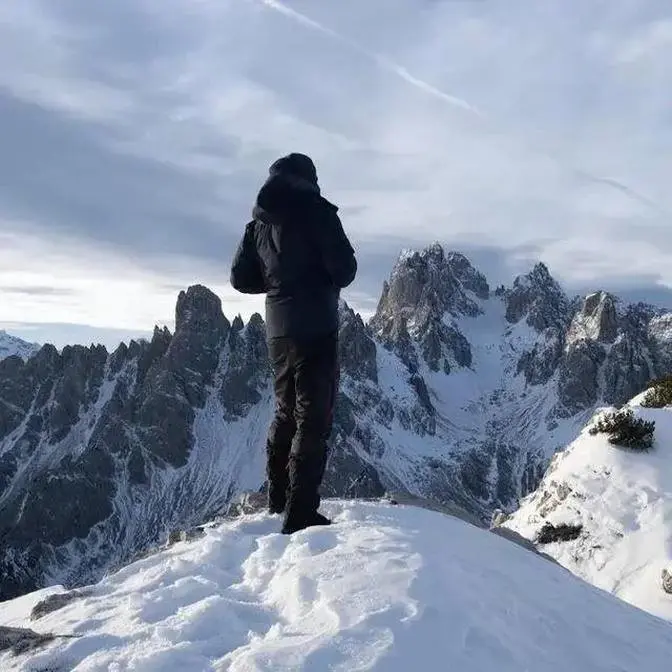
This is the first video from my recent Lofoten in Winter workshop. Like my previous videos from the Dolomites is used an iPhone and a DJI Osmo 3 gimbal to record behind the scenes of my recent workshop there, explaining some of the locations and outlining the thought process behind some of the images.
If you’d like to join me for a landscape photography workshop in Italy or Iceland next I’ll be co-leading groups there in 2021. Check my website for more information https://www.andymumford.com/workshops/
If you're interested in purchasing any of the gear I use in this video, and you enjoy my videos, please support my work by clicking on the affiliate links below. Thanks so much.
Good morning from Lofoten. I'm here with the Winter Workshop in February. As you can see
pretty much everything is covered in snow behind me. It's spectacularly beautiful here. It's
incredibly pretty. This is a group of islands in the Arctic Circle just off the
northwest coast of Norway. I come here, this is about my third, fourth time here, fifth time here
over the last three or four years and every time I come I'm always just blown away at what a
staggeringly pretty place it is. It's just, these islands are, they're former fishing communities.
These huts around me you can see, these are former fishermen's huts where the
fishermen used to live. And these islands are kind of surrounded as you can see by these
wonderful peaks which just rise up out of the fjords covered in snow and just everywhere you
look it's so pretty. There's so much to shoot, there's so much variety here. We can shoot down
on the beaches, do waterscapes, we can shoot the peaks like we've been shooting this morning.
Because of this time of year the sun is always relatively low. I mean right now I'm recording
this it's about midday and the sun's still quite low so there's great light. It means we get really
long shooting sessions and the light when we get it is incredibly dynamic and dramatic.
The thing about the light is that the weather here is very changeable. This is the third day
here and we've had pretty much all kinds of weather. You can get a lot of cloud, a lot of rain
but it's that kind of place where even with lots of clouds and moody weather
it still works really really well. There's still stuff that you can do
but obviously this kind of dynamic light that we're getting now this really makes the colors
pop. It's just such a pretty place to be. So the other thing is that this is also a relatively good
place to see the aurora. Now we can't guarantee that we're going to get that you just you just
never know and even if you do get it we need to have clear skies to be able to shoot it but
hopefully that's going to happen in the week that we're here. Now we've still got about four days
left. I've been out shooting quite a few times. The weather hasn't stopped us from from from it
hasn't made us miss a session yet so so that's been good and yeah let's see. I want to film some
of the sessions. I want to kind of use this video to talk about some of the things that we're we're
doing on the workshop some of the compositional techniques that we're applying some of the kind
of images that we're looking at and yeah so well let's see. So pretty much the most iconic shot in
is the shot of the Hamilway cabins from the bridge and it works for a couple of reasons.
Now first of all the shape of the mountain is just great. It rises up from the fjord and it's
separated from the peaks on both the right and the left and it's that separation that helps to really
anchor the mountain as a focal point. Then you've got the cabins which give a splash of bright red
colour and add contrast to the landscape not just in the colour but in the fact that you've got these
small wooden structures that look so flimsy built over the fjord and below the mountain that really
contrast the feeling of a wild landscape and human habitation and with the edge of the island
working as a nice curve and the water movement around the rocks acting as a foreground the
composition of these three elements is just one of those lucky coincidences where all the elements
are naturally arranged in a really harmonious way but that doesn't mean that there are no
considerations to take into account when you shoot it. Now to get all the elements in you really need
a wide-angle lens. A mid-range zoom for me feels a little bit tight around the top of the mountain
or it cuts too much water off of the bottom and then you need to decide whether you're going to
shoot it in landscape format or in portrait format. If you decide on landscape you have more context
because it includes more of the scene on the right and on the left but it loses a little balance for
me because the right is heavier than the left with the mountain and with the cabins as opposed
to the water and what you're including doesn't actually add anything to the image. The water
here really is just negative space and on the right you're starting to include some of the messy
stuff on the island like this big tank here. Now for me this weakens the composition a little and
I think it works better as a portrait image with the three focal points leading you through the
image from bottom to top. The foreground water, the cabins and then the background rock. The next
decision you have is with the shutter time. Now I wanted to blur the water a little because without
blur the water has too much detail in it and that detail catches your eye. You don't want the water
to become a focal point because it detracts from the other elements in the image so smoothed out
water works really well to focus the eye on what you want people to look at when they when they
look at the image. The question then is how long? Now a really long exposure will completely smooth
out all the water but you lose any of the movement of the waves. Too short and the water over here on
the left is still going to have a lot of detail in it. So in the end I went for 25 seconds using a
10 stop neutral density filter because I really wanted to smooth out the water on the left but I
would have liked to have a little bit more motion visible on the foreground around the rocks.
The other thing about this image is that it shows the value of waiting in a location as long as
possible particularly when you're this far north at this time of year where the sun is always low
so sunrises and sunsets can last for hours. Now we got here in the blue hour and it really didn't
look that promising but even in the clouds it's possible to get some nice mood here so we decided
to shoot anyway. Around sunrise the cloud was still thick and gave us no direct light but then later
the clouds cleared to give us these nice cool conditions where the white and blue and the red
of the cabins combined really well but after that it got really windy some rain blew in clouds came
back in again so most people left. But straight after the rain and this was by now more well more
than an hour after sunset we got this wonderful storm light and colour which we would have missed
if we left. So the place that we're staying in Lofoten is a tiny island called Hamnoy which is
just behind me and Hamnoy is just one of many islands that are scattered amongst this fjord
the Rhinefjorden that are surrounded by these incredibly dramatic peaks just as I pan the
camera around you can see these mountains that just rise up straight out of the fjord it really
is an incredibly dramatic place and really really photogenic. Now these are all fishing communities
like I said and they're all covered with these with these little cabins I don't know if you can
all these yellow cabins and it's just a wonderful place to shoot so during the workshop we spent
some time just walking around the islands shooting the cabins shooting what we see the
light's spectacular today so it's been it's been a lot of fun shooting but this place also looks
great in in pretty much any weather we were out here on the first morning when it was really
cloudy and overcast and it still looks great there's just such an incredible colour tone here
you've got the yellows cabins you've got the red cabins you've got the whites behind and uh just
pretty much everywhere you look is just makes such a great image it's incredibly photogenic
so the light's getting quite low now and we're going to go and find another spot for sunset and
see how that turns out. So for this shot I wanted to capture the yellow cabins on Sakrisoi as they
were lit by the low light of the sun in the golden hour now I really like the contrast of the yellow
cabins with the blue of the fjord and the white of the mountains in the background and for this
composition there are a few elements to consider the huts obviously are the main focal point but
the mountain in the background is also very important and I wanted to get the complete shape
of the mountain on the right and on the left so the decision then is how far you zoom in or out
and that's really decided by what's on the right or the left of the frame over here on the left
we had the sun which I didn't want to include because the dynamic range would have been too
strong but at the same time I wanted to compose as close as I could to the sun because I really
wanted to give that impression of the light entering the frame the side of the frame and
hitting the buildings on the right you have the buildings on the island and it's inevitable that
you'll have to crop something which is never ideal but I thought this line along the edge of the
island worked quite well and kept the right side of the image as clean as possible and it also put
the main buildings on a third which gives this space between the buildings and the light now
there's an implied line here between the buildings that are facing the light and the light coming in
from the left towards the buildings and I find this a fascinating thing in photography that light
or even the suggestion of light can act almost as a physical element in a composition which needs to
be given space within the frame now the other consideration is the horizon I put it right across
the middle because of the reflection and I wanted to make sure that the reflection was properly
resolved and not cut off on the bottom of the frame and I wanted to make sure that the mountains
both here at the bottom of the frame and also at the top had plenty of breathing space and weren't
too close to touching the edge of the image and as there's nothing happening in the sky there doesn't
need to be a lot of sky left in the image so I just kind of cropped it where you can see it there
now like the image of Hammoy that I showed before I wanted to smooth the water out a little bit to
get rid of the distracting detail in the water which would have competed with the buildings
so again I used a 10 stop neutral density filter to give me a shutter time of about five seconds
now this image was taken in almost exactly the same spot but it looks in the opposite direction
and I took it on a different day when we had different weather conditions now I've shot this
cabin on a couple of occasions and I think it works much better in flat even light as the yellow
really seems to stand out against the almost monochromatic background when there's no contrast
from direct light with the white sky we get a much more limited color palette now if we had colors in
the sky or even just a clear blue sky like in the previous image that color would compete with the
cabin and weaken it but in these conditions the cabin is the only color in the frame so it's a
really strong element and the only other texture is here on the mountain so this image is just
about these two elements and the way that they interact now the strength of this composition
are the repeated shapes of the of the cabin in the mountain these two triangles with the peak
of the cabin directly beneath the peak of the mountain and shooting it with a short telephoto
compresses the cabin a little bit against the peak now by removing everything from the side
of the frame because there's another building over onto the left it reduces the image to just
these two elements the cabin and the mountain and even though the cabin is actually it's in a
relatively busy quayside it creates this impression of isolation and remoteness now the cabin really
feels better if it's central in the frame and flat on from the front of the building so we can't see
the sides which makes it like the mountain behind it an almost two-dimensional shape which again
emphasizes the repeated shapes now i really like images like this which reduce the landscape to
its absolutely bare essentials it's almost the same as a japanese landscape prints images which
can define a landscape in just one or two elements with just one or two colors so that people can view
the image and get an idea of the place it creates kind of like a whole story in your head of this
place where the mountains rise up out of the fjords and people live in these remote colorful cabins
it's kind of like the lovatan islands distilled into literally two shapes
now during the trip we also headed out to capture one of the local beaches but the weather was
really heavy with low cloud and lots of snow and shooting on the beach really didn't work with such
a flat uninteresting sky but we did find this little church right next to the beach this is
a great example of the kind of location that's really quite weather dependent without the snow
it would be a very different location we'd have lots of colors and textures on the earth around
the church and in the hills behind it making a really busy confused image but the snow has the
effect of cleaning out the image and reducing the number of elements making it much cleaner and much
simpler we've got a smooth white foreground all around the church and a white sky and the mountains
are covered in snow and the church is also white so the whiteness of the whole scene is just broken
by the odd detail like the lines of the church or the gravestones or the rocks on the peaks and
the fence of the church now the snow here really creates a mood you've got this church and these
gravestones alone along in front of these mountains and a lack of any other detail a lack of any color
and the feel of the snow and the sky creates a mood of isolation and remoteness that works really
well with the subject matter here now we shot the church from a number of angles and my first
inclination was to shoot it straight on like the cabin in the previous image but as soon as i did
that i felt that the line of the mountains at the back really interfered with the church and
introduced the impact of it reducing its strength in the image so i moved along the fence a little
bit so i could put the church in this kind of gap in this v between the two mountains which gives
the church much more prominence and the lines of the mountains direct attention towards it
the final composition and my favorite were with an ultra wide angle and including the fence around
the church in the image shooting ultra wide and in a portrait allowed me to include the whole of
the fence with space at the bottom creating a strong triangle that supports the church now
with this kind of composition symmetry really makes the image stronger so the bottom of the
v of the fence needed to be directly beneath the spire of the church and the v also needed to be
centered in the frame with equal equal space on the right side of the fence and on the left side
of the fence between the edges of the frame in post-processing i just made sure that the whites
were as clean as possible and that there was a consistency of tone and brightness between the
sky in the foreground often i work with vignettes and darker skies to draw the eye to a particular
element within the image but here the overwhelming whiteness works better than any vignette i wanted
the only dark elements of the frame to be the lines of the church and the rocks and the gravestone
so i brightened the image as much as possible in post-processing because when i was in the field
even though i'd exposed a little bit to the right and overexposed it was still whites were still not
as white and clean as i wanted them to be and as i say i really wanted to get that balance between
the snow in the foreground and the whites of the sky and keep the white balance and the whole
image as clean as neutral as possible so that's it for this video i hope it's been interesting
and i hope you found something useful in it if you've got any questions at all please just drop
me a comment in the comment box below and i will definitely try to get back to you or send me an
email and as always thanks for watching and take care